

What Should Buyers Know Before Choosing a Welding Cutting Kit Supplier?
A reliable welding cutting kit supplier provides more than a collection of individual tools. For distributors, importers, and industrial buyers, a complete welding cutting kit represents a ready-to-use oxy-fuel system that must deliver compatibility, safety, performance, and consistent quality across every component.
Many purchasing problems occur because buyers focus only on the lowest product price while overlooking:
- Torch and regulator compatibility
- Gas type requirements
- Cutting capacity
- Accessory completeness
- Replacement component availability
- Certification requirements
- Packaging and logistics
- Long-term supply stability
A professional supplier should help buyers select the right kit configuration according to the final application, target market, and customer expectations.
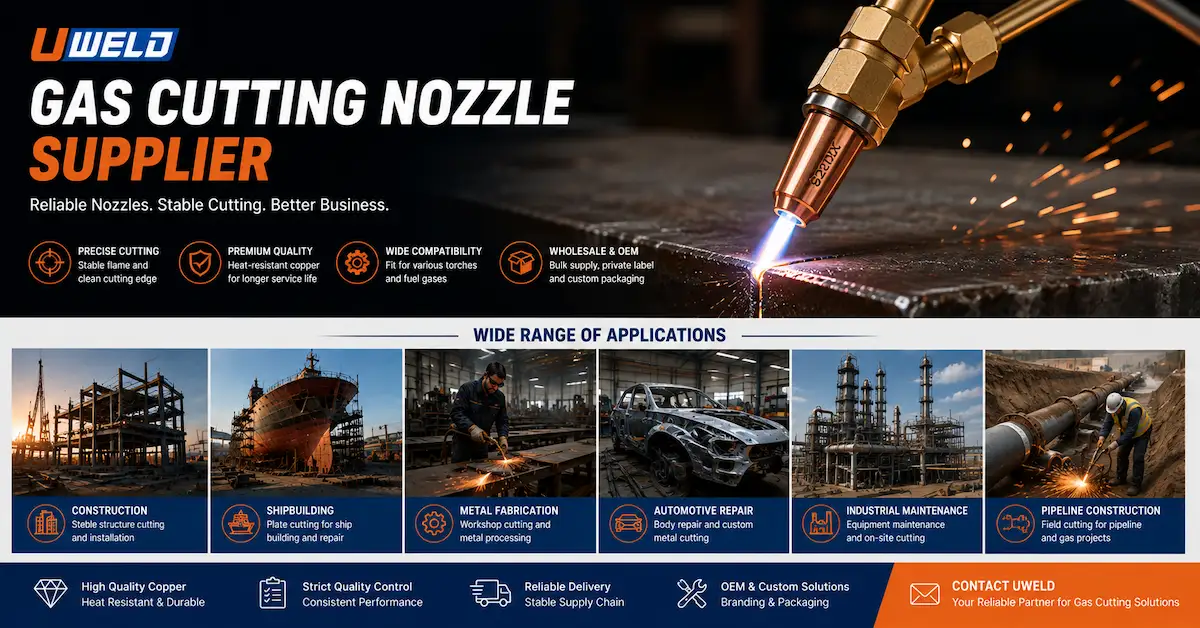
UWELD provides welding and cutting equipment solutions including gas cutting torches, regulators, nozzles, kits, and related accessories. Buyers can explore the UWELD gas cutting product range when developing welding and cutting equipment product lines.
What Is Included in a Professional Welding Cutting Kit?
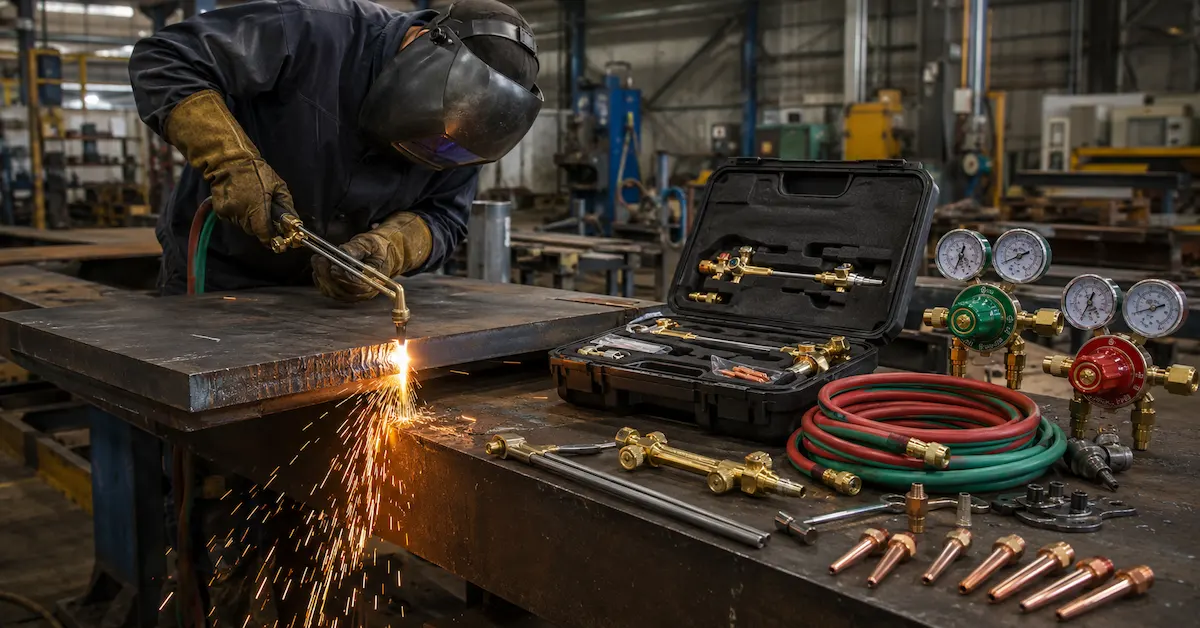
A welding cutting kit combines multiple components required for oxy-fuel cutting and welding operations.
A typical kit may include:
| Component | Function |
|---|---|
| Cutting torch | Produces cutting flame and controls operation |
| Welding torch or tip | Supports gas welding and heating applications |
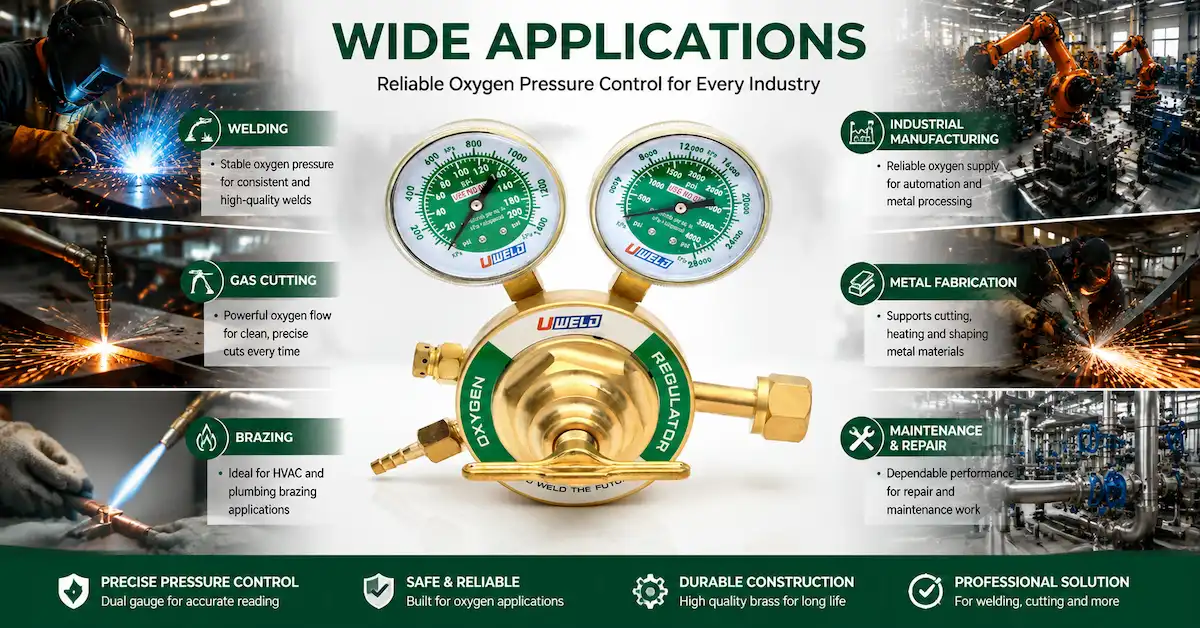
| Oxygen regulator | Controls oxygen pressure and flow |
| Fuel gas regulator | Controls fuel gas supply |
| Cutting nozzle | Determines cutting performance and thickness range |
| Welding tips | Supports welding and heating tasks |
| Gas hoses | Transfers oxygen and fuel gas |
| Accessories | Improves usability and maintenance |
The exact configuration depends on the intended market and application.
For example, a workshop kit may focus on versatility, while an industrial fabrication kit may prioritize heavy-duty performance and longer service life.
Who Needs a Welding Cutting Kit Supplier?
Different buyers have different sourcing priorities. Understanding the target customer helps determine the right product configuration.
Welding Equipment Distributors
Distributors usually require a balanced product portfolio.
Their main concerns include:
- Stable product quality
- Competitive wholesale pricing
- Complete product categories
- Easy-to-sell product combinations
- Replacement parts availability
- Reliable repeat supply
A supplier that provides both individual components and complete kits allows distributors to serve different customer needs.
Industrial Tool Importers
Importers must evaluate more than product specifications.
Important considerations include:
- Market compliance
- Documentation
- Packaging requirements
- Shipping efficiency
- Product consistency
- Supplier communication
A complete welding cutting kit can simplify purchasing because multiple compatible components are sourced from one supplier.
Hardware and Welding Supply Wholesalers
Hardware wholesalers often prefer products that are easy to explain and sell.
A well-designed kit provides:
- Clear application value
- Multiple included accessories
- Reduced customer selection difficulty
- Better retail presentation
Private Label Welding Brands
OEM buyers usually need customization options.
Possible requirements include:
- Brand logo
- Customized packaging
- Product labels
- Accessory combinations
- Market-specific configurations
A capable welding cutting kit supplier can support brands that want to develop their own welding tool product lines.
How to Select the Right Welding Cutting Kit for Different Applications?
The best kit depends on where and how it will be used.
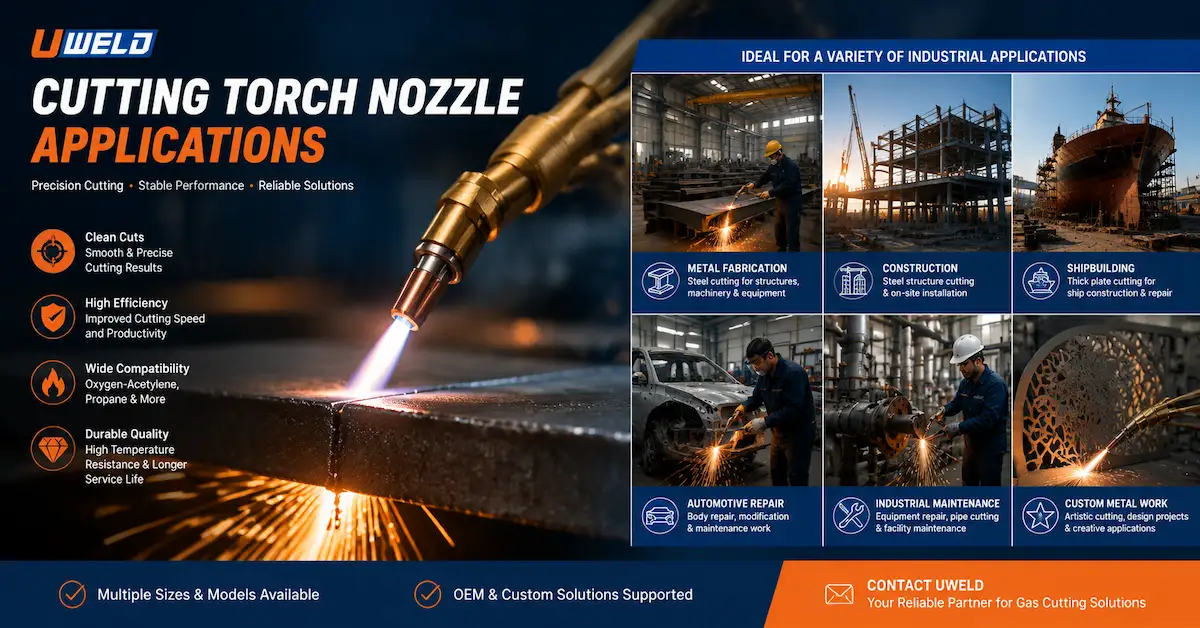
Metal Fabrication Applications
Fabrication workshops typically require:
- Stable cutting performance
- Reliable torch operation
- Multiple nozzle options
- Durable components
- Easy maintenance
Common applications include:
- Steel plate cutting
- Structural components
- Metal processing
- Workshop fabrication
Construction and Field Work
Construction users often prioritize:
- Portability
- Simple operation
- Rugged design
- Complete accessories
A portable welding cutting kit can reduce the need to transport multiple separate tools.
Equipment Maintenance and Repair
Maintenance teams need flexible equipment for:
- Repair cutting
- Component removal
- Heating operations
- Emergency maintenance
The ideal kit should balance performance with practical mobility.
Shipbuilding and Heavy Industry
Heavy industrial users typically require:
- Durable components
- Stable gas control
- Long working capability
- Reliable replacement supply
These environments place greater demands on equipment consistency.
What Technical Specifications Should Buyers Check?
A professional buyer should create a technical checklist before requesting quotations.
Fuel Gas Compatibility
The first question is whether the kit matches the intended fuel system.
Consider:
- Acetylene
- Propane/LPG
- Oxygen supply
- Nozzle compatibility
- Regulator configuration
Different gases require suitable components.
A supplier should clearly identify which gas combinations are supported.
Cutting Capacity
Cutting capacity determines whether a kit fits the customer's application.
Important factors include:
- Material type
- Steel thickness
- Cutting frequency
- Working environment
- Required cutting speed
A small repair workshop and a heavy fabrication facility usually require different kit specifications.
Regulator Performance
Regulators are critical components because they control gas pressure.
Buyers should evaluate:
- Gas compatibility
- Inlet pressure
- Outlet adjustment range
- Gauge quality
- Connection standards
UWELD currently offers gas control products including regulators designed for welding and cutting applications within its product portfolio. (uweld.com)
Torch Design
The cutting torch affects:
- Flame stability
- Operator control
- Working comfort
- Maintenance requirements
Buyers should consider:
- Torch length
- Handle design
- Valve arrangement
- Material quality
- Replacement parts
Nozzle and Consumable Availability
A complete sourcing plan should include future consumables.
Important questions:
- Are replacement nozzles available?
- Are different cutting sizes supported?
- Can customers reorder accessories easily?
- Are consumables supplied consistently?
For distributors, consumable availability directly affects customer retention.
Welding Cutting Kit Comparison for Different Buyers
| Kit Type | Features | Best For | Buyer Benefit |
|---|---|---|---|
| Basic Cutting Kit | Essential torch and accessories | Workshops and general users | Lower entry cost |
| Professional Cutting Kit | More complete configuration | Industrial users | Better application coverage |
| Portable Cutting Kit | Compact design | Field service | Easier transportation |
| OEM Customized Kit | Branding and configuration options | Private-label brands | Market differentiation |
Choosing the correct product range helps buyers avoid carrying too many overlapping products.
Materials and Component Quality of Welding Cutting Kits
Product reliability depends on the quality of each individual component.
Torch Body and Metal Components
Important factors include:
- Manufacturing precision
- Surface quality
- Heat resistance
- Structural durability
Valves and Gas Control Parts
Reliable valves help ensure:
- Stable adjustment
- Better operator control
- Reduced leakage risk
- Longer service life
Hoses and Connections
Gas hoses and fittings should match the intended application.
Buyers should verify:
- Connection type
- Gas compatibility
- Hose quality
- Length requirements
A complete kit should work as an integrated system rather than a collection of unrelated parts.
How Does a Welding Cutting Kit Supplier Ensure Quality?
For wholesale buyers, supplier quality management is as important as product design.
A professional supplier should have inspection processes covering:
Incoming Material Inspection
Check:
- Component quality
- Material consistency
- Supplier reliability
Assembly Inspection
Verify:
- Correct component matching
- Connection accuracy
- Assembly quality
Functional Testing
Test:
- Gas flow
- Operation
- Product performance
- Safety-related functions
Final Inspection
Before shipment, suppliers should verify:
- Product appearance
- Accessories
- Packaging
- Quantity accuracy
UWELD highlights quality management and testing processes as part of its manufacturing approach, supporting consistent welding and cutting equipment production.
Certification and Compliance Considerations
For international buyers, compliance requirements are an important part of supplier evaluation.
Before ordering, buyers should confirm:
- Applicable standards
- Product documentation
- Certification scope
- Destination-market requirements
For example, UWELD references standards including EN ISO 5172 for torch-related products and EN ISO 2503 for regulators within its quality and certification information.
Buyers should always confirm that certification information applies to the specific product model being purchased.
How OEM Welding Cutting Kit Suppliers Support Brand Growth?
OEM cooperation allows distributors and brands to create customized solutions.
Common OEM options include:
- Logo customization
- Packaging design
- Product combinations
- Accessory selection
- Private-label development
A successful OEM project requires clear communication about:
- Target customers
- Market requirements
- Product specifications
- Packaging
- Quality expectations
- Order quantity
A strong supplier relationship helps brands expand their product range without building their own manufacturing system.
Common Mistakes When Selecting a Welding Cutting Kit Supplier
Choosing Only the Lowest Price
The cheapest kit may create additional costs through:
- Poor product consistency
- Missing accessories
- Customer complaints
- Replacement difficulties
Ignoring Component Compatibility
A kit should be evaluated as a complete system.
Problems may occur when:
- Torch does not match nozzle
- Regulator does not match gas type
- Connections differ from local requirements
Buying Without Sample Testing
Samples help verify:
- Product quality
- Performance
- Packaging
- Application suitability
Overlooking After-Sales Support
Long-term buyers need:
- Replacement parts
- Technical support
- Stable supply
- Product updates
How to Evaluate a Welding Cutting Kit Supplier Before Bulk Ordering?
A practical supplier evaluation process includes:
Step 1: Define Your Market
Identify:
- Target customers
- Applications
- Required specifications
Step 2: Select the Appropriate Kit Configuration
Confirm:
- Torch type
- Gas type
- Accessories
- Packaging
Step 3: Request Samples
Test:
- Product performance
- Compatibility
- Quality
- Documentation
Step 4: Confirm Production Standards
Finalize:
- Specifications
- Packaging
- Inspection requirements
Step 5: Plan Long-Term Supply
Evaluate:
- Production capability
- Communication
- Repeat-order support
FAQ About Welding Cutting Kit Supplier Selection
What is a welding cutting kit supplier?
A welding cutting kit supplier provides complete oxy-fuel welding and cutting equipment sets, including torches, regulators, nozzles, hoses, and accessories for professional applications.
What should I check before buying welding cutting kits wholesale?
Buyers should check fuel compatibility, cutting capacity, component quality, certifications, packaging, replacement parts, and supplier production capability.
Are complete kits better than buying separate components?
Complete kits can simplify purchasing because components are selected to work together. However, buyers should still confirm specifications match their application.
Can welding cutting kits support OEM branding?
Many suppliers support OEM services such as logo printing, packaging customization, and accessory combinations. Specific options depend on supplier capability and product requirements.
What industries use welding cutting kits?
Common applications include metal fabrication, construction, shipbuilding, industrial maintenance, repair workshops, and manufacturing.
How do I choose between a basic and professional cutting kit?
Choose according to workload, cutting thickness, application environment, and customer expectations. Industrial users usually require more durable configurations.
Why are regulator and nozzle quality important?
Regulators control gas pressure while nozzles influence cutting performance. Poor-quality components can reduce efficiency and increase operating problems.
What documents should importers request from suppliers?
Importers should request product specifications, technical documents, compliance information, packaging details, and any required market documentation.
How can distributors reduce sourcing risks?
Distributors can reduce risks by testing samples, confirming specifications, evaluating quality systems, and selecting suppliers with stable production capability.
How can I request a welding cutting kit quotation from UWELD?
Prepare your target market, required kit configuration, quantity, packaging requirements, and OEM needs, then contact UWELD through the contact page.
Conclusion
Selecting the right welding cutting kit supplier requires evaluating the complete solution rather than comparing individual product prices. A reliable supplier should provide compatible components, stable quality, technical support, compliance information, and long-term supply capability.
For distributors, importers, and industrial buyers, a well-designed welding cutting kit program can improve product competitiveness while reducing sourcing complexity.
UWELD supplies welding and cutting equipment solutions including torches, regulators, accessories, and complete product combinations for professional applications. Buyers can explore the UWELD products or discuss wholesale and OEM requirements through the UWELD contact page.