

Quick Answer: How to Select a Reliable Cutting Torch OEM Supplier
A reliable cutting torch OEM supplier should provide consistent product specifications, manufacturing control, customization support, quality management and stable repeat-order capability. Industrial buyers should evaluate gas compatibility, torch structure, nozzle matching, materials, production processes, inspection methods and documentation before making a sourcing decision. A professional OEM supplier helps customers convert application requirements into a repeatable product solution instead of simply adding a logo to an existing product.
Introduction: Why Choosing the Right Cutting Torch OEM Supplier Matters
For gas cutting distributors, industrial tool wholesalers and private-label brands, choosing the right cutting torch OEM supplier directly affects product quality, customer satisfaction and long-term supply stability.
A cutting torch is a precision tool used within an oxy-fuel cutting system. Although the product structure may appear simple, performance depends on multiple factors including gas compatibility, internal design, manufacturing accuracy, connection standards and matching cutting accessories.
Many buyers face challenges during sourcing:
- Different suppliers provide similar-looking torches with different specifications;
- Product descriptions may not clearly explain gas compatibility;
- OEM buyers need customized packaging and product identification;
- Repeat orders may become inconsistent without proper product control.
UWELD provides a range of gas cutting products, including cutting torches, cutting nozzles, regulators, flashback arrestors and related oxy-fuel equipment. This allows buyers to evaluate cutting torches as part of a complete gas-cutting system rather than as an isolated component.
What Is a Cutting Torch OEM Supplier?
A cutting torch OEM supplier is a manufacturer that produces cutting torch products for another company’s brand, distribution channel or customized product program.
Compared with a standard product supplier, an OEM supplier needs to support additional requirements, including:
- Product specification confirmation;
- Brand labeling;
- Packaging customization;
- Technical documentation;
- Sample approval;
- Production consistency.
OEM cooperation is not only about changing a logo. A successful OEM project begins with defining the actual product requirements.
Before sourcing, buyers should confirm:
- Cutting application;
- Fuel gas type;
- Torch model;
- Connection requirements;
- Compatible nozzles;
- Target market requirements;
- Branding and packaging needs.
UWELD provides OEM and customized solutions for industrial customers, covering product cooperation, manufacturing capability and customized development discussions.
Why Do Buyers Work With Cutting Torch OEM Suppliers?
Product Differentiation for Distributors and Brands
Many industrial tool distributors compete in markets where similar cutting tools are available from multiple suppliers. OEM cooperation allows companies to create more recognizable product lines through:
- Customized branding;
- Product packaging;
- Accessory combinations;
- Market-specific documentation.
However, customization should begin after technical specifications are confirmed. Packaging and branding can improve market presentation, but they do not replace product engineering and quality control.
Stable Product Supply for Repeat Orders
For distributors, the first shipment is only the beginning of the relationship.
A professional cutting torch OEM supplier should help maintain:
- Consistent product dimensions;
- Stable connection specifications;
- Controlled material changes;
- Repeatable assembly quality;
- Consistent packaging.
Without proper product control, future shipments may look similar but perform differently.
Technical Support for Different Applications
Different customers use cutting torches in different environments.
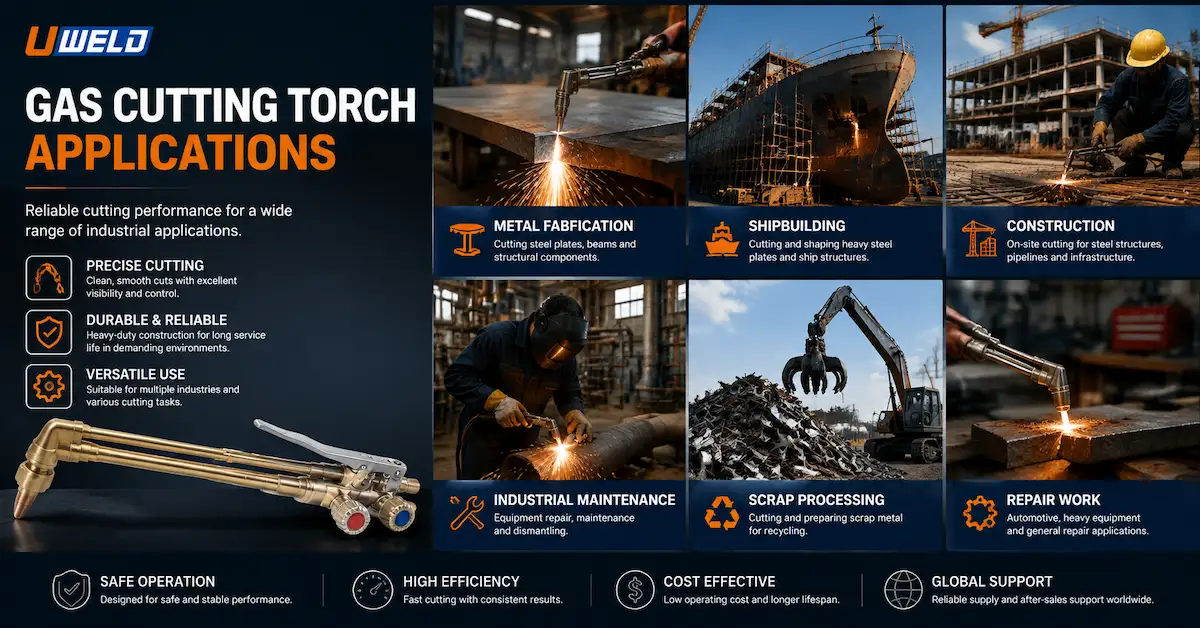
Examples include:
- Metal fabrication workshops;
- Construction maintenance;
- Equipment repair;
- Industrial cutting operations;
- Tool distribution channels.
An experienced OEM supplier should understand the application requirements before recommending a product configuration.
How Should Buyers Evaluate a Cutting Torch OEM Supplier?
Product Specification Control
The first step in supplier evaluation is confirming whether the supplier can clearly define the product.
Buyers should request:
| Evaluation Item | Buyer Questions |
|---|---|
| Product model | Is the model clearly identified? |
| Gas compatibility | Which fuel gases are supported? |
| Cutting application | What type of cutting work is suitable? |
| Connections | Are thread standards and fittings confirmed? |
| Accessories | Which nozzles or parts are compatible? |
| Product documents | Are specifications and instructions available? |
A reliable supplier should provide a clear product definition instead of relying only on product images.
Manufacturing Capability
A cutting torch manufacturer should demonstrate control over the production process.
Important areas include:
- Engineering design;
- Material preparation;
- Component processing;
- Assembly;
- Inspection;
- Packaging.
UWELD describes its manufacturing process as including engineering design, manufacturing, testing, assembly and global support. Buyers should still confirm the specific production and inspection process for the exact cutting torch model being purchased.
How to Choose the Right Cutting Torch for Different Applications
Hand Cutting Torch Applications
Hand cutting torches are commonly used for:
- Repair operations;
- Fabrication work;
- Construction projects;
- General metal cutting.
When selecting a hand cutting torch, buyers should consider:
- Torch weight;
- Handle design;
- Gas requirements;
- Cutting nozzle compatibility;
- Working environment.
UWELD provides different cutting torch products for gas cutting applications.
Heavy-Duty Industrial Cutting Applications
Heavy-duty cutting operations may require stronger equipment configurations.
Buyers should evaluate:
- Expected cutting frequency;
- Material thickness;
- Gas supply conditions;
- Nozzle selection;
- Operator requirements.
UWELD lists the NM250 Heavy Duty Cutting Torch as one example of a heavy-duty hand cutting torch product.
The correct choice depends on the actual application rather than simply selecting the largest product.
What Specifications Should Buyers Confirm Before Ordering?
Before placing an OEM order, buyers should prepare a detailed product specification.
| Specification | Why It Matters |
|---|---|
| Fuel gas type | Ensures the torch matches the intended application |
| Cutting capacity | Helps determine suitability for the target work |
| Torch structure | Affects operation and product positioning |
| Nozzle compatibility | Prevents accessory mismatch |
| Connection standard | Ensures market compatibility |
| Material requirements | Supports product durability expectations |
| Packaging requirements | Supports brand presentation |
| Product labeling | Ensures correct market identification |
| Inspection requirements | Maintains quality consistency |
A clear specification helps both buyer and supplier avoid misunderstandings during production.
Cutting Torch OEM Quality Control Process
Incoming Material Control
A professional OEM supplier should understand which materials and components require control.
Buyers may ask about:
- Material specifications;
- Component consistency;
- Supplier management;
- Incoming inspection procedures.
Assembly Process Control
Assembly consistency affects the final product.
Important considerations include:
- Assembly procedures;
- Component matching;
- Connection accuracy;
- Product identification.
Finished Product Inspection
Before shipment, buyers should understand what checks are performed.
Possible inspection areas include:
- Appearance;
- Function;
- Connection verification;
- Packaging completeness;
- Product identification.
Quality claims become more meaningful when they are connected to specific inspection processes.
How Does Cutting Torch OEM Customization Work?
A typical OEM cutting torch project usually follows several stages:
Requirement Confirmation
The buyer provides:
- Target market;
- Product application;
- Quantity;
- Branding requirements;
- Packaging needs.
Sample Evaluation
Before mass production, buyers should confirm:
- Product appearance;
- Model identification;
- Packaging;
- Required specifications.
Production Approval
After sample confirmation, both sides should maintain a clear reference for:
- Product version;
- Packaging design;
- Accessories;
- Documentation.
UWELD supports customized cooperation through its partner services.
OEM Cutting Torch Supplier vs Standard Product Supplier
| Factor | Standard Product Supplier | OEM Cutting Torch Supplier |
|---|---|---|
| Product selection | Existing models | Customized cooperation possible |
| Branding | Supplier branding | Buyer branding possible |
| Packaging | Standard packaging | Customized packaging |
| Product development | Limited | More cooperation opportunities |
| Long-term control | Depends on supplier | Requires specification management |
OEM is suitable for companies that want stronger product differentiation and control over their market offering.
Common Risks When Sourcing Cutting Torches
Choosing Only by Price
The lowest quotation may not represent the lowest total cost.
Buyers should compare:
- Product specification;
- Included accessories;
- Documentation;
- Packaging;
- Repeat-order stability.
Ignoring Gas Compatibility
Different gas applications may require different product configurations.
Buyers should clearly identify:
- Oxygen/fuel gas requirements;
- Torch application;
- Compatible components.
Approving Products Without Sample Review
Sample approval helps confirm:
- Actual product version;
- Packaging;
- Product consistency.
It reduces the risk of receiving products different from the original expectation.
How Should Buyers Compare Cutting Torch OEM Suppliers?
A supplier comparison should consider more than price.
| Comparison Factor | Evaluation Question |
|---|---|
| Manufacturing capability | Can the supplier control production? |
| Product knowledge | Can they explain application differences? |
| Quality control | Are inspection processes defined? |
| Customization | Can branding and packaging requirements be supported? |
| Communication | Can technical requirements be understood clearly? |
| Repeat orders | Can the approved product remain consistent? |
The best supplier is not necessarily the cheapest supplier. It is the partner that can consistently provide the required product solution.
What Information Should Be Included in an OEM Inquiry?
A detailed RFQ helps suppliers provide accurate proposals.
Buyers should include:
- Application;
- Fuel gas;
- Product type;
- Quantity;
- Target market;
- Packaging requirements;
- Branding requirements;
- Required documents.
For a complete gas cutting solution, buyers can review the UWELD gas cutting product range and submit project requirements through the contact page.
Frequently Asked Questions
What Should I Look for in a Cutting Torch OEM Supplier?
Look for product knowledge, manufacturing capability, quality control, customization support and stable repeat-order management.
Can a Cutting Torch OEM Supplier Customize Packaging?
Yes, many OEM suppliers support packaging and branding customization. Buyers should confirm available options before production.
How Do I Select the Right Cutting Torch Model?
Consider gas type, application, cutting requirements, nozzle compatibility and connection standards.
Does UWELD Provide OEM Cutting Torch Solutions?
UWELD provides gas cutting products and customized cooperation options. Buyers can discuss specific OEM requirements through its solution and partner channels.
Why Is Sample Approval Important for OEM Orders?
A sample confirms the actual product configuration before bulk production and provides a reference for future orders.
Are Cutting Torches Compatible With All Nozzles?
No. Compatibility depends on the torch model, nozzle design and gas system requirements.
What Is the Difference Between OEM and Wholesale Purchasing?
Wholesale usually focuses on existing products, while OEM includes branding, packaging and customized cooperation possibilities.
How Can Buyers Reduce OEM Quality Risks?
Use clear specifications, approved samples, controlled changes and documented quality requirements.
What Documents Should Buyers Request Before Ordering?
Request product specifications, instructions, identification information and any market-specific documents required.
How Can I Contact UWELD for Cutting Torch OEM Projects?
Prepare your application requirements, quantity, market information and customization needs, then contact UWELD through the contact page.
Conclusion
Selecting a cutting torch OEM supplier requires evaluating more than product price. Industrial buyers, distributors and private-label brands should consider product specifications, manufacturing capability, customization support, quality control and long-term supply stability before choosing a partner.
A reliable OEM supplier should help transform application requirements into a controlled product solution with consistent quality and clear communication. Explore the UWELD gas cutting product range, review available cutting torch solutions, and contact UWELD with your OEM requirements, target market and product expectations for a project-specific discussion.