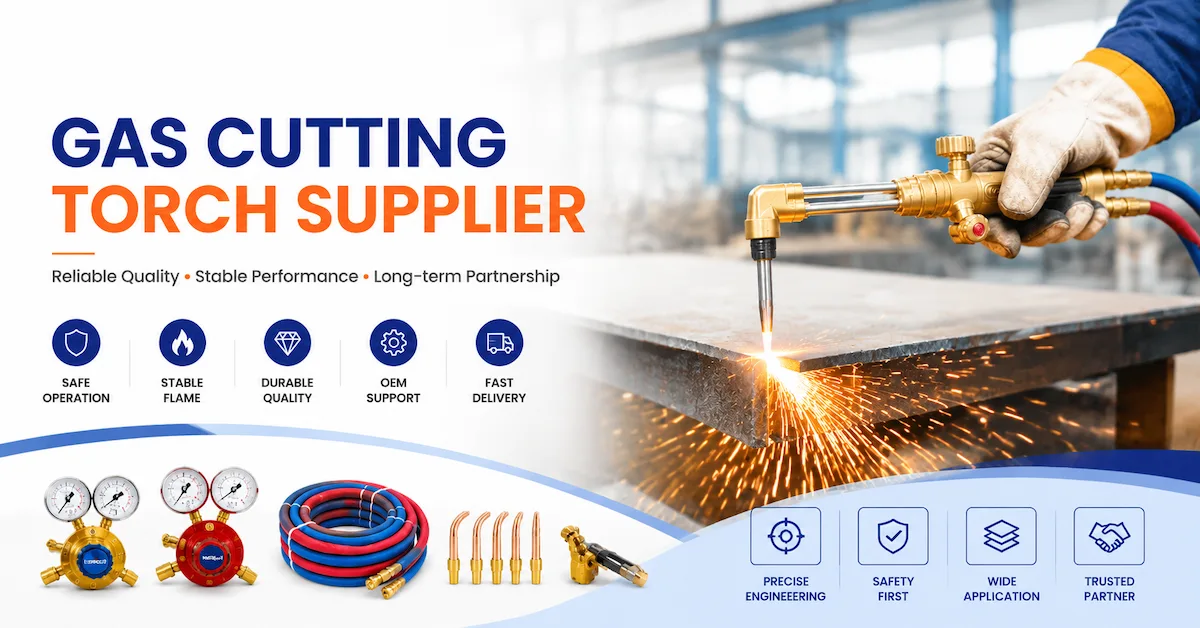


Quick Answer: A reliable welding and cutting equipment manufacturer should demonstrate control over product specifications, gas-system compatibility, welding torch interfaces, component quality, and repeat-order consistency. For industrial distributors and OEM buyers, the most important evidence includes approved technical drawings, model-specific performance ratings, sample inspections, applicable conformity documents, and traceable production batches. UWELD offers gas cutting, MIG/TIG welding, industrial heating, and related equipment for international wholesale and customization programs.
Global welding equipment importers face a problem that is easy to underestimate: products from the same supplier may belong to entirely different technical systems.
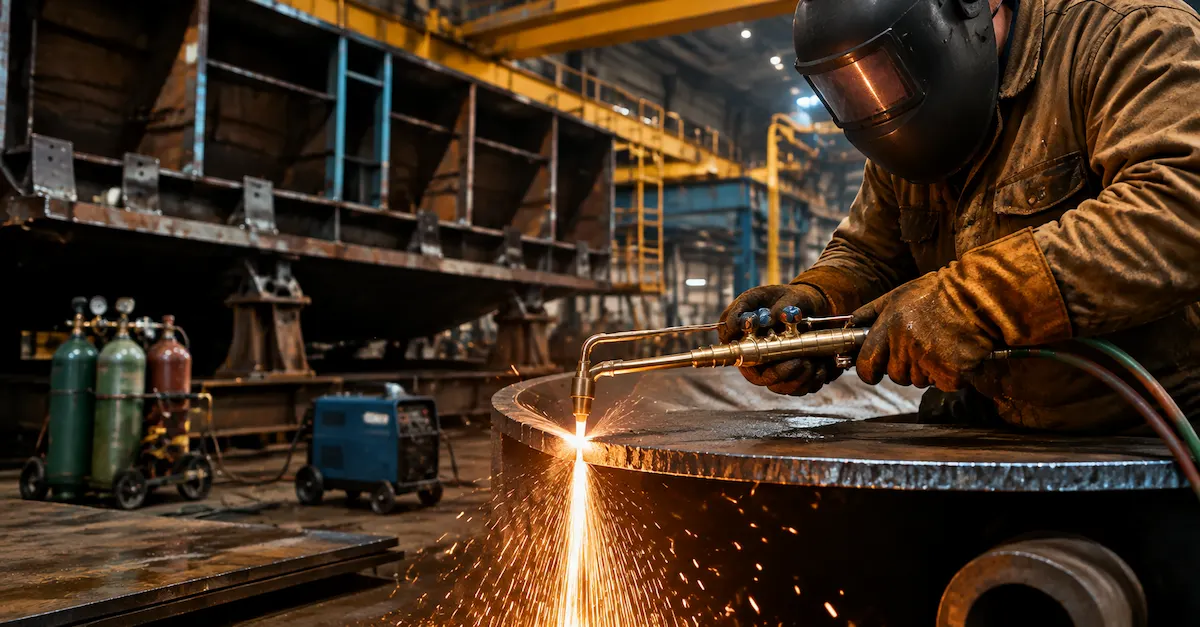
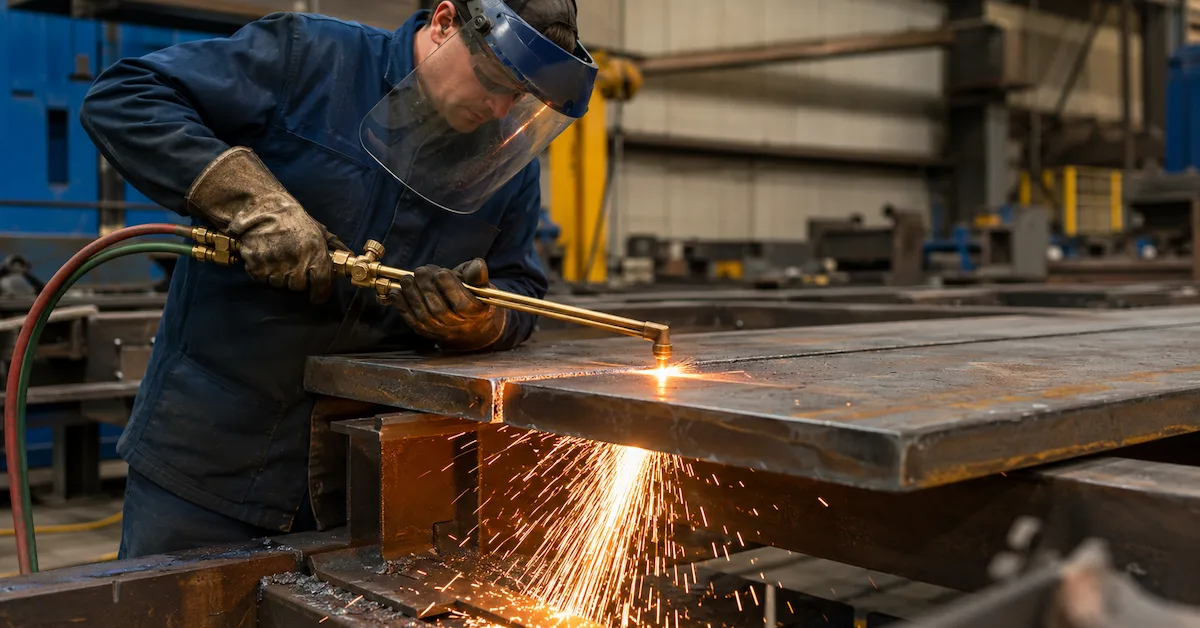
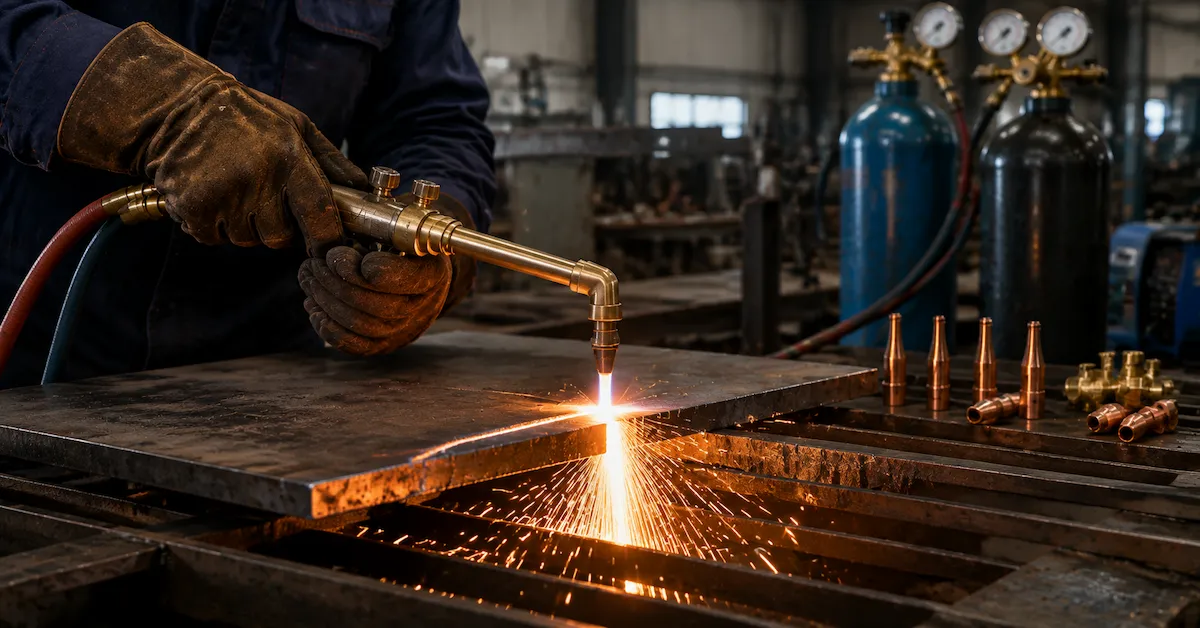
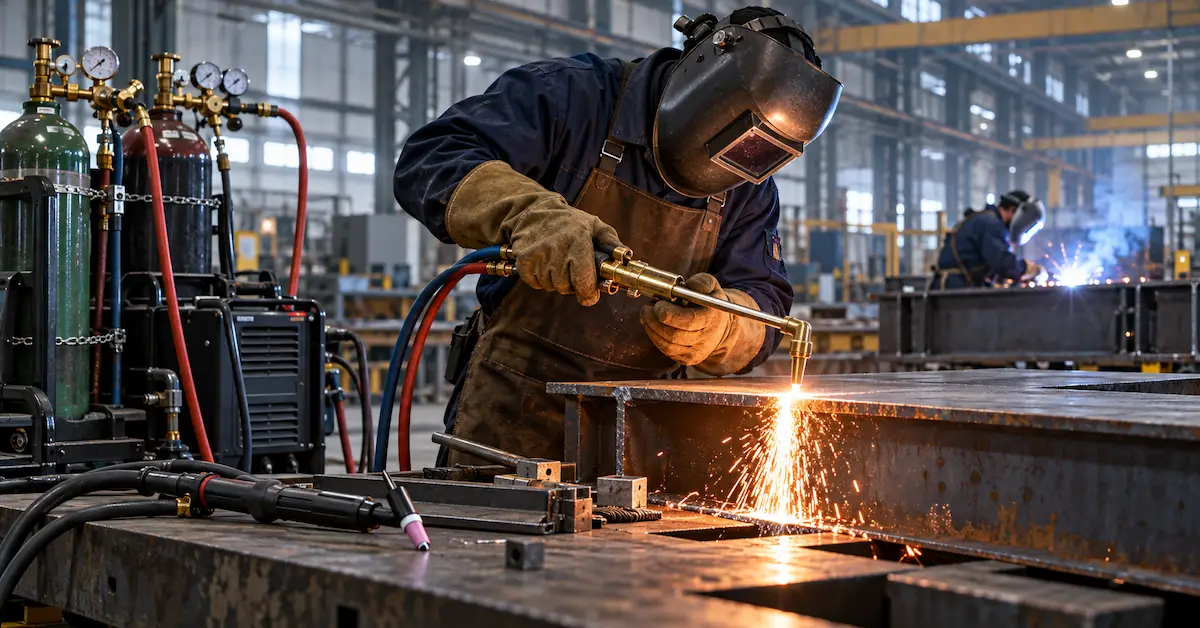
An oxy-fuel cutting torch requires specific gases, regulators, nozzles, and protective devices. A TIG welding torch depends on compatible power connections, cooling arrangements, and electrical controls. Complete welding and cutting kits require all included components to match an approved configuration.
When these requirements are not properly documented, distributors may experience incompatible accessories, product returns, inconsistent repeat shipments, and unnecessary after-sales costs.
This engineering sourcing guide explains how buyers can evaluate manufacturing capabilities, control technical risks, compare product specifications, and establish a consistent multi-category purchasing program.
Explore UWELD's welding and cutting equipment to review its product portfolio.
Key Takeaways
-
Technical compatibility comes first. Products should be evaluated against the entire equipment system rather than individual component appearance.
-
Manufacturing consistency requires evidence. Approved specifications, inspection records, and controlled component references help prevent variation between orders.
-
Different product families require different tests. Gas regulators, cutting nozzles, and TIG torches cannot be assessed using one generic inspection procedure.
-
OEM sourcing requires configuration control. Branding and packaging changes should not obscure technical specifications or safety requirements.
-
Total cost matters more than unit price. Freight, inspection, replacement parts, inventory, and customer support affect long-term purchasing economics.
What Technical Capabilities Should a Welding and Cutting Equipment Manufacturer Demonstrate?
A professional manufacturer should show how product requirements are translated into controlled specifications, manufacturing activities, inspection procedures, and final deliverables.
For international industrial buyers, the evaluation should cover four main dimensions.
Engineering Capability Comparison
| Evaluation Dimension | Technical Requirement | Evidence to Request | Purchasing Decision |
|---|---|---|---|
| Product engineering | Correct equipment design and intended application | Technical drawings and specifications | Does the product fit the intended task? |
| Manufacturing quality | Controlled materials, assembly, and component identification | Inspection criteria and sample records | Can the configuration be reproduced? |
| Functional verification | Appropriate testing for the equipment category | Model-specific test records | Are critical performance requirements verified? |
| Supply management | Stable product references, packaging, and delivery arrangements | BOM, revision control, order documentation | Can repeat orders remain consistent? |
A large factory or extensive catalog does not automatically establish strong performance in all four dimensions.
The manufacturer should be able to explain how the requirements apply to each product family.
UWELD's Manufacturing and Product Development Approach
UWELD, operated by Ningbo United Tools Co., Ltd., supplies industrial welding and cutting equipment, gas-control products, heating tools, and related accessories.
The company describes engineering cooperation, manufacturing capabilities, quality management, and OEM/ODM customization through its industrial solutions page.
For a specific order, buyers should connect these company-level capabilities to the actual product being purchased.
The most useful questions concern approved manufacturing specifications, relevant inspection methods, component sourcing controls, and technical responsibility for product changes.
How Do Different Equipment Categories Affect Technical Purchasing Requirements?
A multi-category supplier may simplify commercial coordination, but each equipment group has different operating principles and compatibility requirements.
UWELD's product portfolio includes Gas Cutting, Welding, Safety, Gas Heating, HVAC, and specialized gas-control equipment.
Product Category and Application Matrix
| Equipment Category | Main Product Types | Industrial Application | Critical Specifications |
|---|---|---|---|
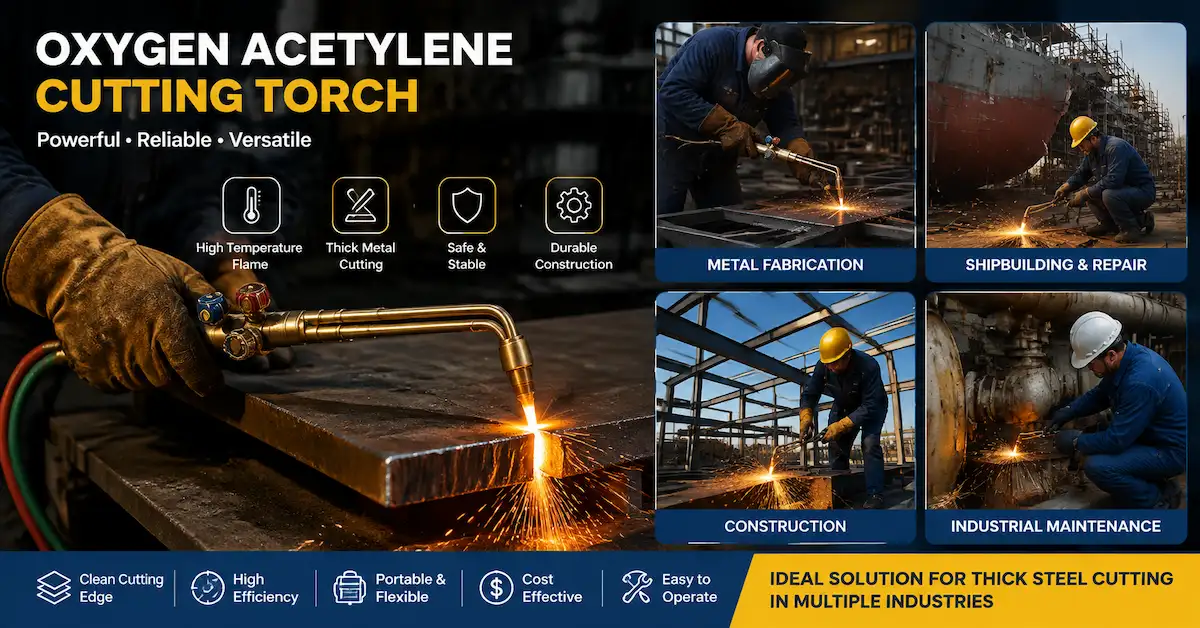
| Gas Cutting | Cutting torches, nozzles, regulators, welding and cutting kits | Steel fabrication, maintenance, construction | Fuel compatibility, nozzle size, connections |
| Welding | MIG torches, TIG torches, plasma cutting torches, accessories | Fabrication, production, equipment repair | Rated current, duty cycle, cooling, connectors |
| Gas Heating | Propane/MAPP torches, heating heads, burners | Brazing, heating, installation | Fuel gas, burner design, ignition |
| Welding Safety | Helmets, auto-darkening masks, face protection | Industrial welding protection | Filter characteristics and applicable standards |
| HVAC | Manifold gauges, brazing tools | Refrigeration service and installation | Pressure ratings, refrigerant compatibility |
| Gas Control | Pressure regulators, protective devices | Welding, cutting, heating | Gas approval, pressure range, flow performance |
The technical review should therefore be organized by product family rather than using one universal equipment checklist.
Which UWELD Models Illustrate the Most Important Specification Differences?
Comparing actual model characteristics helps buyers understand how technical approval should work.
Representative UWELD Product Specifications
| UWELD Model | Published Product Characteristics | Required Buyer Verification |
|---|---|---|
| 1C016-0045 | Heavy-duty cutting and welding outfit; catalog-listed oxygen-acetylene configuration | Complete BOM, gas connections, rated capacity |
| 1C005-0003 | Heavy-duty cutting torch with check-valve features | Fuel compatibility, cutting nozzle, connection |
| WP26 TIG Torch | Air-cooled, 200 A published rating, 13 ft cable, M16×1.5 connector, 2-pin socket | Duty cycle, machine interface, cooling conditions |
| H188 Oxygen Flashback Arrestor | Torch-mounted oxygen protective device with specified functions | Gas compatibility, flow, protective functions |
| 1C020-0033 | MAPP/propane hose torch with 5 ft hose and swirl flame | Approved fuel, hose, connection, application |
These characteristics are product-specific. They do not establish that different models or product categories can be used interchangeably.
Gas Cutting Equipment: Complete System Compatibility
The UWELD 1C016-0045 Heavy Duty Cutting and Welding Kit illustrates how the performance of a complete outfit depends on multiple components.
An earlier UWELD catalog configuration lists an oxygen-acetylene system with a 315FC torch handle, CA2460 cutting attachment, welding tips, a cutting tip, and a 4.5 m hose.
The same catalog lists welding and cutting capacities under specified configurations. These historical ratings should be reconfirmed against the latest technical datasheet rather than used as universal guarantees.
For an importer, the priority is establishing whether the current supplied configuration matches the application and approved component list.
TIG Welding Equipment: Electrical and Cooling Compatibility
The UWELD WP26 Air-Cooled TIG Torch is listed with a 200 A rating, a 13 ft cable, an M16×1.5 connector, and a 2-pin socket.
These specifications are useful but do not establish compatibility with every TIG welding machine.
Buyers should additionally verify power connections, control interface, rated duty cycle, consumables, and the required operating conditions.
Protective Devices: Function Must Match Application
The UWELD H188 Oxygen Flashback Arrestor is intended for a specified torch-side oxygen application.
Its protective functions must be evaluated against the actual gas system.
A flashback arrestor and a non-return valve perform different safety functions, even when a product combines both.
A matching connection alone does not prove the protective device is suitable.
What Enables Consistent Quality Across Welding and Cutting Equipment Batches?
Consistency begins with specification control rather than final visual inspection.
A manufacturer's quality system should be able to establish what was ordered, what was manufactured, what was inspected, and whether approved changes were implemented correctly.
1. Material and Component Identification
Different product families require different materials and components.
Gas-cutting equipment may use forged brass bodies, copper-alloy nozzles, metal tubing, and specialized valves.
TIG torches additionally require electrical conductors, cable assemblies, insulating components, and compatible connectors.
Buyers should request approved material or component specifications for the exact SKU.
2. Dimensional and Connection Verification
Interfaces are critical because small differences can make an otherwise functional component unusable.
Important dimensions may include regulator threads, nozzle seating geometry, torch connectors, hose fittings, and electrical interface details.
Inspection tolerances should be established through approved drawings and applicable standards.
There is no universal dimensional tolerance that should automatically be applied to every welding and cutting product.
3. Functional Testing
Functional testing should reflect the product's operating principle.
A regulator may require applicable gas-tightness and pressure-control verification.
A welding torch may require electrical continuity, cooling configuration, and assembly checks.
A gas cutting nozzle may require dimensional inspection and appropriate functional evaluation.
4. Production Revision Control
If a supplier changes a component, material, connection, or approved accessory, the change should be reviewed and documented.
This is particularly important for OEM products sold under a distributor's own brand.
Without controlled revisions, later shipments may no longer match the original approved sample.
Quality Verification Table
| Quality Level | Main Control | Evidence |
|---|---|---|
| Component approval | Materials and parts | Approved specifications |
| Dimensional approval | Connections and interfaces | Inspection measurements |
| Functional approval | Product-specific performance | Qualified test records |
| Assembly approval | Correct component installation | Assembly inspection |
| Final shipment approval | Packing, labeling, quantity | Final inspection report |
| Repeat-order approval | Revision and configuration consistency | Controlled SKU and BOM |
Engineering conclusion: Product consistency is not established merely by performing more inspections. It depends on clearly defined specifications, suitable verification methods, and controlled responses to deviations.
How Can Gas-System Compatibility Prevent Industrial Equipment Failures?
Gas control is particularly important for oxy-fuel welding and cutting equipment.
The regulator, hoses, torch, cutting nozzle, and protective devices must form a compatible system.
Key Gas-System Specifications
| Technical Parameter | Purchasing Question |
|---|---|
| Gas type | Is the equipment approved for oxygen, acetylene, propane, or another specified gas? |
| Inlet pressure | Does the regulator suit the intended supply? |
| Outlet range | Is the range appropriate for the approved equipment? |
| Flow capacity | Can the component support the required gas demand? |
| Connection | Are the thread and sealing arrangements correct? |
| Nozzle configuration | Is the tip approved for the torch and fuel? |
| Protective devices | Are the correct gas-specific functions provided? |
For example, an oxygen regulator must not automatically be substituted for an acetylene regulator.
Likewise, propane and acetylene cutting tips may have different preheating passages and approved torch arrangements.
A supplier's compatibility matrix can therefore be more valuable than a general statement that equipment is suitable for industrial use.
Standards and Safety Evidence
ISO 2503 covers relevant pressure regulators for gas welding, cutting, and allied processes, while ISO 5172 addresses applicable gas welding and cutting blowpipes.
For U.S. workplaces, OSHA 29 CFR 1910.253 provides oxygen-fuel gas welding and cutting requirements.
These references help establish technical review criteria but do not independently certify every UWELD product.
Buyers must request current model-specific conformity evidence where applicable.
How Should Manufacturers Control MIG and TIG Torch Performance?
Electrical welding tools require a different engineering approach from oxy-fuel equipment.
A welding torch's published current rating does not independently establish its performance during every working cycle.
Rated Current and Duty Cycle
The rated current must be considered alongside the conditions under which it applies.
Important information includes duty cycle, cooling arrangement, cable configuration, and the intended welding process.
For example, a water-cooled torch may support a different intended workload from an air-cooled configuration, but actual capability must be verified for the specific models.
Connector and Control Compatibility
A TIG torch may require a specific power connection and control plug.
MIG torches may use Euro connectors or other machine-specific interfaces.
The distributor should document the intended welding machine, connector type, cable length, and consumable system before ordering.
Repeat-Order Testing
For a welding torch purchasing program, the approved specification should identify the cable assembly, connector, control wiring, cooling design, and relevant replacement parts.
Any supplier change to these components should be reviewed before a repeat order is accepted.
This approach reduces the risk of customers receiving products that appear identical but cannot connect to their equipment.
How Can Quality Control Reduce Total Procurement Costs?
Equipment sourcing cost includes more than the factory quotation.
When components are incorrect or inconsistent, the buyer may face inspection, returns, replacements, customer support, and inventory losses.
Total Sourcing Cost Formula
Total Sourcing Cost = Purchase Price + Freight + Inspection + Inventory + Replacement Parts + After-Sales Costs
The economic benefit of one manufacturer or supplier configuration should be calculated from actual quotations and operating records.
Procurement Cost and Quality Risk Matrix
| Cost Factor | Potential Risk | Control Method |
|---|---|---|
| Product pricing | Comparing incomplete configurations | Standardize the RFQ |
| Technical mismatch | Incorrect torch or regulator connection | Approve compatibility matrix |
| Batch variation | Different components in repeat shipments | Control drawings and BOM |
| Quality claims | Insufficient verification evidence | Request inspection records |
| Inventory | Duplicate or slow-moving SKUs | Consolidate compatible product families |
| After-sales | Unavailable replacement accessories | Establish spare-parts references |
| Logistics | Separate shipments and documentation | Compare consolidation options |
Is Buying From One Manufacturer Always Cheaper?
No.
Consolidated purchasing may reduce supplier coordination and simplify shipment planning, but savings are not guaranteed.
The manufacturer must still meet the required technical specifications, product quality, pricing, and delivery conditions.
For example, combining gas cutting equipment and TIG welding accessories in one shipment may simplify logistics while adding no benefit if one product family fails the buyer's compatibility requirements.
The correct strategy is to consolidate only technically approved products.
How Does Order Volume Affect Quality-Control Requirements?
As purchase volume grows, the consequences of configuration errors become larger.
A mistake affecting one sample is easier to resolve than the same problem affecting a major distribution shipment.
Procurement Stages and Recommended Controls
| Purchasing Stage | Technical Requirement | Main Objective |
|---|---|---|
| Sample order | Confirm product suitability | Avoid selecting incompatible equipment |
| Pilot order | Verify approved configurations | Establish production consistency |
| Regular wholesale orders | Monitor quality and revisions | Maintain repeatable supply |
| OEM expansion | Control branding and product specifications | Support long-term product development |
Sample Qualification
The buyer should obtain representative products and current technical data.
Sample approval should include all relevant connections, supplied accessories, and applicable functional checks.
Pilot Production
A pilot order can help determine whether the supplied products match approved samples and drawings.
Any differences should be documented before a larger order is released.
Repeat-Order Monitoring
For recurring supply, important performance indicators include defect records, compatibility complaints, on-time delivery, component revisions, and spare-parts availability.
Actual production and quality metrics should be collected rather than assumed.
How Can Buyers Qualify a Welding and Cutting Equipment Manufacturer in Three Steps?
A structured evaluation can simplify manufacturing partner selection.
Step 1: Define Technical and Application Requirements
Identify the equipment categories, target industries, required performance, destination markets, and critical connection standards.
Decision rule: Do not shortlist products that lack confirmed application suitability.
Step 2: Verify Manufacturing and Quality Evidence
Review current technical documents, representative samples, materials, component compatibility, and applicable inspection procedures.
Decision rule: Approve only configurations with sufficient evidence to support the purchasing specification.
Step 3: Evaluate Commercial and Supply Reliability
Compare complete quotations, MOQ, lead times, packaging, replacement support, quality responsibilities, and OEM terms.
Decision rule: Select a sourcing program that offers the best verified combination of technical fit, consistency, and total purchasing value.
For available models and product categories, review the UWELD Product Center.
Practical Sourcing Scenario: Standardizing Equipment Across Multiple Distributor Product Lines
Consider an industrial equipment importer serving metal fabrication workshops, construction contractors, and maintenance businesses.
The importer wants to expand its catalog to include cutting torches, gas regulators, TIG torches, and complete welding and cutting kits.
Initially, the purchasing team treats all products as one broad equipment category.
This is an illustrative procurement scenario, not a documented UWELD customer case or a claim of measured performance improvement.
The Purchasing Challenge
The importer discovers that different products require different connection standards and technical approval procedures.
Some customers use oxy-acetylene cutting systems, while others require particular TIG torch connections and control configurations.
The importer also wants to ensure that repeat orders contain the same approved components.
The Recommended Engineering Approach
First, separate technical product families. Oxy-fuel gas-control equipment and electrical welding tools receive different approval checklists.
Second, create controlled product specifications. Every SKU records its interfaces, relevant ratings, required accessories, and inspection criteria.
Third, approve representative samples. Samples are checked against the intended customers' equipment requirements.
Fourth, establish revision controls. Proposed changes to connections, internal components, or supplied accessories require approval.
Expected Commercial Value
The process can improve product identification, reduce compatibility uncertainty, and make repeat orders easier to verify.
Any reduction in returns, defects, or sourcing costs would need to be measured using actual purchasing records.
The central lesson is that technical standardization should precede large-scale purchasing consolidation.
How Does UWELD Support OEM/ODM and Wholesale Equipment Programs?
UWELD describes both UWELD-branded distribution cooperation and customized manufacturing services.
Depending on the project, OEM/ODM requirements may include product identification, packaging, appearance, accessory configurations, or engineering modifications.
A successful custom project should begin with technical requirements rather than branding alone.
Recommended OEM Procurement Workflow
| Stage | Main Activity | Expected Deliverable |
|---|---|---|
| Requirements | Define application and target market | Technical requirement sheet |
| Configuration | Select approved components | Product specification and BOM |
| Development | Review customization feasibility | Approved design proposal |
| Sample approval | Evaluate representative products | Sample approval record |
| Quality planning | Establish inspection requirements | Quality acceptance plan |
| Production | Manufacture approved configuration | Controlled production order |
| Shipment | Verify labels, documents, quantities | Final shipment package |
| After-sales | Manage product feedback and replacement parts | Support and revision records |
Changes involving gas pressure control, safety devices, or electrical interfaces should receive qualified technical review.
UWELD's Solutions page explains its engineering cooperation and customization positioning, while the Partners page describes distributor collaboration.
MOQ and Lead-Time Considerations
UWELD's published FAQs indicate that MOQ depends on the product and customization requirements.
Stock products may have shorter lead times than customized configurations, but exact schedules should be confirmed for the order.
A multi-category RFQ should request separate quantities, technical configurations, and lead times for each product family.
What Should an Industrial Buyer Include in the RFQ?
A well-prepared quotation request helps a manufacturer identify the exact products and commercial conditions required.
Recommended RFQ Checklist
| RFQ Field | Buyer Information |
|---|---|
| Company type | Distributor, importer, OEM brand, industrial end user |
| Target market | Destination countries and industries |
| Product categories | Gas cutting, welding, heating, safety |
| Product models | Exact UWELD SKU or required configuration |
| Technical ratings | Pressure, current, duty cycle, gas compatibility |
| Connections | Gas fittings, electrical interfaces, hose specifications |
| Application | Intended work and operating conditions |
| Quality requirements | Tests, drawings, inspection criteria |
| Documentation | Applicable standards and required certificates |
| Accessories | Consumables, replacement parts, packaging |
| OEM requirements | Logo, labels, customization |
| Commercial requirements | Quantity, delivery schedule, trade terms |
A detailed RFQ allows technical specifications and quotations to be compared on an equivalent basis.
For multi-category sourcing, samples, OEM development, or distributor cooperation, contact UWELD to request a technical review and product-specific quotation.
Frequently Asked Questions About Welding and Cutting Equipment Manufacturers
1. What does a welding and cutting equipment manufacturer produce?
Depending on its capabilities, a manufacturer may offer welding torches, cutting torches, gas regulators, cutting nozzles, welding and cutting kits, heating equipment, safety accessories, and related products.
2. How can buyers verify a manufacturer's technical capability?
Request current product drawings, specifications, sample inspection results, applicable technical documents, and evidence of relevant manufacturing or quality-control procedures.
3. Does UWELD supply both oxy-fuel and MIG/TIG equipment?
Yes. UWELD's published product range includes gas cutting equipment, MIG/TIG welding torches, related accessories, heating tools, and safety products.
4. Why is component compatibility important?
Incorrect gas connections, cutting nozzles, welding torch connectors, or accessories can prevent proper installation and create operating or safety risks. Compatibility must be confirmed for the complete equipment system.
5. What is the difference between manufacturing quality and product certification?
Manufacturing quality concerns the control and consistency of production. Product certification concerns conformity to applicable requirements within a defined scope. One does not automatically establish the other.
6. Can one manufacturer supply several equipment categories?
Yes, provided the supplier can deliver products meeting the buyer's specifications. However, each product family should undergo appropriate technical and quality evaluation.
7. How can distributors prevent repeat-order differences?
Use approved specifications, controlled BOMs, identified product revisions, representative samples, and documented inspection criteria.
8. Is consolidated welding equipment sourcing always more economical?
No. It can reduce coordination and logistics complexity, but the actual result depends on product prices, quality, freight, inventory, and after-sales requirements.
9. Does UWELD offer OEM/ODM welding equipment?
UWELD supports customization inquiries involving branding, packaging, and feasible product specifications. Available options, MOQ, and lead times should be confirmed for each project.
10. How can international buyers request a wholesale quotation?
Provide the equipment categories, target applications, models, technical specifications, quantity, destination market, and customization requirements through the UWELD contact page.
Conclusion
Choosing a welding and cutting equipment manufacturer requires an engineering-based evaluation of product specifications, component compatibility, manufacturing controls, and long-term supply capabilities.
For industrial distributors and OEM buyers, reliable sourcing begins with clear technical requirements and continues through sample approval, batch inspection, revision control, and repeat-order management.
A manufacturer offering multiple welding and cutting product categories can simplify purchasing coordination, but every equipment family must still meet its own technical and quality requirements.
UWELD provides professional gas cutting tools, MIG/TIG welding products, heating equipment, protective accessories, and related industrial solutions for international markets.
Its portfolio allows buyers to evaluate multiple product categories while discussing wholesale supply, engineering cooperation, and OEM/ODM projects.
To develop a reliable equipment sourcing program, explore UWELD Products, review the company's industrial manufacturing solutions, or contact UWELD to request current specifications, sample information, and a quotation tailored to your application.