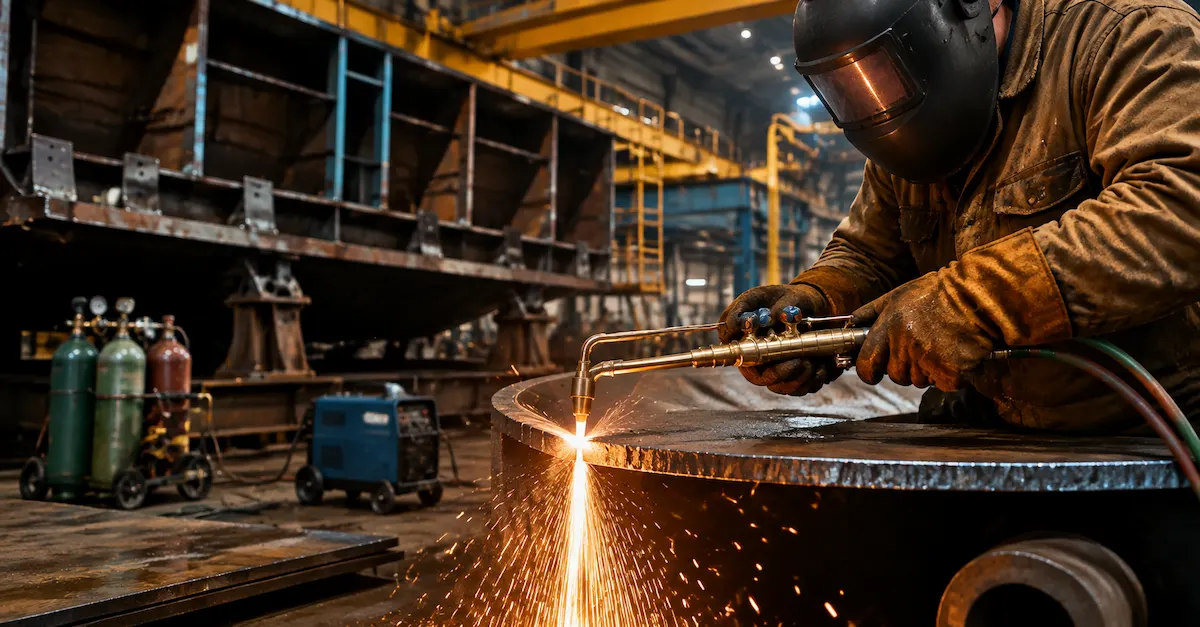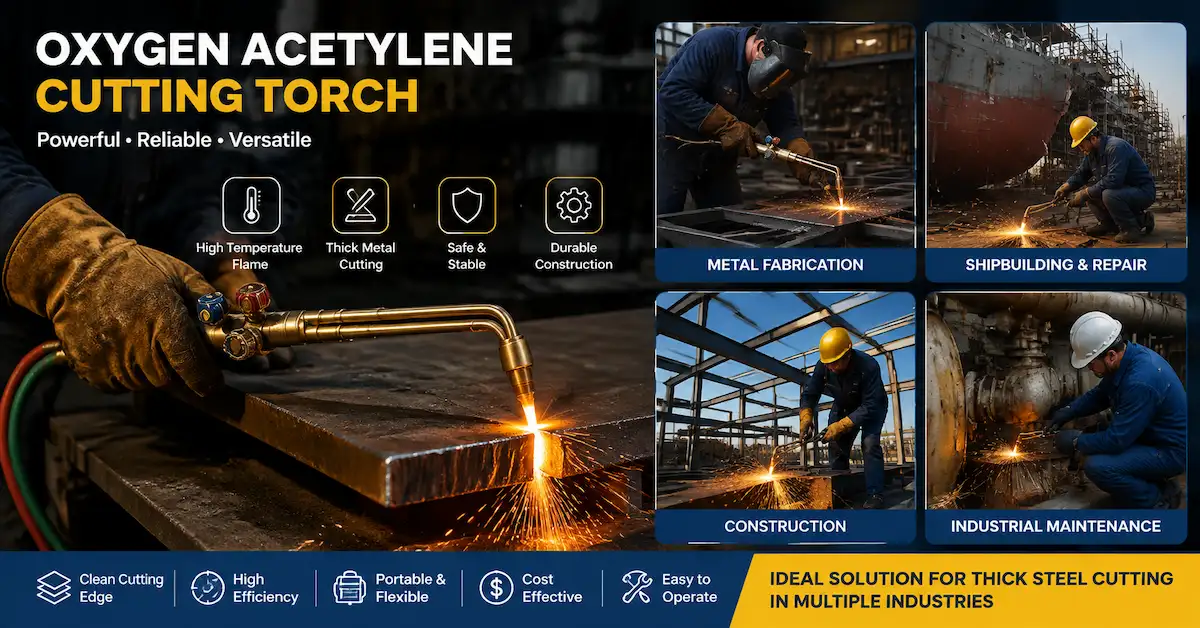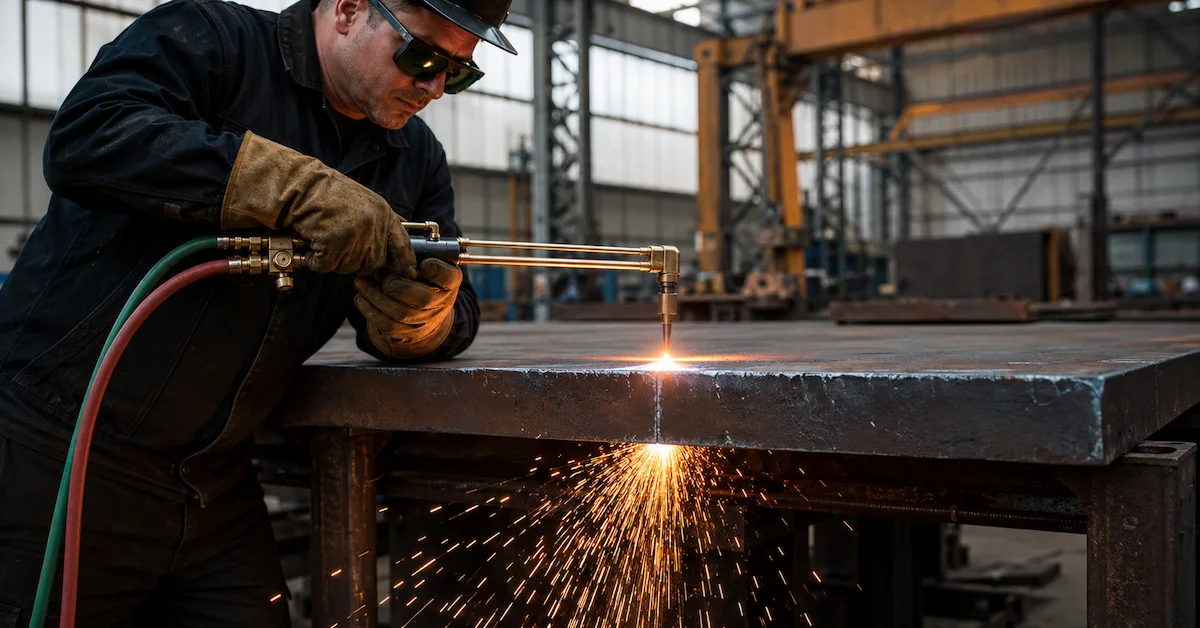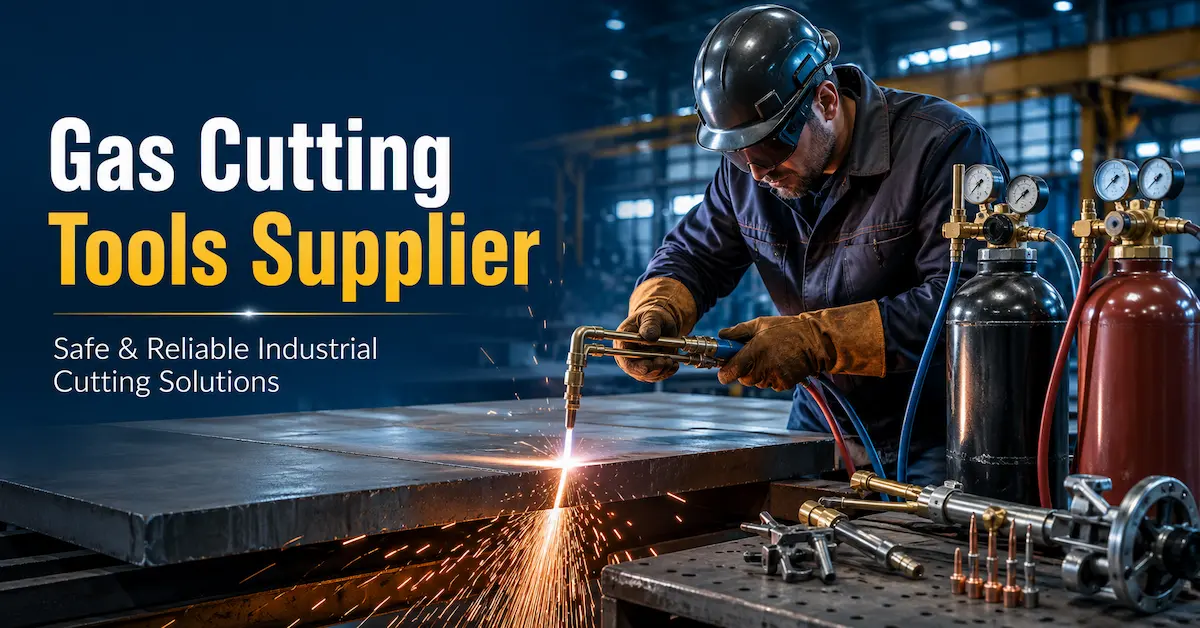


An oxy acetylene cutting torch is a gas cutting tool that uses oxygen and acetylene to create a high-temperature flame for cutting steel and other ferrous metals.
The torch combines two functions:
- A preheating flame to raise the metal temperature
- A cutting oxygen jet to oxidize and remove molten metal
For industrial buyers, selecting the right oxy acetylene cutting torch requires more than checking the product appearance. Buyers should evaluate:
- Cutting capacity
- Torch construction
- Gas compatibility
- Cutting tip selection
- Regulator matching
- Safety components
- Quality control
- Spare parts availability
- Supplier capability
A reliable supplier should provide a complete cutting solution instead of only supplying the torch body.
UWELD provides professional welding and cutting solutions including gas cutting torches, regulators, hoses, accessories, and OEM solutions. Buyers can explore the UWELD product range or discuss sourcing requirements through UWELD solutions.
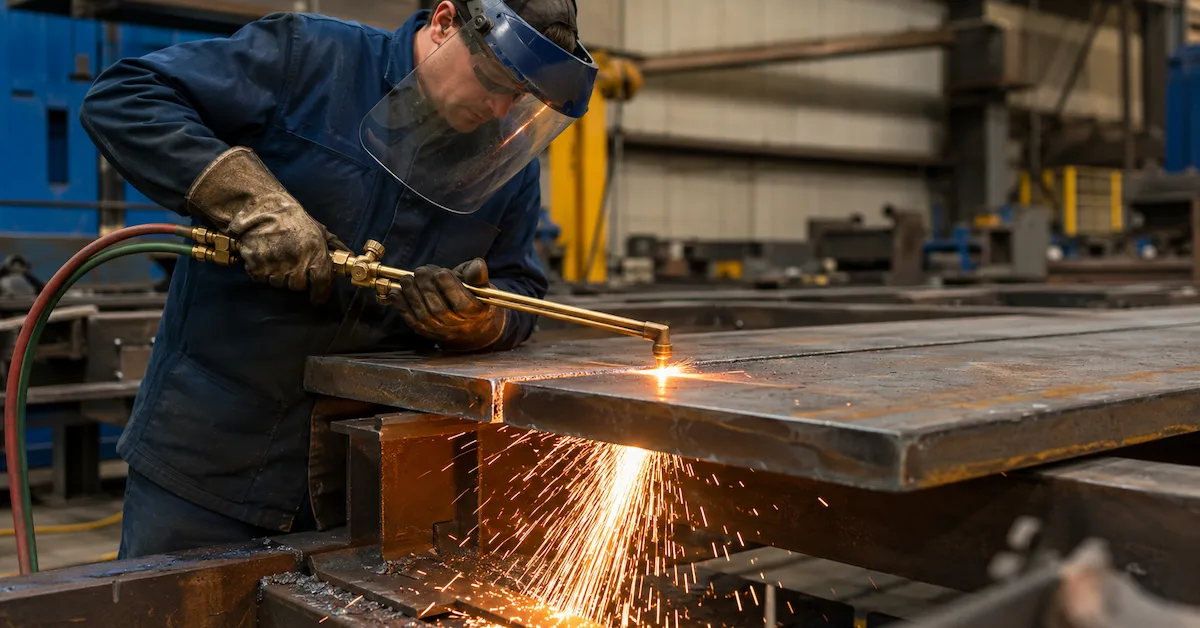
What Is an Oxy Acetylene Cutting Torch?
An oxy acetylene cutting torch is one of the most widely used oxy-fuel cutting tools in metal processing industries.
It is commonly used for:
- Steel plate cutting
- Metal fabrication
- Ship repair
- Construction
- Industrial maintenance
- Equipment repair
The system uses:
- Oxygen gas
- Acetylene gas
- Cutting torch
- Cutting tip
- Regulators
- Gas hoses
The torch mixes oxygen and acetylene to create a controlled heating flame. After the metal reaches the required ignition temperature, a high-pressure oxygen stream cuts through the heated material.
Unlike some automated cutting systems, oxy acetylene cutting offers:
- High portability
- Flexible operation
- Low equipment complexity
- Suitability for field work
- Ability to cut thicker steel sections
For many industrial environments, it remains an important cutting solution.
How Does an Oxy Acetylene Cutting Torch Work?
Understanding the working principle helps buyers choose suitable equipment.
Preheating Flame Stage
The first step is heating the steel surface.
The torch mixes oxygen and acetylene to produce a flame that heats the metal until it reaches the required temperature.
The preheating flame affects:
- Ignition efficiency
- Cutting stability
- Gas consumption
- Cutting speed
A stable flame requires:
- Correct gas pressure
- Proper tip selection
- Good valve control
- Clean gas passages
Cutting Oxygen Stage
After preheating, the operator activates the cutting oxygen lever.
The oxygen jet:
- Oxidizes the heated metal
- Creates molten material
- Removes the metal from the cutting path
The cutting oxygen flow directly influences:
- Cutting speed
- Edge quality
- Material thickness capability
Complete Cutting Process
The basic process is:
- Oxygen and acetylene enter the torch
- Gas flow is adjusted through valves
- Preheating flame heats the steel
- Cutting oxygen stream starts
- Oxidized metal is removed
- A continuous cutting path is created
Because the process depends on multiple factors, torch, tip, regulator, and hose selection must be matched correctly.
Main Components of an Oxy Acetylene Cutting Torch
A complete oxy acetylene system includes several important components.
Torch Body
The torch body controls gas mixing and operator handling.
Important factors:
- Material quality
- Internal gas passage design
- Valve structure
- Balance and ergonomics
A professional torch should provide smooth operation and reliable gas control.
Cutting Tip
The cutting tip is one of the most important components.
It affects:
- Flame characteristics
- Cutting thickness
- Gas consumption
- Cutting quality
Buyers should confirm:
- Tip series
- Fuel gas compatibility
- Cutting range
- Replacement availability
A wrong tip can reduce performance even when the torch itself is high quality.
Valves
Valves control:
- Oxygen flow
- Acetylene flow
- Cutting oxygen operation
Quality valves should provide:
- Smooth adjustment
- Reliable sealing
- Stable performance
- Long service life
Regulators
Regulators control gas pressure from cylinders.
The buyer should confirm:
- Oxygen regulator specification
- Acetylene regulator specification
- Pressure range
- Connection standards
A torch cannot perform correctly without proper pressure control.
Gas Hoses
Hoses deliver gas from cylinders to the torch.
Important considerations:
- Pressure rating
- Length
- Flexibility
- Connection compatibility
- Safety markings
Oxy Acetylene Cutting Torch Types
Different users require different configurations.
Standard Oxy Acetylene Cutting Torch
Suitable for:
- General fabrication
- Workshops
- Repair operations
Advantages:
- Flexible use
- Easy maintenance
- Wide application range
Heavy Duty Oxy Acetylene Cutting Torch
Designed for:
- Thick steel cutting
- Shipyards
- Heavy fabrication
- Industrial maintenance
Key features:
- Stronger construction
- Higher cutting capacity
- Better durability
For heavy industrial users, reliability is usually more important than initial purchase price.
Combination Welding and Cutting Torch
Combination systems allow both welding and cutting functions.
Common users:
- Maintenance teams
- Small workshops
- Mobile repair services
Advantages:
- Multi-purpose operation
- Reduced equipment investment
- Easier transportation
How to Choose the Right Oxy Acetylene Cutting Torch?
Select Based on Material Thickness
Material thickness determines the required torch and tip configuration.
| Application | Recommended Configuration |
|---|---|
| Thin steel sheet | Standard torch |
| Medium steel plate | Industrial torch |
| Thick steel plate | Heavy-duty torch |
Buyers should provide actual working conditions instead of only asking for maximum cutting thickness.
Select Based on Application Environment
| Industry | Main Requirement |
| Fabrication workshop | Flexible operation |
| Shipbuilding | Heavy-duty performance |
| Construction | Portable design |
| Maintenance | Easy handling |
Select Based on Gas System
Confirm:
- Oxygen supply
- Acetylene pressure
- Connection standards
- Local market requirements
Different markets may use different fittings and specifications.
Oxy Acetylene Cutting Torch vs Other Cutting Methods
| Cutting Method | Advantages | Typical Application |
| Oxy acetylene cutting | Portable, suitable for thick steel | Fabrication and repair |
| Plasma cutting | Faster for many thin materials | Precision cutting |
| Laser cutting | High accuracy | Automated production |
Oxy acetylene remains valuable where portability, flexibility, and thick-material cutting are important.
What Should Buyers Check Before Purchasing?
Gas Compatibility
Confirm:
- Fuel gas type
- Pressure requirements
- Tip compatibility
Incorrect gas configuration can create performance and safety problems.
Cutting Tip Availability
For distributors, replacement tips are essential.
Check:
- Availability
- Cost
- Local customer demand
- Compatibility
Connection Standards
Confirm:
- Hose connections
- Regulator connections
- Thread standards
Safety Features
Professional systems may require:
- Flashback arrestors
- Check valves
- Proper pressure control
Quality Control of Oxy Acetylene Cutting Torches
A reliable supplier should have a structured quality-control process.
Material Inspection
Check:
- Brass components
- Copper parts
- Valves
- Seals
Material consistency affects product durability.
Machining Inspection
Important checks:
- Thread accuracy
- Gas passages
- Component dimensions
Precision machining improves sealing and performance.
Leakage Testing
Gas equipment requires careful leakage inspection.
Testing may include:
- Valve sealing
- Connection inspection
- Gas-flow testing
Flame Testing
Functional testing verifies:
- Flame stability
- Gas mixing
- Cutting performance
Final Inspection
Before shipment, inspect:
- Product appearance
- Accessories
- Packaging
- Labels
- Quantity
OEM Oxy Acetylene Cutting Torch Solutions
Many distributors and brands require customized products.
OEM options may include:
- Logo printing
- Product marking
- Custom packaging
- Manuals
- Labels
- Tool kits
- Accessories
OEM solutions help buyers:
- Build brand recognition
- Improve market differentiation
- Increase product value
A professional OEM supplier should confirm:
- Product specifications
- Packaging requirements
- Minimum order quantity
- Sample approval
- Production schedule
Common Mistakes When Buying Oxy Acetylene Cutting Torches
Choosing Only Based on Price
Low-cost products may result in:
- Poor materials
- Short lifespan
- More complaints
Ignoring Tip Compatibility
The torch and cutting tip must be correctly matched.
Not Checking Spare Parts
Distributors should plan for:
- Tips
- Valves
- Seals
- Accessories
Skipping Sample Testing
Samples help verify:
- Performance
- Compatibility
- Packaging
Ignoring Documentation
Importers should confirm:
- Product specifications
- Manuals
- Safety information
- Shipping documents
Applications of Oxy Acetylene Cutting Torches
Metal Fabrication
Used for:
- Steel cutting
- Structural preparation
- Workshop processing
Shipbuilding
Used for:
- Steel plate cutting
- Repair
- Maintenance
Construction
Used for:
- Structural cutting
- Field operations
Automotive and Machinery Repair
Used for:
- Component removal
- Repair work
- Maintenance
Industrial Maintenance
Used for:
- Equipment servicing
- Emergency cutting
Why Choose UWELD for Oxy Acetylene Cutting Solutions?
UWELD supports global buyers looking for reliable welding and cutting solutions.
The company can support:
- Oxy acetylene cutting torches
- Gas cutting equipment
- Regulators
- Hoses
- Cutting accessories
- OEM projects
- Distributor supply
Buyers can review products through the UWELD product center, learn more about the company through the About UWELD page, or submit requirements through UWELD solutions.
FAQ: Oxy Acetylene Cutting Torch
What is an oxy acetylene cutting torch?
It is a gas cutting tool using oxygen and acetylene to heat and cut steel materials.
What materials can an oxy acetylene torch cut?
It is mainly used for cutting carbon steel and other suitable ferrous metals.
How thick can an oxy acetylene cutting torch cut?
The cutting range depends on the torch model, tip size, gas pressure, and operating conditions.
What is the difference between oxy acetylene and plasma cutting?
Oxy acetylene is highly portable and suitable for thick steel, while plasma cutting is often faster for thinner materials.
Why are cutting tips important?
Tips control flame characteristics, cutting speed, and material capability.
Can oxy acetylene torches be customized?
Yes. OEM options include branding, packaging, manuals, and product kits.
What should buyers check before importing?
Check specifications, compatibility, documentation, samples, quality control, and supplier capability.
Do distributors need spare parts?
Yes. Tips, valves, seals, and accessories support after-sales service.
How do I choose a supplier?
Evaluate product quality, technical support, OEM ability, and long-term supply stability.
How can I contact UWELD?
Buyers can contact UWELD through the solutions page for product selection and cooperation.
Conclusion
Choosing the right oxy acetylene cutting torch requires understanding both the technical requirements of the cutting process and the practical needs of the end user.
For distributors, importers, and industrial buyers, the most important factors include:
- Correct torch selection
- Gas compatibility
- Cutting-tip matching
- Quality manufacturing
- Reliable testing
- Spare-parts availability
- OEM capability
- Long-term supplier support
A high-quality oxy acetylene cutting torch is not only a product purchase. It is part of a complete cutting solution that includes performance, safety, maintenance, and supply reliability.
Working with a professional supplier helps buyers reduce sourcing risks and provide better solutions to their customers.
UWELD supports global buyers with professional welding and cutting products, OEM cooperation, and long-term supply solutions.
Explore the UWELD product center or contact UWELD solutions to discuss your oxy acetylene cutting requirements.