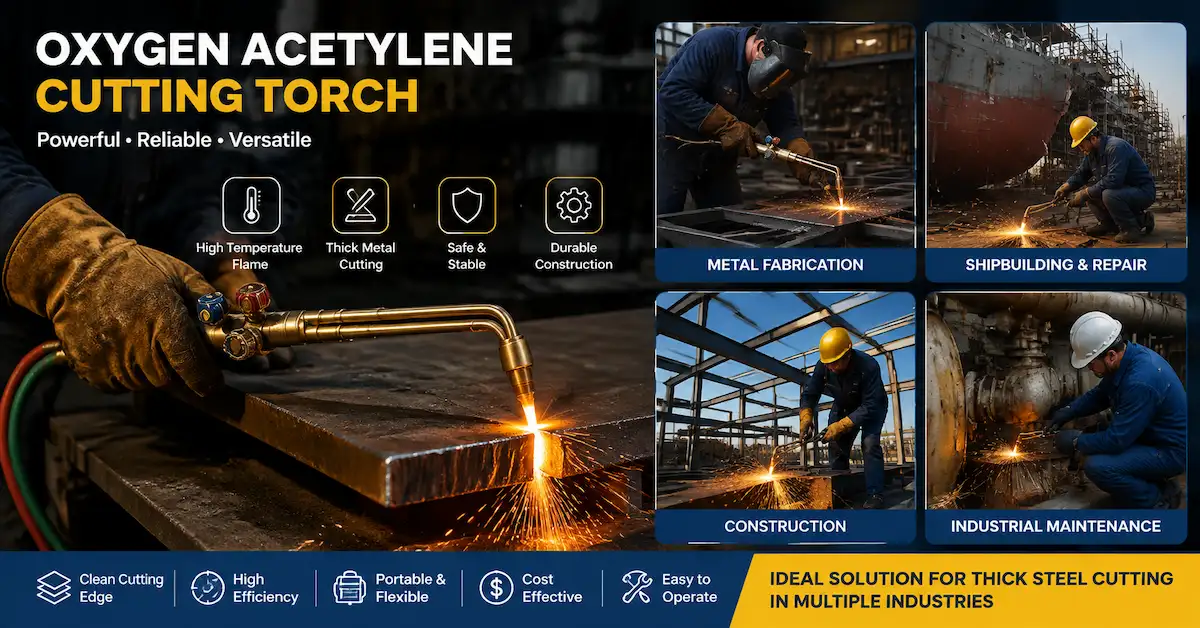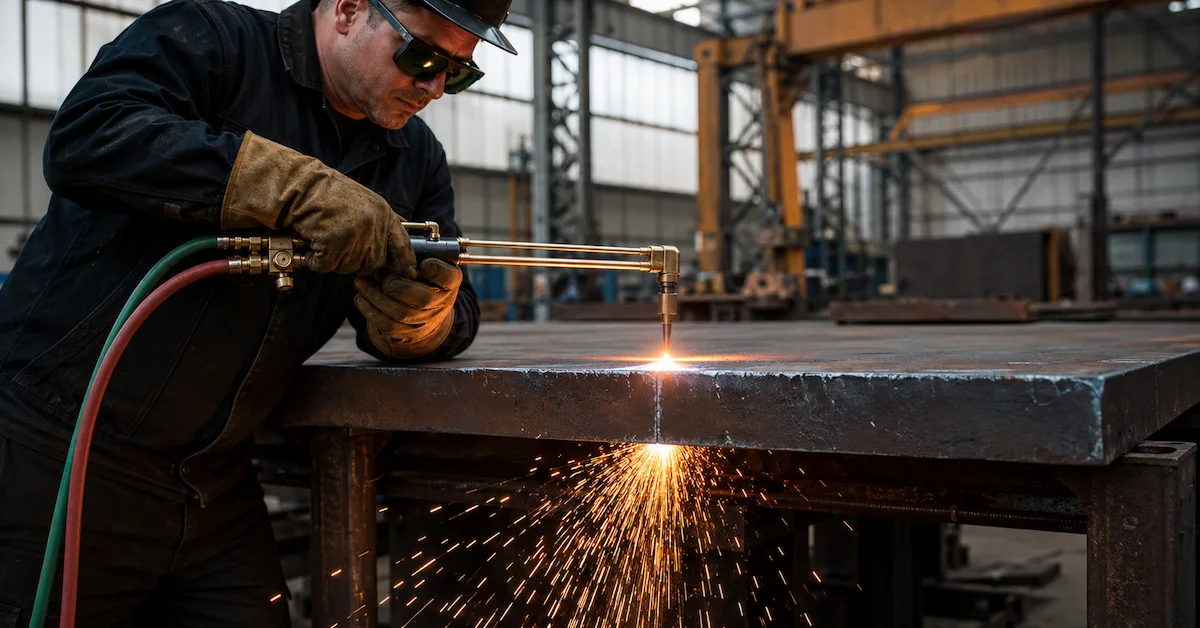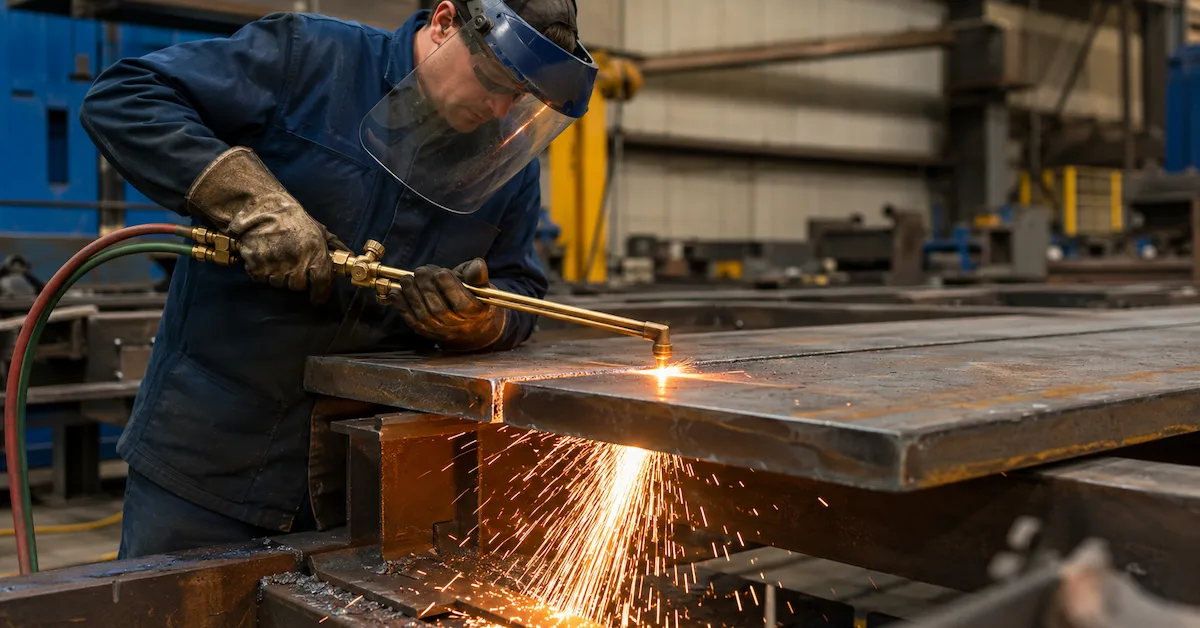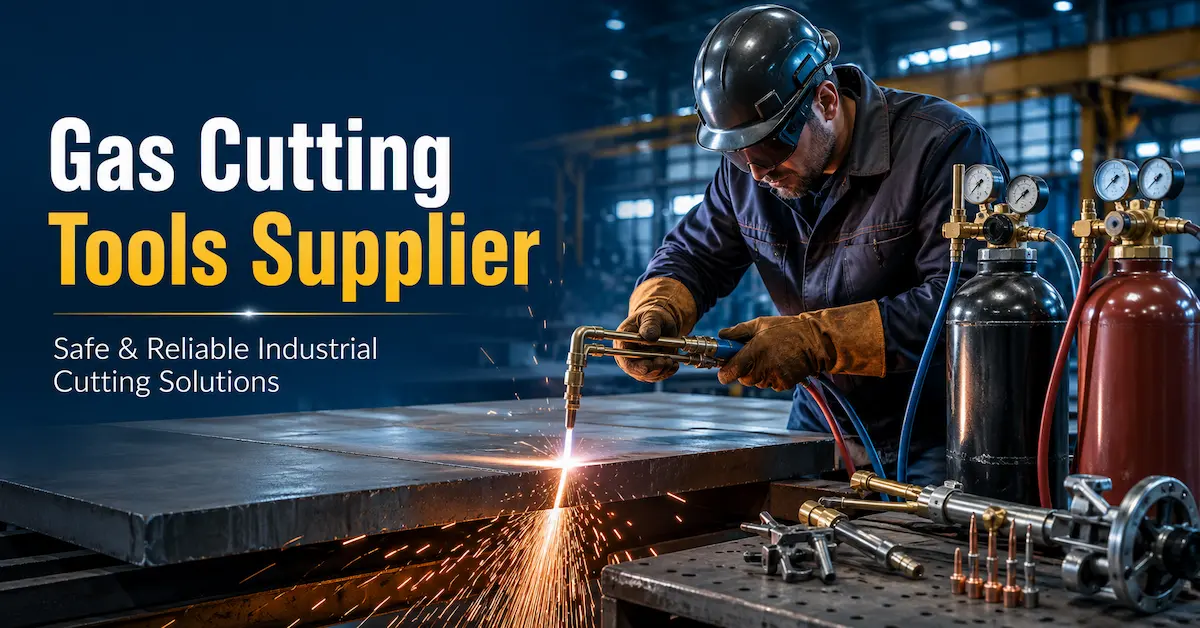


An industrial cutting torch is a professional metal-cutting tool designed for demanding applications such as steel fabrication, shipbuilding, construction, industrial maintenance, and heavy equipment repair.
Compared with standard workshop cutting tools, industrial cutting torches are designed for:
- Frequent operation
- Thick metal cutting
- Stable flame performance
- Long working life
- Professional industrial environments
A reliable industrial cutting torch should provide:
- Correct gas compatibility
- Stable cutting performance
- Durable construction
- Reliable valves and seals
- Compatible cutting tips
- Suitable regulators and hoses
- Quality inspection
- Spare parts availability
For industrial buyers, selecting the right torch requires evaluating the complete cutting system rather than only comparing product prices.
UWELD provides professional welding and cutting solutions including gas cutting torches, regulators, hoses, accessories, and OEM solutions. Buyers can explore the UWELD product range or discuss requirements through UWELD solutions.
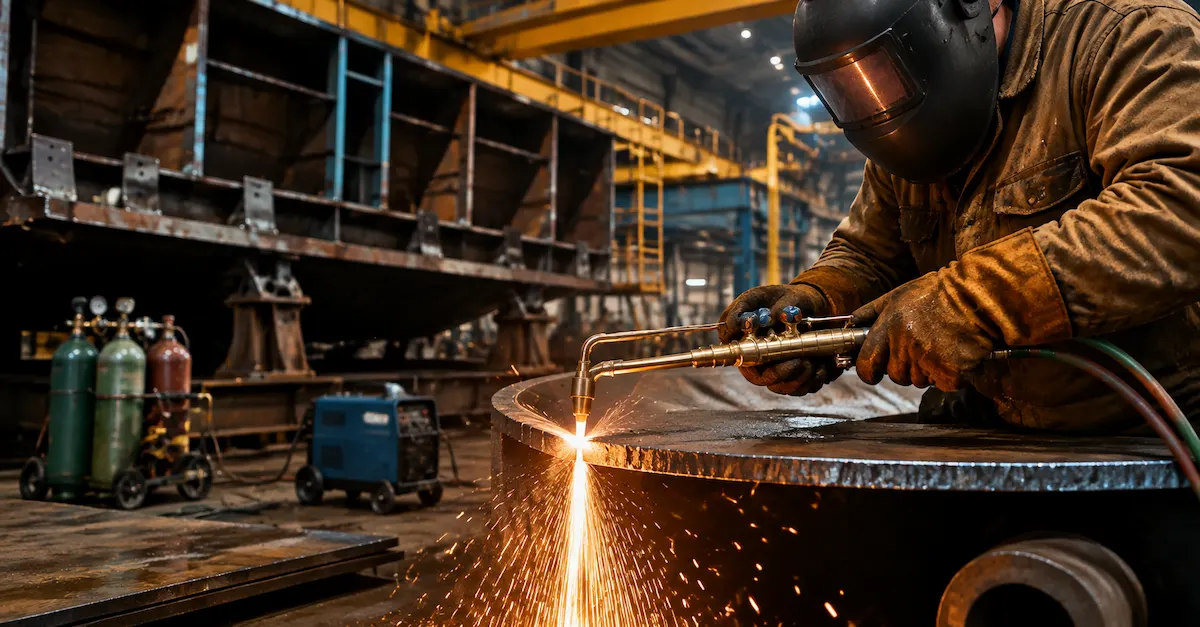
What Makes an Industrial Cutting Torch Different?
Industrial cutting torches are designed for applications where reliability and productivity are more important than occasional use.
Compared with standard cutting torches, industrial models usually focus on:
- Higher durability
- More stable gas control
- Better suitability for repeated operation
- Stronger construction
- Professional maintenance support
| Factor | Standard Cutting Torch | Industrial Cutting Torch |
|---|---|---|
| Usage | Occasional cutting | Frequent industrial operation |
| Application | Workshop repair | Production and heavy-duty work |
| Cutting demand | Light to medium | Medium to heavy material |
| Durability requirement | General | Higher service life |
| Support requirement | Basic | Technical and spare parts support |
However, “industrial” does not always mean one specific design. The correct torch depends on:
- Material thickness
- Gas type
- Cutting frequency
- Working environment
- Customer requirements
Main Types of Industrial Cutting Torches
Different industries require different cutting solutions.
Heavy Duty Cutting Torch
Heavy-duty cutting torches are designed for demanding applications.
Common industries:
- Shipbuilding
- Steel fabrication
- Heavy equipment repair
- Industrial maintenance
Key requirements:
- Strong construction
- Stable flame
- Long service life
- Reliable valve performance
These products are usually selected by buyers who need consistent performance under frequent use.
Extended Reach Cutting Torch
Extended reach models are designed for difficult-access applications.
Typical uses:
- Large steel structures
- Ship repair
- Industrial maintenance
- Heavy fabrication
Advantages:
- Greater operator distance from heat
- Better access to difficult areas
- Improved working flexibility
However, buyers should consider balance and operator comfort.
Combination Welding and Cutting Torch
Combination torches provide both welding and cutting functions.
They are commonly used by:
- Maintenance teams
- Repair companies
- Small fabrication workshops
Benefits:
- Multi-purpose operation
- Reduced equipment requirements
- Easier transportation
Machine Cutting Torch
Machine cutting torches are used in more controlled industrial systems.
Applications:
- Automated cutting equipment
- Production lines
- Large-scale fabrication
These applications require higher consistency and integration capability.
How Does an Industrial Cutting Torch Work?
Industrial cutting torches usually operate through an oxy-fuel cutting process.
The basic process includes:
Gas Mixing
Fuel gas and oxygen are supplied through controlled passages.
The system controls:
- Gas flow
- Pressure
- Flame characteristics
Preheating Flame
The torch creates a heating flame that raises the metal temperature.
The quality of preheating affects:
- Cutting speed
- Stability
- Gas consumption
Cutting Oxygen Jet
Once the metal reaches the required temperature, cutting oxygen removes oxidized material.
This affects:
- Cutting quality
- Edge condition
- Productivity
Because the cutting process depends on multiple components, torch, tip, regulator, and hose selection must be properly matched.
Industrial Cutting Torch Components
A complete industrial cutting system includes several important components.
Torch Body
The torch body controls gas flow and operation.
Important factors:
- Material quality
- Gas passage design
- Valve structure
- Operator handling
Cutting Tip
The cutting tip directly influences:
- Cutting thickness
- Flame shape
- Cutting speed
- Gas consumption
Buyers should confirm:
- Tip series
- Gas compatibility
- Replacement availability
Valves
Industrial applications require reliable valves.
Important characteristics:
- Smooth adjustment
- Good sealing
- Stable performance
- Long service life
Regulators
Regulators control gas pressure.
Important considerations:
- Oxygen pressure
- Fuel gas pressure
- Gauge accuracy
- Connection standards
Hoses and Connections
A complete system requires compatible hoses.
Check:
- Pressure rating
- Length
- Flexibility
- Connection type
Industrial Applications of Cutting Torches
Metal Fabrication
Metal fabrication companies use industrial cutting torches for:
- Steel plate cutting
- Structural preparation
- Workshop production
- Repair work
Key requirements:
- Stable cutting performance
- Reliable operation
- Replacement parts
Shipbuilding and Ship Repair
Shipyards often require heavy-duty cutting solutions.
Applications:
- Steel plate cutting
- Structural modification
- Maintenance
- Repair
Important requirements:
- Durable construction
- Long working life
- Easy maintenance
Construction
Construction applications include:
- Steel structure work
- Field cutting
- Installation adjustment
Equipment should provide:
- Portability
- Durability
- Reliable performance
Industrial Maintenance
Maintenance teams use cutting torches for:
- Equipment repair
- Component removal
- Emergency cutting
For this market, spare parts and fast support are important.
Scrap Metal Processing
Scrap processing requires flexible and powerful cutting solutions.
Typical requirements:
- Thick material cutting
- Long working periods
- Easy operation
How to Choose the Right Industrial Cutting Torch?
Consider Material Thickness
| Material Application | Recommended Solution |
| Thin steel | Standard torch |
| Medium steel | Industrial torch |
| Thick steel | Heavy-duty torch |
Buyers should provide actual working conditions rather than only maximum cutting requirements.
Consider Gas Compatibility
Confirm:
- Oxygen requirement
- Acetylene compatibility
- Propane compatibility
- Tip selection
Incorrect gas configuration can affect performance and safety.
Consider Operating Environment
| Environment | Key Requirement |
| Factory workshop | Stable operation |
| Construction site | Portable design |
| Shipyard | Heavy-duty capability |
| Maintenance | Easy handling |
Quality Factors Buyers Should Evaluate
Choosing industrial cutting equipment requires evaluating manufacturing quality.
Material Quality
Important components:
- Brass
- Copper
- Valves
- Seals
Material consistency affects:
- Durability
- Safety
- Service life
Machining Precision
Important checks:
- Thread accuracy
- Gas passages
- Component dimensions
Precision machining improves:
- Compatibility
- Sealing
- Performance
Valve Reliability
Check:
- Adjustment smoothness
- Leakage resistance
- Long-term stability
Cutting Tip Compatibility
Ensure:
- Correct tip series
- Available replacements
- Suitable cutting range
Quality Control Process
A professional supplier should have structured inspection.
| QC Stage | Inspection Focus |
| Material inspection | Components and raw materials |
| Machining inspection | Dimensions and threads |
| Assembly inspection | Component matching |
| Functional testing | Leakage and operation |
| Final inspection | Packaging and shipment |
Quality control helps ensure that bulk orders match approved samples.
Industrial Cutting Torch Buying Guide
Different buyers have different priorities.
For Distributors
Focus on:
- Product range
- Spare parts
- Packaging
- Market demand
For Importers
Focus on:
- Supplier reliability
- Documentation
- Shipping support
- OEM options
For Industrial Users
Focus on:
- Performance
- Durability
- Maintenance
- Application suitability
OEM Industrial Cutting Torch Solutions
Many buyers want customized products.
OEM options include:
- Logo marking
- Product labels
- Packaging
- Manuals
- Tool kits
- Custom combinations
OEM benefits:
- Brand development
- Higher market differentiation
- Better customer loyalty
A professional supplier should support:
- Requirement confirmation
- Sample approval
- Packaging design
- Bulk production
- Quality inspection
- Shipment
Common Mistakes When Buying Industrial Cutting Torches
Choosing Only Based on Price
Low-cost products may create:
- Poor performance
- More replacements
- Higher after-sales costs
Ignoring Application Requirements
A torch should match:
- Material
- Thickness
- Gas type
- Working environment
Skipping Sample Testing
Samples verify:
- Quality
- Compatibility
- Packaging
Not Planning Spare Parts
Distributors should consider:
- Cutting tips
- Valves
- Seals
- Accessories
Why Choose UWELD for Industrial Cutting Torch Solutions?
UWELD supports global buyers with professional welding and cutting solutions.
Capabilities include:
- Industrial cutting torches
- Gas cutting equipment
- Accessories
- Regulators
- Hoses
- OEM solutions
- Distributor support
Buyers can explore products through the UWELD product center, learn more through the About UWELD page, or contact the team through UWELD solutions.
FAQ: Industrial Cutting Torch
1. What is an industrial cutting torch?
It is a professional cutting tool designed for demanding metal-cutting applications such as fabrication, construction, and industrial maintenance.
2. How is an industrial cutting torch different from a standard torch?
Industrial models are designed for higher frequency use, stronger durability, and more demanding applications.
3. What industries use industrial cutting torches?
Common industries include fabrication, shipbuilding, construction, maintenance, and steel processing.
4. What gases are used with industrial cutting torches?
Common gases include oxygen with acetylene or other suitable fuel gases depending on the torch design.
5. How do buyers choose cutting tips?
Choose based on torch model, gas type, cutting thickness, and application requirements.
6. What quality checks should buyers request?
Check materials, machining, assembly, leakage testing, and final inspection.
7. Can industrial cutting torches be customized?
Yes. OEM options include branding, packaging, manuals, and customized kits.
8. Why are spare parts important?
They reduce downtime and help distributors provide better customer support.
9. Should buyers test samples?
Yes. Samples help confirm quality, compatibility, and supplier reliability.
10. How can buyers choose a supplier?
Evaluate product quality, technical support, OEM capability, QC process, and long-term supply stability.
Conclusion
Selecting the right industrial cutting torch requires more than comparing product prices.
Industrial buyers should consider:
- Application requirements
- Cutting capacity
- Gas compatibility
- Product construction
- Quality control
- Spare parts support
- Supplier capability
A reliable industrial cutting torch solution should provide stable performance, long service life, and compatibility with real working conditions.
For distributors, importers, and industrial users, choosing the right supplier helps reduce operational risks, improve customer satisfaction, and build a stronger product portfolio.
UWELD provides professional welding and cutting solutions for global buyers, including industrial cutting torches, gas cutting equipment, OEM support, and long-term supply solutions.
Explore the UWELD product center or contact UWELD solutions to discuss your industrial cutting requirements.