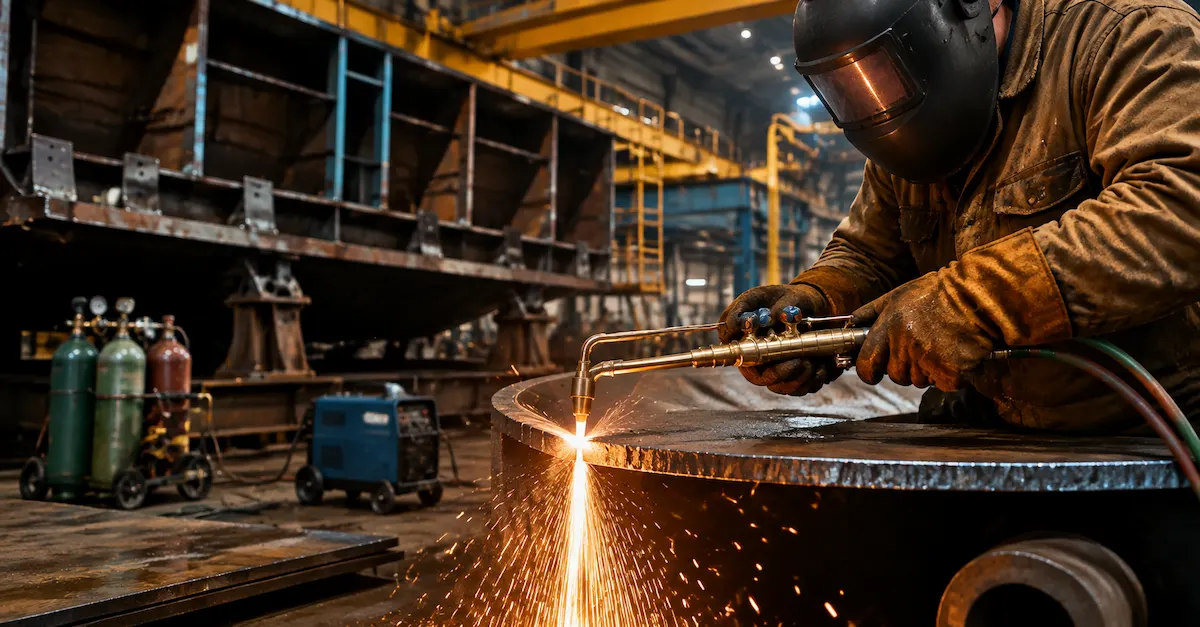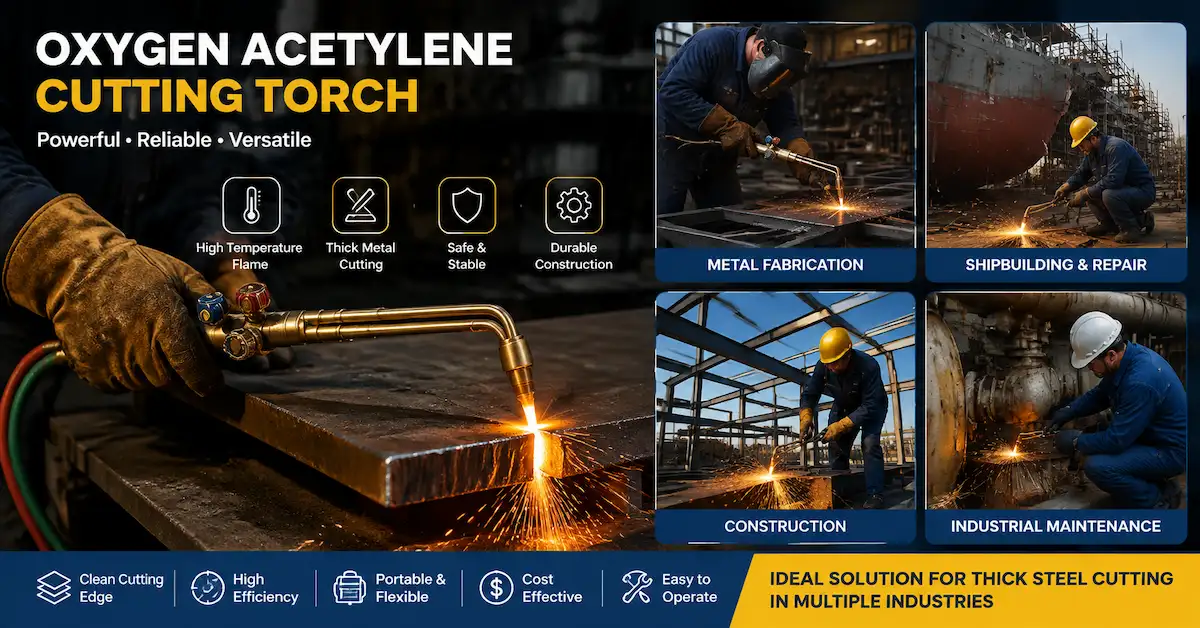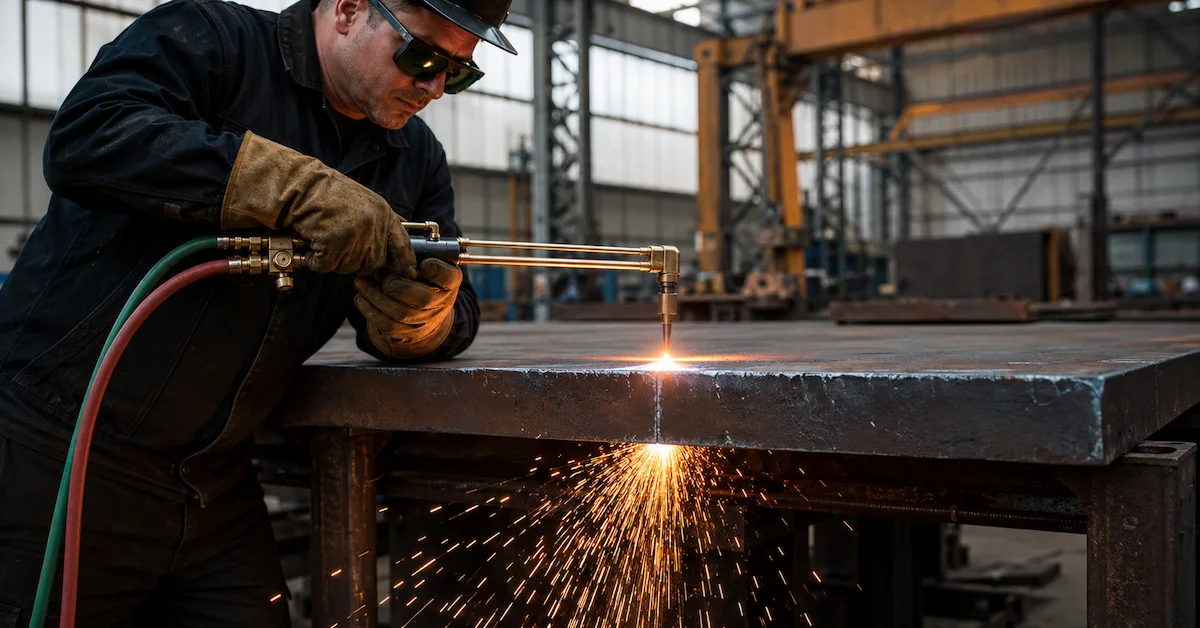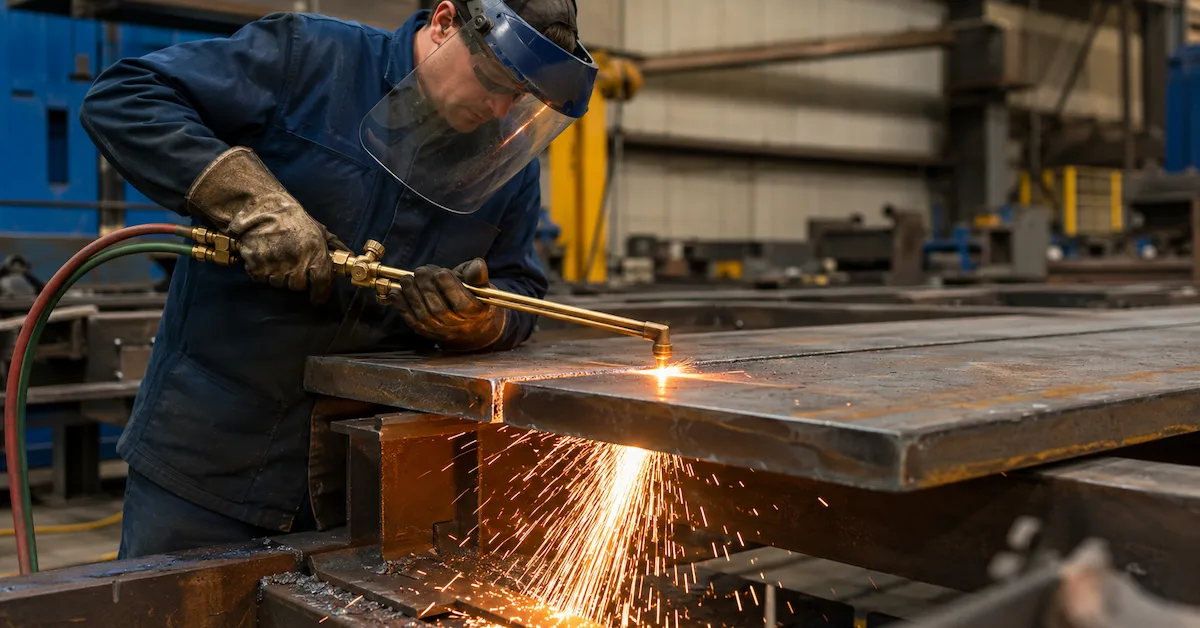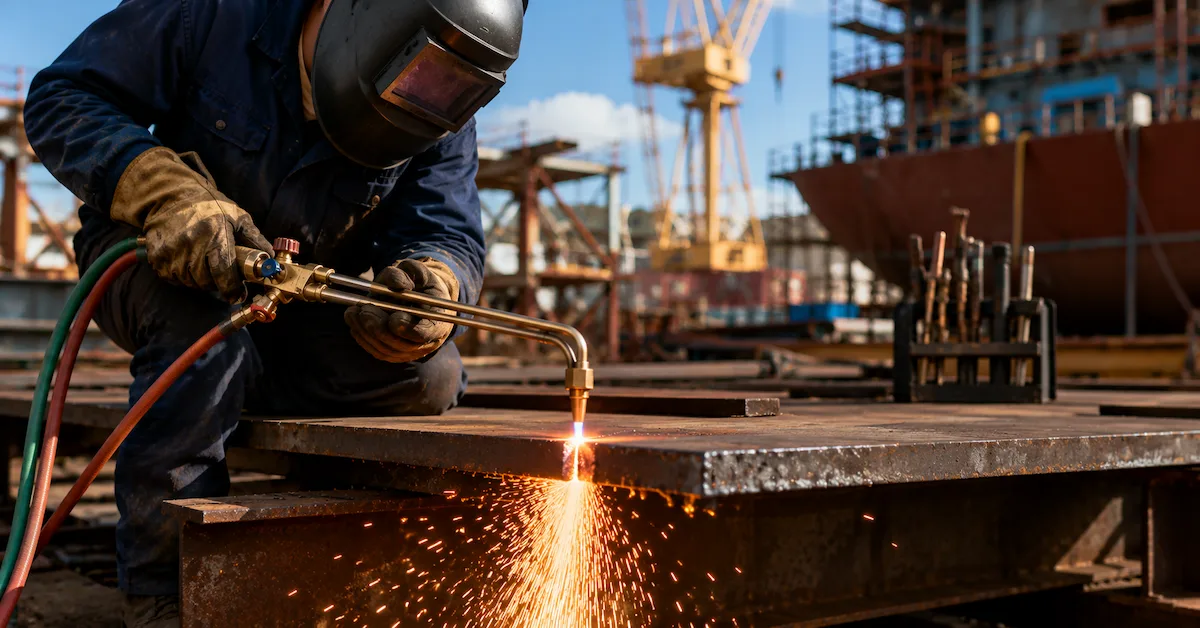


A reliable heavy duty cutting torch supplier should provide more than a durable-looking torch. Buyers need to confirm whether the supplier can match the torch body, cutting tip, fuel gas, regulator, hose connection, cutting capacity, and application environment as one complete system.
Before approving a supplier, evaluate:
- Heavy-duty product experience
- Torch materials and construction
- Fuel-gas and cutting-tip compatibility
- Valve and sealing performance
- Available cutting ranges
- Quality-control procedures
- Sample and batch consistency
- Replacement-part availability
- OEM and private-label capability
- Production capacity and lead time
- Export packaging and documentation
- Long-term reorder support
The approved sample should represent future bulk production. Materials, dimensions, valves, tips, connections, labels, accessories, and packaging should not change without written approval.
For industrial distributors and importers, the best supplier is not simply the one offering the lowest unit price. It is the partner capable of reducing product failures, compatibility issues, customer complaints, urgent replacement shipments, and repeat-order risks.
Buyers can review UWELD’s broader welding and cutting product range before preparing a detailed sourcing request.
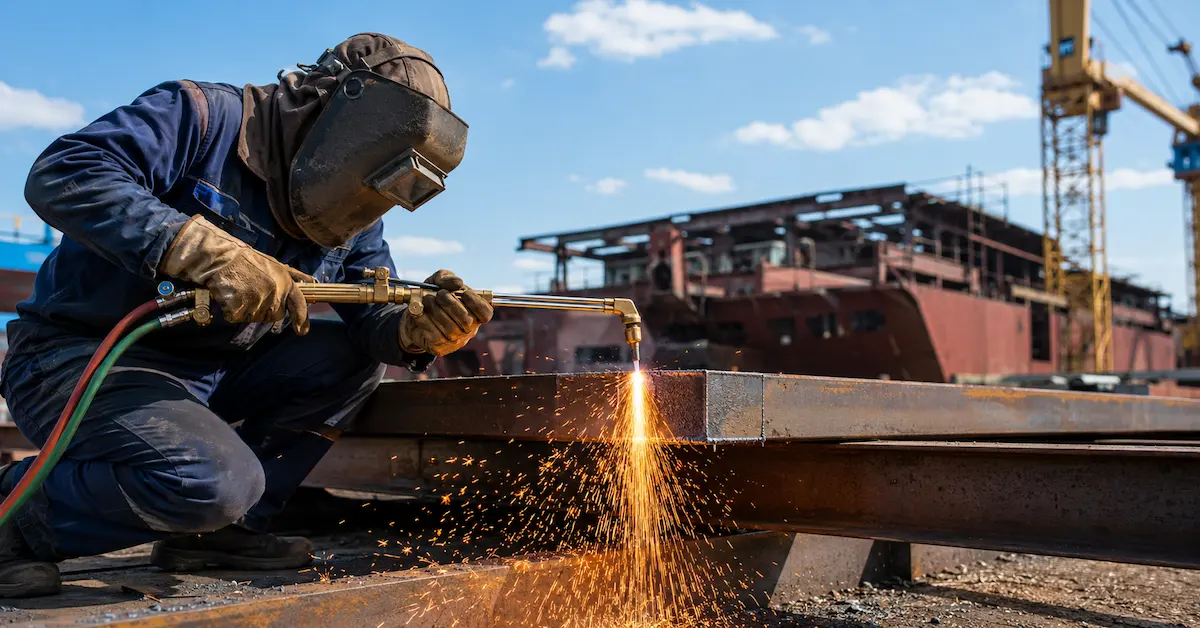
What Is a Heavy Duty Cutting Torch?
A heavy duty cutting torch is designed for demanding oxy-fuel cutting applications where standard workshop models may not provide sufficient durability, reach, cutting capacity, or service life.
Depending on the model and system configuration, these torches may be used for:
- Thick steel plate cutting
- Shipyard fabrication and repair
- Structural steel processing
- Scrap metal dismantling
- Foundry maintenance
- Heavy-equipment repair
- Construction and demolition
- Industrial maintenance operations
The term “heavy duty” should not be treated as a decorative product label. Buyers should ask the supplier to explain what makes the model suitable for demanding use.
Possible heavy-duty characteristics include:
- Reinforced torch construction
- Durable brass and copper-based components
- Serviceable valves and seals
- Stable gas passages
- Long or extended-reach designs
- Compatibility with larger cutting-tip ranges
- Better suitability for frequent industrial use
- Stronger packaging and spare-parts support
Exact performance depends on the complete gas-cutting system. A torch body alone does not determine cutting capacity.
Who Should Buy Heavy Duty Cutting Torches?
Heavy-duty models are generally suitable for professional and industrial buyers rather than occasional users.
Industrial Distributors
Distributors may need several product levels to serve fabrication shops, shipyards, construction contractors, steel processors, and maintenance companies.
Their main concerns include:
- Stable batch quality
- Replacement tips
- Spare parts
- Product differentiation
- OEM packaging
- Repeat-order consistency
Importers and Wholesalers
Importers often purchase mixed product categories, including torches, regulators, hoses, tips, safety accessories, and complete kits.
They need a supplier capable of coordinating:
- Product compatibility
- Documentation
- Export packaging
- Container planning
- Reorder specifications
OEM and Private-Label Brands
Brand owners may require custom colors, logos, labels, manuals, tool cases, and market-specific connections.
Their purchasing decision depends on both manufacturing control and product-development support.
Industrial End Users
Shipyards, steel fabrication companies, maintenance contractors, and scrap-processing facilities may purchase directly when volumes or technical requirements justify it.
They usually prioritize:
- Application suitability
- Product durability
- Serviceability
- Spare-parts availability
- Consistent industrial performance
Who May Not Need a Heavy-Duty Model?
A heavy-duty torch may not be necessary for buyers serving only occasional repair users, light sheet-metal applications, or small retail markets.
A heavier and more expensive product is not automatically the correct choice. Product selection should match the actual workload, cutting thickness, fuel gas, operating frequency, and customer expectations.
Heavy Duty vs Standard Cutting Torch
| Evaluation Area | Standard Cutting Torch | Heavy Duty Cutting Torch |
|---|---|---|
| Typical application | General workshop and repair work | Frequent or demanding industrial cutting |
| Work intensity | Intermittent | Regular or intensive |
| Product construction | General professional design | Reinforced or application-focused design |
| Cutting range | Light to medium, model dependent | Medium to thick steel, system dependent |
| Torch length | Usually standard | Standard or extended reach |
| Typical buyers | Repair shops and general distributors | Shipyards, steel processors and industrial suppliers |
| Spare-parts need | Important | Critical for long-term use |
| Purchasing priority | Flexibility and price balance | Durability, compatibility and service support |
Buyers should never choose between these categories based only on the product name. The supplier should provide model-level specifications and explain the intended duty level.
Where Are Heavy Duty Cutting Torches Used?
Shipbuilding and Ship Repair
Shipyards use cutting equipment for steel-plate work, structural preparation, repair, dismantling, and maintenance.
A suitable product may require:
- Durable construction
- Stable valve control
- Good balance while wearing gloves
- Appropriate reach
- Accessible spare parts
- Reliable performance during repeated use
Heavy Steel Fabrication
Steel fabricators may use cutting torches to prepare structural components, remove damaged sections, or perform work that is difficult to complete with fixed machinery.
Product selection should consider:
- Steel thickness
- Cutting frequency
- Tip availability
- Gas-system compatibility
- Operator comfort
Scrap Metal Processing
Scrap-processing applications may involve irregular shapes, restricted access, contaminated surfaces, and long working distances.
Extended-reach models can be useful, but buyers should confirm that the torch remains controllable and properly balanced.
Construction and Demolition
Field applications require portable and durable equipment that can tolerate transport, repeated setup, and demanding working conditions.
Packaging and connection protection are especially important for this market.
Industrial Maintenance
Maintenance teams may use heavy-duty torches for equipment disassembly, emergency repair, component removal, and shutdown work.
A complete system with replacement parts can be more valuable than a low-cost standalone torch.
What Should a Heavy Duty Cutting Torch Supplier Provide?
A professional supplier should provide a complete product system rather than a single torch body.
| Product Area | Typical Supply Scope | Buyer Benefit |
|---|---|---|
| Heavy-duty torches | Standard and extended-reach models | Supports different industrial applications |
| Cutting tips | Multiple sizes and gas configurations | Enables correct cutting range and replacement sales |
| Regulators | Oxygen and fuel-gas regulators | Improves complete-system compatibility |
| Hoses | Twin hoses and relevant connections | Reduces multi-supplier sourcing |
| Safety components | Check valves and flashback protection products | Supports complete system configuration |
| Spare parts | Valves, seals, nuts, fittings and repair parts | Reduces downtime and warranty pressure |
| Complete kits | Torch, tips, regulators, hoses and accessories | Simplifies distribution and resale |
| OEM support | Logo, labels, packaging, manuals and cases | Helps buyers develop private-label products |
A broad range is useful only when the supplier understands product matching. Buyers should ask for a written configuration list for every complete kit.
Which Specifications Should Buyers Confirm?
A professional RFQ should include enough information for the supplier to recommend a suitable product.
Fuel Gas
Confirm whether the system will use:
- Acetylene
- Propane
- Natural gas
- Another approved fuel gas
Different gases may require different tips or system configurations. Buyers should not assume that one setup is universally interchangeable.
Cutting Requirement
Provide the expected steel-thickness range and operating frequency.
Avoid asking only for “maximum cutting thickness.” A model capable of occasional thick cutting may not be appropriate for continuous work at that level.
Torch Length
Standard-length torches offer easier handling for general work. Extended-reach models increase operator distance from heat and difficult work areas but may add weight and reduce maneuverability.
Head Angle
The head angle affects access, visibility, cutting posture, and operator comfort.
Inlet Connection
Confirm:
- Thread type
- Fitting style
- Hose compatibility
- Regional connection requirements
Connection errors can make an otherwise acceptable product unusable in the target market.
Cutting-Tip System
Confirm:
- Tip series
- Fuel-gas type
- Available sizes
- Replacement availability
- Packaging quantities
- Local resale demand
Included Accessories
Quotations should clearly state whether the price includes:
- Cutting tips
- Connection nuts
- Adaptors
- Spare seals
- Wrenches
- Manuals
- Inner boxes
- Tool cases
| Specification | Buyer Question | Risk if Unclear |
|---|---|---|
| Fuel gas | Which gas is the product designed for? | Incorrect flame or tip configuration |
| Cutting range | What is the regular working range? | Undersized or unnecessarily expensive product |
| Torch length | Is standard or extended reach required? | Poor ergonomics |
| Connection | Does it match the local gas system? | Installation failure |
| Tip system | Are replacement tips available locally? | After-sales problems |
| Duty level | Is it designed for frequent industrial use? | Short service life |
| Included parts | What is included in the quoted price? | Misleading price comparisons |
| Packaging | Is it suitable for export and resale? | Damage or poor presentation |
How Do Materials and Construction Affect Performance?
A heavy-duty appearance does not guarantee heavy-duty performance.
Brass and Copper-Based Components
Gas-control products commonly use brass and copper-based components because of their workability and suitability for relevant torch parts.
Buyers should ask how material specifications are controlled rather than accepting general descriptions such as “high-quality brass.”
Important questions include:
- Are materials inspected before production?
- Are the same grades used for repeat orders?
- Are substitutions allowed without approval?
- Are critical dimensions recorded?
Internal Gas Passages
Gas passages should be clean, accurately formed, and free from processing debris.
Poorly controlled passages may affect gas flow, mixing, sealing, or functional consistency.
Valves and Valve Seats
Valve performance is one of the most important user-experience and quality indicators.
Check whether valves:
- Turn smoothly
- Close securely
- Maintain adjustment
- Remain serviceable
- Perform consistently across samples
Cutting Head and Tip Seat
The cutting head should align correctly with the tip system. Poorly controlled dimensions can cause difficult installation, looseness, leakage, or inconsistent replacement-tip fit.
Handle and Ergonomics
Operators often use heavy gloves, so buyers should assess:
- Handle shape
- Product balance
- Valve position
- Knob identification
- Torch weight
- Reach
- Surface finish
A heavier product is not necessarily more durable or easier to use.
How Should Heavy Duty Cutting Torches Be Manufactured?
Understanding the production process helps buyers separate real capability from marketing claims.
Material and Component Inspection
Incoming inspection may cover:
- Brass components
- Copper tubes
- Valve parts
- Seals
- Cutting heads
- Connections
- Tips
Precision Machining
Critical operations may include:
- Thread machining
- Valve-seat processing
- Gas-passage formation
- Component sizing
- Surface finishing
Machining consistency influences sealing, fit, gas flow, and interchangeability.
Controlled Assembly
Assembly instructions should define:
- Component sequence
- Valve installation
- Connection tightening
- Tube alignment
- Seal placement
- Tip fitting
Cleaning and Finishing
Internal and external cleanliness should be controlled before final assembly and packaging.
Surface finishing should not hide machining defects, sharp edges, or poor joints.
Functional Inspection
Products should be checked using documented procedures appropriate to the product design and buyer requirements.
What Quality-Control Process Should Buyers Expect?
The statement “quality checked” is too vague for industrial procurement.
Buyers should ask what is checked, how it is checked, how often it is checked, and whether the results are recorded.
| QC Stage | Typical Inspection Focus | Commercial Value |
|---|---|---|
| Incoming inspection | Materials, valves, seals, tubes and tips | Prevents unsuitable components entering production |
| Machining inspection | Threads, dimensions, valve seats and gas passages | Improves consistency and interchangeability |
| Assembly inspection | Alignment, valve movement and component fit | Reduces variation between units |
| Leakage inspection | Sealing of relevant gas passages and joints | Reduces field failures |
| Functional inspection | Valve operation, flow and connection fit | Confirms product usability |
| Controlled flame evaluation | Configuration and flame behavior where applicable | Checks functional matching |
| Final inspection | Appearance, accessories, labels and quantity | Prevents shipment errors |
| Packaging inspection | Protection, carton strength and shipping marks | Reduces transport damage |
Buyers should agree on an approved reference sample before bulk production.
The reference should record:
- Product appearance
- Dimensions
- Weight where relevant
- Valve feel
- Tip and connection fit
- Accessories
- Labels
- Packaging
- Manuals
For significant orders, a buyer-arranged or third-party pre-shipment inspection can provide additional protection.
How Should Buyers Evaluate Samples?
A sample should be treated as a technical and commercial approval tool.
Visual and Dimensional Checks
Inspect:
- Surface finish
- Component alignment
- Thread quality
- Handle condition
- Label accuracy
- Packaging protection
Operational Checks
Qualified personnel should evaluate:
- Valve movement
- Connection fit
- Tip installation
- Product balance
- Flame adjustment under controlled conditions
- Cutting stability for the intended application
- Ease of replacing service parts
Comparison Checks
When comparing suppliers, use the same:
- Fuel gas
- Regulator setup
- Hose
- Tip size
- Steel material
- Cutting thickness
- Test procedure
Otherwise, the comparison may produce misleading conclusions.
Trial Orders
A trial order provides information that one sample cannot reveal, such as:
- Batch variation
- Packaging consistency
- Accessory completeness
- Label accuracy
- Delivery performance
- Communication quality
How Do MOQ, Capacity, and Lead Time Work?
MOQ depends on:
- Product model
- Tip configuration
- Packaging
- Logo requirements
- Custom colors
- Accessory combinations
- Component availability
- Production setup
Standard products in existing packaging generally allow more flexibility than deeply customized projects.
Before placing a bulk order, ask the supplier about:
- Sample lead time
- Packaging-development time
- Current production schedule
- Monthly capacity
- Peak-season constraints
- Inspection time
- Expected shipment date
- Reorder lead time
A short promised lead time is not valuable when the supplier reduces inspection, changes materials, or uses unapproved components.
For long-term distributors, consistency is more important than one unusually fast first shipment.
What Determines Heavy Duty Cutting Torch Price?
Price may be affected by:
- Torch construction
- Material specifications
- Product length
- Head design
- Valve system
- Tip compatibility
- Included accessories
- Testing requirements
- Order quantity
- Surface finish
- Packaging
- Branding
- Manuals
- Spare parts
- Shipping terms
Buyers should calculate total sourcing cost rather than comparing only unit prices.
| Cost Area | What Buyers Should Review |
|---|---|
| Unit price | Exact model and included parts |
| Cutting tips | Quantity, sizes and replacement cost |
| Packaging | Standard carton, color box or tool case |
| OEM charges | Logo, artwork, labels and manuals |
| Inspection | Supplier inspection and third-party inspection |
| Freight | Shipping term, volume and weight |
| Import expenses | Duty, tax, clearance and inland delivery |
| Warranty cost | Returns, spare parts and urgent replacements |
| Inventory cost | MOQ and slow-moving model risk |
A low-cost torch can become expensive when it creates returns, customer complaints, emergency air shipments, or unusable inventory.
What Can an OEM Heavy Duty Cutting Torch Supplier Customize?
OEM and private-label options may include:
- Product logo
- Handle branding
- Custom colors
- Model labels
- Cutting-tip packaging
- Instruction manuals
- Warning labels
- Barcodes
- Color boxes
- Carrying cases
- Accessory combinations
- Distributor-specific kits
More complex modifications may require:
- Engineering review
- New tooling
- Additional samples
- Functional verification
- Higher MOQ
- Longer development time
A practical OEM process should include:
- Define the target market and application.
- Confirm fuel gas, cutting range, connection, and tip system.
- Select accessories and spare parts.
- Prepare branding and packaging artwork.
- Produce and evaluate samples.
- Approve all technical and visual details.
- Begin controlled bulk production.
- Complete pre-shipment inspection.
- Retain the specification for repeat orders.
Buyers can submit custom project requirements through UWELD solutions.
Supplier, Manufacturer, or Integrated Product Partner?
| Partner Type | Strength | Possible Limitation | Suitable Buyer |
|---|---|---|---|
| Direct manufacturer | Strong production control | May offer fewer related products | Large-volume and technical OEM buyers |
| Integrated supplier | Broader cutting-system range | Production control must be verified | Distributors needing complete systems |
| Trading company | Flexible mixed sourcing | Traceability may be more complex | Smaller mixed orders with strong QC oversight |
The best choice depends on the buyer’s product range, volume, customization level, and quality-management ability.
An integrated supplier may offer greater value when the buyer needs torches, tips, regulators, hoses, accessories, safety products, and complete kits in one order.
A direct manufacturer may be preferable for large-volume production or substantial product modification.
Common Sourcing Risks and How to Reduce Them
Selecting by Weight Alone
A heavy product can still contain poorly machined components or weak valves. Evaluate construction and performance, not only weight.
Comparing Incomplete Quotations
Confirm whether tips, adaptors, packaging, manuals, and spare parts are included.
Ignoring Gas Compatibility
The torch, tip, regulator, and fuel gas must be correctly matched.
Approving Only One Sample
One sample does not demonstrate batch consistency. Use a trial order or pre-shipment inspection.
Failing to Confirm Connections
Incorrect threads or fittings can make the product unusable in the destination market.
No Spare-Parts Plan
Distributors should stock suitable tips, seals, valves, and repair components.
Excessive First-Order Customization
Changing too many technical and packaging details at once increases risk. Approve the core product before expanding customization.
No Written Reorder Standard
Future orders may change unless the approved specifications are retained.
Heavy Duty Cutting Torch Supplier Checklist
Before approving a supplier, confirm that:
- The target industry and application are defined.
- The intended fuel gas is confirmed.
- The normal cutting-thickness range is documented.
- Torch length and head design match the application.
- Connections match the destination market.
- Cutting tips and replacement parts are available.
- Samples have been tested using consistent conditions.
- Materials and critical dimensions are controlled.
- The quality-control process is documented.
- Bulk inspection criteria are agreed.
- MOQ, capacity, and lead time are realistic.
- Packaging and shipping protection are approved.
- Manuals, labels, and documents are complete.
- OEM details are recorded in writing.
- A reference sample is retained for repeat orders.
Why Consider UWELD as Your Heavy Duty Cutting Torch Supplier?
UWELD supports global importers, distributors, industrial buyers, and OEM brands across welding, heating, and gas-cutting product categories.
The company’s product-oriented sourcing support can help buyers consider the complete cutting system rather than purchasing isolated components.
Relevant product areas may include:
- Heavy-duty cutting torches
- Standard cutting torches
- Cutting tips
- Regulators
- Hoses
- Connections
- Gas-cutting accessories
- Complete kits
- Spare parts
- OEM packaging
Buyers can explore UWELD’s product categories, review company information on the About UWELD page, or read related sourcing content on the UWELD blog.
For a more accurate recommendation, provide the destination market, fuel gas, application, cutting range, connection standard, expected quantity, packaging, and OEM requirements.
FAQ About Heavy Duty Cutting Torch Suppliers
1. What is a heavy duty cutting torch?
It is a cutting torch designed for demanding professional or industrial applications. Its suitability depends on construction, cutting range, gas configuration, duty level, and complete system compatibility.
2. How is a heavy-duty torch different from a standard model?
Heavy-duty models may use reinforced construction, extended lengths, serviceable components, or tip systems suited to demanding cutting. Exact differences vary by model.
3. Which fuel gases can heavy duty cutting torches use?
Possible fuel gases include acetylene, propane, and natural gas, depending on the torch and tip configuration. The supplier should confirm the exact setup.
4. Can one torch cut every steel thickness?
No. Cutting capacity depends on the torch, tip, gas, pressure settings, and application conditions. Buyers should define their normal working range.
5. What materials should buyers check?
Review torch-body materials, tubes, valves, valve seats, seals, cutting heads, connections, and tips. Material control and workmanship are both important.
6. How should samples be evaluated?
Inspect dimensions, finish, valve operation, tip fit, connection compatibility, balance, packaging, and controlled cutting performance using consistent test conditions.
7. Can heavy duty cutting torches be private labeled?
Yes. Common options include logos, colors, labels, manuals, packaging, tool cases, barcodes, and customized accessory combinations.
8. What spare parts should distributors stock?
Typical items include cutting tips, seals, valves, connection parts, nuts, and model-specific service components.
9. What affects MOQ and lead time?
Product model, component availability, packaging, branding, tooling, order quantity, production schedule, and inspection requirements all affect MOQ and lead time.
10. What information should buyers send UWELD?
Provide the target market, application, fuel gas, cutting range, connection type, torch length, order quantity, packaging, spare-parts plan, and OEM requirements.
Conclusion
Choosing a heavy duty cutting torch supplier is an important supply-chain decision for industrial distributors, importers, OEM brands, shipyard suppliers, steel fabricators, and maintenance-equipment buyers.
The purchasing process should begin with the application rather than the price.
Buyers should clearly define:
- Fuel gas
- Regular cutting range
- Work intensity
- Torch length
- Head angle
- Connection standard
- Cutting-tip system
- Required accessories
- Spare parts
- Packaging
- Documentation
- OEM requirements
The supplier should then demonstrate that it can provide a correctly matched product system, not only a heavy-looking torch.
Material control, precision machining, valve performance, component alignment, leakage inspection, functional evaluation, packaging protection, and batch consistency all influence long-term product value.
Samples should be tested against written criteria, and approved specifications should be retained for bulk production and repeat orders. For new suppliers, trial orders and pre-shipment inspections can reduce risk before larger commitments are made.
Importers should also consider total sourcing cost. A slightly lower unit price may not compensate for incompatible connections, unavailable tips, weak packaging, customer complaints, warranty replacements, or unstable future supply.
The most valuable supplier is one that can support product selection, system matching, technical communication, OEM development, documentation, spare parts, and consistent reorders.
UWELD provides welding and gas-cutting product solutions for global buyers seeking professional supply and long-term cooperation.
Visit the UWELD product center or submit your application, specifications, quantity, and customization requirements through UWELD solutions to begin evaluating a suitable heavy-duty cutting torch program.