

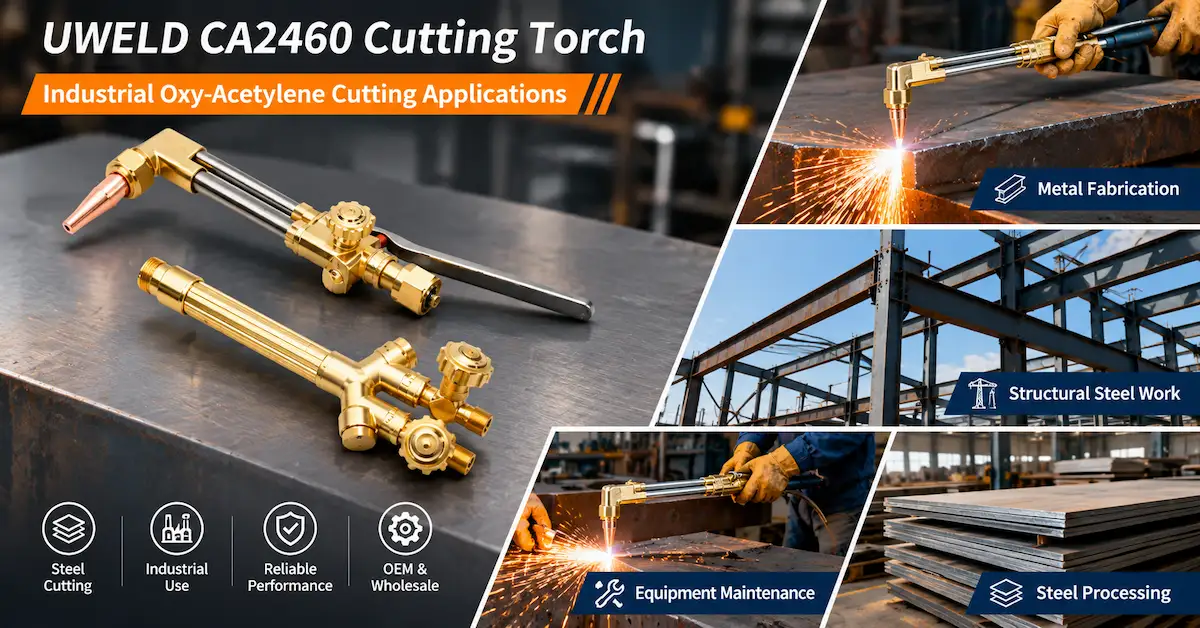
Quick Answer: The UWELD CA2460 heavy duty oxy acetylene cutting torch, model 1C005-0002, is intended for industrial steel cutting, fabrication, and maintenance. Its published configuration includes a 1-1-101 cutting tip and identifies compatibility with an HD310C torch handle. Buyers should confirm the exact handle assembly, nozzle size, fuel-gas requirements, cutting capacity, and included components before ordering. For wholesale and OEM procurement, controlled specifications and compatible replacement parts are especially important.
Industrial cutting equipment buyers frequently face an important problem: two cutting torches may look similar but use different handles, cutting attachments, nozzles, and gas connections.
These differences can create installation problems, incorrect accessory orders, unexpected performance limitations, and unnecessary inventory costs.
For distributors and professional fabrication workshops, purchasing a heavy-duty cutting torch should involve evaluating the complete oxy-fuel system rather than selecting equipment based on appearance or advertised maximum cutting thickness.
UWELD, operated by Ningbo United Tools Co., Ltd., supplies professional welding and gas cutting equipment for international industrial buyers.
This guide examines the CA2460 product configuration, technical selection requirements, industrial applications, quality inspection, and OEM/wholesale purchasing considerations.
Explore the UWELD CA2460 Cutting Torch 1C005-0002 for product information and customization inquiries.
Key Takeaways: What Should Buyers Know About the CA2460 Cutting Torch?
-
Industrial cutting design: The CA2460 is positioned as a heavy-duty cutting attachment for professional oxy-fuel steel cutting.
-
Included cutting tip: UWELD identifies a 1-1-101 cutting tip in its published product description.
-
Handle compatibility: The product overview refers to an HD310C handle, while a separate product illustration shows a 315FC configuration. The exact compatible assembly should be established for each order.
-
Cutting capacity: The published product description references 3/4-inch steel cutting. Greater capacity may be possible with other approved components, but it should not be assumed for the supplied tip.
-
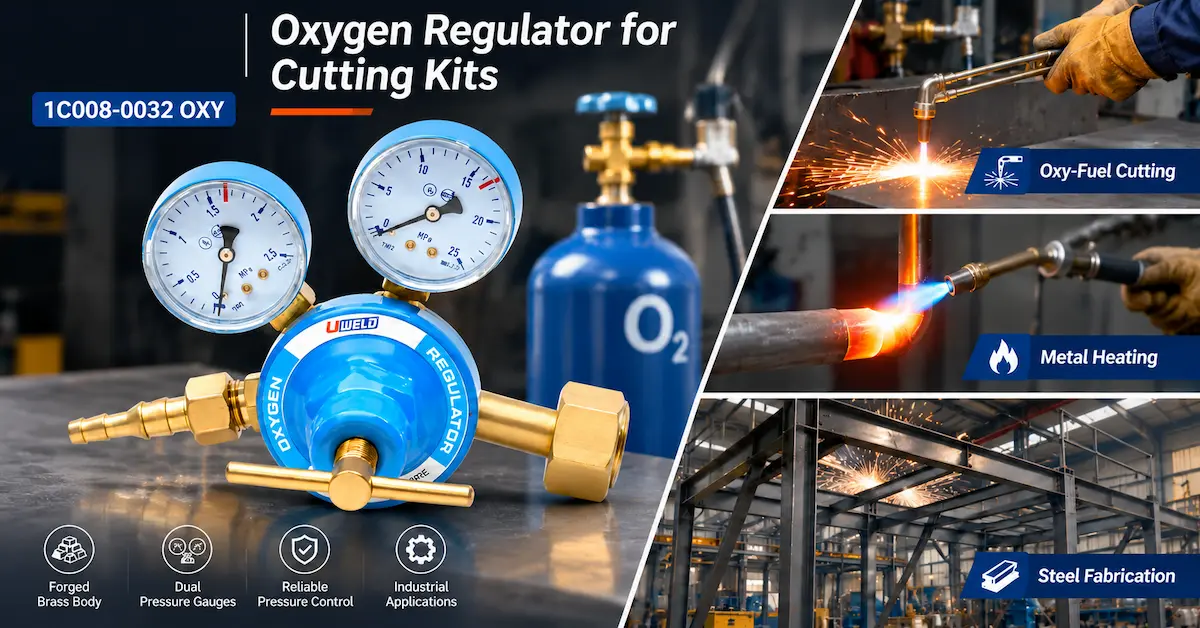
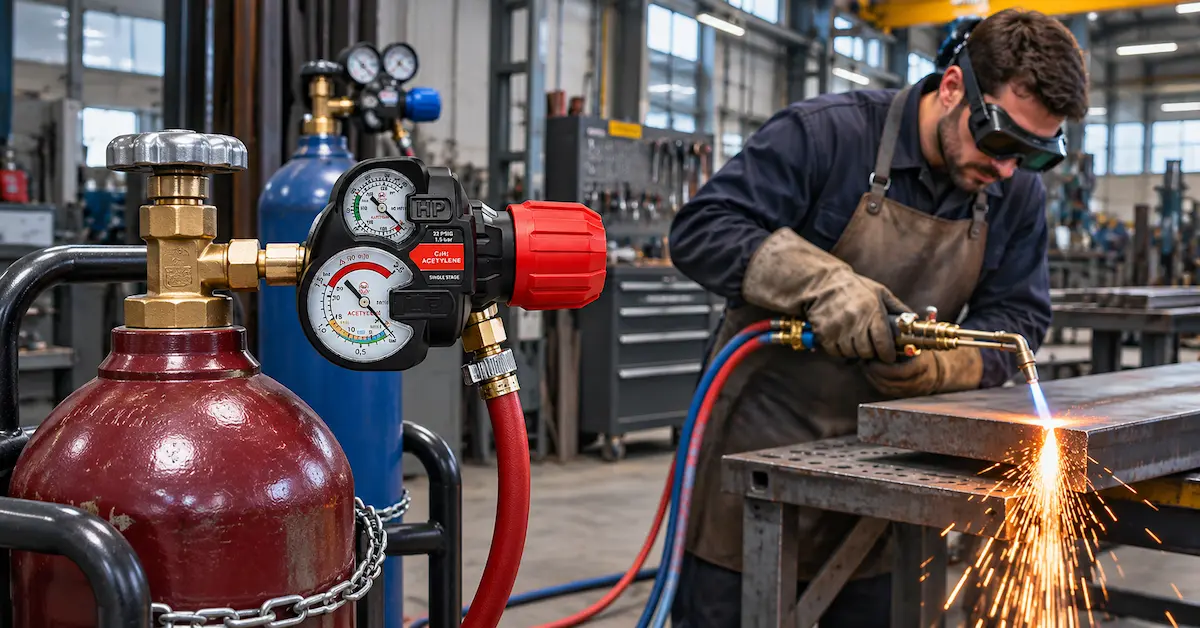
Gas compatibility: Fuel type, regulators, cutting nozzles, hoses, and protective devices must be correctly matched.
-
Product variants: The 1C005-0002 range includes separately identified handle, head, and kit options.
-
Wholesale sourcing: Buyers should request a complete bill of materials, approved specifications, and suitable inspection documents.
Purchasing recommendation: Select the CA2460 based on its complete approved configuration, actual steel-cutting requirements, and replacement-part compatibility.
What Is the UWELD CA2460 Heavy Duty Cutting Torch?
The UWELD CA2460 is an oxy-fuel cutting product intended for suitable carbon steel cutting applications.
Oxy-fuel cutting works by preheating the steel and directing a concentrated oxygen stream into the heated material. The oxygen reacts with the iron, generating heat through oxidation and removing oxides from the cutting path.
This differs from processes that primarily separate materials by melting.
The CA2460 is relevant to industrial applications where users require a hand-operated cutting arrangement for suitable steel sections, structural components, and repair work.
UWELD CA2460 Product Specifications
| Specification | Published Product Information |
|---|---|
| Brand | UWELD |
| Product model | CA2460 |
| Part number | 1C005-0002 |
| Product type | Heavy-duty oxy-fuel cutting torch / cutting attachment |
| Published cutting process | Oxy-acetylene cutting |
| Included cutting tip | 1-1-101, as described in the product overview |
| Published handle compatibility | HD310C |
| Additional illustrated handle | 315FC |
| Published cutting application | Industrial steel cutting |
| Product variants | Standard, Handle, Head, Kit |
| Main applications | Metal fabrication, steel processing, construction, maintenance |
| Business services | Wholesale and OEM/ODM inquiries |
The table distinguishes published product information from final configuration approval. Buyers should establish the actual handle, nozzle, hose connections, and assembly components through a model-specific order specification.
Why Is a Heavy-Duty Cutting Torch Useful?
A heavy-duty cutting torch is intended for industrial applications where equipment may be used frequently or under demanding working conditions.
Relevant purchasing factors include construction quality, valve operation, handling, cutting tip availability, and maintenance requirements.
However, the term heavy duty does not establish a universal cutting thickness, duty cycle, or service life.
These characteristics depend on the approved equipment configuration and operating conditions.
How Does the CA2460 Cutting Torch Work?
The CA2460 uses the conventional oxy-fuel cutting principle.
The complete system combines a suitable fuel gas, oxygen supply, cutting attachment, torch handle, and cutting nozzle.
Stage 1: Steel Preheating
An approved oxygen-fuel flame heats the steel to the required ignition condition.
The preheating characteristics depend on the fuel gas, cutting nozzle, steel grade, and operating conditions.
The purpose is to prepare the material for oxidation rather than simply melt a large volume of steel.
Stage 2: Cutting Oxygen Delivery
When the material reaches the appropriate condition, a concentrated cutting oxygen stream supports the oxidation reaction.
The oxygen reacts with the heated steel and helps remove the resulting oxides from the kerf.
The nozzle and cutting attachment influence the delivery of the oxygen stream.
Stage 3: Maintaining Cut Quality
During the operation, the operator maintains the approved torch position and cutting conditions.
Cut quality can be influenced by nozzle selection, oxygen purity, travel speed, gas supply, and steel thickness.
A correctly selected cutting attachment is only one part of the complete process.
Which Metals Are Suitable for Conventional Oxy-Fuel Cutting?
| Material | General Suitability | Purchasing Consideration |
|---|---|---|
| Mild steel | Suitable | Match cutting thickness and nozzle |
| Carbon steel plate | Suitable | Verify approved cutting configuration |
| Structural carbon steel | Suitable | Consider grade, thickness and edge requirements |
| Certain low-alloy steels | Conditional | Evaluate composition and heat-affected zone |
| Stainless steel | Generally unsuitable for conventional oxy-fuel cutting | Consider an appropriate alternative process |
| Aluminum | Generally unsuitable for conventional oxy-fuel cutting | Consider plasma, laser or mechanical cutting |
A heavy duty oxy acetylene cutting torch should not be described as a universal cutting solution for every metal.
How Thick Can the CA2460 Cutting Torch Cut?
Cutting thickness is one of the first questions industrial buyers ask.
UWELD's product description references 3/4-inch industrial steel cutting with the supplied 1-1-101 tip.
A separate product illustration describes a higher cutting-capacity range for the broader cutting attachment configuration.
These claims refer to different aspects of equipment capability and should not be interpreted as equivalent.
Understanding Cutting Capacity
| Published Information | Technical Interpretation | Purchasing Recommendation |
|---|---|---|
| 3/4-inch steel cutting | Application described for the product configuration | Use as a published reference, not a universal limit |
| 1-1-101 cutting tip | Identified included consumable | Confirm the exact supplied tip and size |
| 8-inch / 200 mm cutting capacity | Illustrated maximum capability associated with a broader configuration | Requires appropriate approved tip and system verification |
| 3-inch / 76.2 mm welding capacity | Appears in a related welding/cutting equipment illustration | Not a standalone welding rating for the CA2460 cutting attachment |
Why Does Cutting Tip Size Matter?
Different cutting tip sizes are designed for different cutting applications.
A tip intended for relatively thin steel may not provide the oxygen delivery required for much thicker sections.
The appropriate cutting tip depends on the torch system, fuel gas, material thickness, and manufacturer's cutting chart.
Therefore, the maximum capability of a cutting attachment should not be confused with the capability of one supplied cutting tip.
Is the CA2460 Suitable for 200 mm Steel?
The manufacturer's illustration lists a cutting-capacity figure reaching approximately 200 mm.
However, this should be treated as a configuration-dependent capability rather than a guaranteed result for every CA2460 assembly.
Buyers intending to cut material near this thickness should establish the approved cutting tip, oxygen and fuel-gas supply requirements, and complete equipment rating.
The best procurement approach is to specify the actual steel thickness range instead of ordering only by the maximum number shown in a catalog.
Why Are Torch Handle and Cutting Tip Compatibility Important?
A cutting attachment must connect correctly to the approved torch handle.
Even where products share a familiar model designation, they should not automatically be treated as interchangeable.
The product interface, gas passages, sealing arrangement, and attachment mechanism must meet the relevant specifications.
CA2460 Handle Compatibility
UWELD's current product overview identifies the HD310C torch handle as compatible with the CA2460.
A separate product illustration describes a CA2460 cutting attachment paired with a 315FC torch handle.
These descriptions should be distinguished when preparing a purchasing specification.
Torch Handle and Attachment Checklist
| Component | Requirement | Common Purchasing Risk |
|---|---|---|
| Cutting attachment | Correct CA2460 configuration | Incorrect attachment supplied |
| Torch handle | Approved compatible handle model | Attachment and handle mismatch |
| Coupling interface | Correct mating and sealing design | Unsuitable assembly |
| Cutting tip | Approved 1-1-101 or other specified tip | Incorrect nozzle family or size |
| Oxygen supply | Suitable pressure and flow capability | Inadequate cutting oxygen delivery |
| Fuel-gas supply | Approved fuel configuration | Incorrect equipment combination |
| Gas hoses | Correct ratings and connections | Installation incompatibility |
| Protective devices | Appropriate gas-specific functions | Incomplete safety arrangement |
Why Should OEM Buyers Control the Handle Reference?
For industrial distributors, product identification is important during repeat purchasing.
If a customer needs a replacement torch handle, the distributor must be able to identify the approved replacement without relying only on appearance.
An OEM product specification should record the complete model reference, relevant connection dimensions, and approved replacement components.
This also helps prevent inconsistencies between samples and production orders.
What About Hose Connections?
A product illustration references a 9/16"-18 hose connection and mentions alternative thread options.
For international buyers, this should be treated as configuration information requiring approval.
The exact connection must match the intended downstream equipment and relevant market requirements.
A matching thread designation alone does not guarantee suitability for a particular gas system.
What Components Are Available in the 1C005-0002 Product Range?
UWELD lists several options associated with the 1C005-0002 product family.
These include the standard product, handle, head, and kit variants.
Product Variant Comparison
| Product Variant | Purchasing Focus | What to Confirm |
|---|---|---|
| 1C005-0002 | Standard cutting torch configuration | Exact included assembly |
| 1C005-0002 Handle | Handle-related product option | Handle model and connections |
| 1C005-0002 Head | Cutting head or attachment option | Approved mating interface |
| 1C005-0002 Kit | Packaged equipment configuration | Complete bill of materials |
The existence of these variants does not establish that every item includes the same accessories.
For example, a cutting head should not automatically be assumed to include a complete handle or gas supply assembly.
Why Is the Packing List Important?
A distributor may purchase a cutting attachment for replacement supply or a more complete assembly for resale.
These two transactions have different technical and commercial requirements.
A detailed packing list should identify the supplied handle, cutting head, nozzle, fittings, accessories, and packaging.
For OEM customers, the final approved bill of materials should also control future component substitutions.
What Manufacturing Features Affect Cutting Torch Quality?
A professional cutting attachment includes several components that influence handling, gas delivery, mechanical integrity, and long-term serviceability.
The UWELD product illustration describes features associated with the CA2460 and compatible torch arrangements, including a spiral mixer and reverse-flow check valves.
Because the location of individual protective components may depend on the handle and assembly, buyers should evaluate the complete configuration.
Manufacturing and Component Evaluation
| Component | Technical Importance | Buyer Evaluation |
|---|---|---|
| Torch head | Supports the cutting nozzle and gas delivery | Material and machining quality |
| Gas tubes | Carry gases through the attachment | Construction and condition |
| Cutting oxygen control | Controls the cutting oxygen stream | Valve function and inspection |
| Mixing system | Supports the intended preheating gas mixture | Approved design and compatibility |
| Handle connection | Joins the attachment to the handle | Mating dimensions and seals |
| Cutting nozzle | Controls preheating and cutting oxygen delivery | Correct series and size |
| Protective components | Provide specified safety functions | Device type and location |
Why Does Gas Mixing Design Matter?
The mixing system influences how oxygen and the approved fuel gas are combined for the preheating flame.
The product illustration describes a spiral mixer arrangement.
However, a mixer description should not be interpreted as proof that every fuel gas can be used without changing other components.
Fuel-gas compatibility must be established for the complete torch, nozzle, regulator, and hose system.
Why Is Valve Construction Important?
The cutting oxygen valve is an important component of the attachment.
Its construction and operation affect how the cutting oxygen flow is controlled.
For industrial buyers, relevant inspection considerations include valve assembly, mating surfaces, gas tightness, and functional condition.
These characteristics should be evaluated according to the manufacturer's approved specifications.
Why Does Ergonomic Handling Matter?
UWELD's product description highlights balanced handling when the cutting attachment is paired with a compatible torch handle.
This may be relevant to professional users performing repeated steel cutting operations.
However, actual handling suitability depends on the complete assembly, operator preferences, working posture, and application.
Buyers can assess the equipment's handling characteristics during sample evaluation.
Which Industrial Applications Are Suitable for the CA2460?
The CA2460 is positioned for industrial steel cutting and related fabrication work.
The most appropriate equipment configuration depends on the material, normal thickness, work environment, and cutting requirements.
Application Comparison
| Industrial Application | Typical Task | Main Equipment Requirement |
|---|---|---|
| Metal fabrication | Cutting carbon steel plate and components | Suitable tip and rated cutting capability |
| Structural steel work | Cutting beams and steel sections | Handling and torch access |
| Industrial maintenance | Removing damaged steel components | Portability and correct equipment configuration |
| Construction | Approved on-site steel cutting | Equipment safety and suitability |
| Machinery repair | Cutting or removing suitable steel parts | Appropriate torch and nozzle selection |
| Steel processing | Repeated cutting operations | Consistent equipment and consumable supply |
Metal Fabrication Workshops
Metal fabrication workshops may use oxy-fuel cutting equipment to separate suitable steel sections and prepare components for further processing.
For these operations, nozzle compatibility, cut quality, and replacement parts are important purchasing factors.
Structural Steel and Construction
Construction contractors may require cutting tools for site modifications and steel component preparation.
The working environment can introduce additional requirements concerning equipment handling, hose protection, and hot-work safety.
Industrial Maintenance
Maintenance teams may need to remove damaged steel components during equipment repair.
A heavy-duty cutting attachment can be considered where the intended work falls within its approved capacity.
The complete equipment arrangement must still meet the relevant operating and safety requirements.
How Can Buyers Verify CA2460 Quality Before Bulk Purchasing?
For importers and OEM brands, a successful sample should be supported by consistent production specifications.
A product's appearance is not sufficient evidence of quality.
Recommended Quality-Control Checklist
| Inspection Item | Required Verification |
|---|---|
| Product identity | Correct CA2460 / 1C005-0002 model |
| Variant | Correct handle, head, standard or kit version |
| Handle interface | Approved mating configuration |
| Cutting nozzle | Correct model and supplied size |
| Material requirements | Approved component specifications |
| Dimensions | Conformance to technical drawings |
| Valve assembly | Correct assembly and functional condition |
| Gas tightness | Qualified verification under approved procedures |
| Protective components | Correct specification and installation |
| Product identification | Model, labels and traceability |
| Packaging | Correct components and quantities |
| Technical documentation | Applicable instructions and test records |
Why Is Sample Approval Important?
A representative sample helps buyers evaluate whether the proposed configuration meets the intended requirements.
For a cutting torch, sample approval should cover the correct components, nozzle compatibility, assembly quality, and relevant functional tests.
Testing involving oxygen and fuel gas must be performed by qualified personnel using appropriate procedures.
The approved sample and technical specification should form the basis of later production inspections.
How Should Repeat Orders Be Controlled?
A distributor should maintain controlled product references and approved component specifications.
Any changes affecting handle compatibility, nozzle fit, gas passages, protective devices, or connections should receive appropriate technical review.
This helps reduce the risk of receiving products that appear similar but no longer match the original approved configuration.
What Safety Requirements Apply to Heavy-Duty Oxy-Acetylene Cutting?
Oxy-fuel equipment involves compressed gases, combustible fuel, elevated temperatures, and potential flashback hazards.
Professional cutting operations require trained personnel and suitable workplace controls.
Gas Compatibility
The CA2460 should be used only with approved fuel-gas and oxygen equipment.
Different fuels may require different cutting nozzles, regulators, hoses, or operating conditions.
A product illustration describing compatibility with multiple fuel gases should not be treated as permission to interchange components without technical approval.
Check Valves vs Flashback Arrestors
UWELD's product illustration references reverse-flow check valves.
These devices are intended to restrict reverse gas flow under their specified conditions.
A flashback arrestor provides a different protective function: preventing flame propagation under its rated conditions.
The presence of a check valve should not automatically be considered equivalent to a complete flashback-protection system.
Applicable Standards
ISO 5172:2006, including applicable amendments, specifies requirements and tests for certain gas welding, heating, and cutting blowpipes.
For U.S. workplaces, OSHA 29 CFR 1910.253 provides requirements relating to oxygen-fuel gas welding and cutting equipment.
The applicability of these requirements depends on the equipment and jurisdiction.
A standard reference does not establish that a particular UWELD model carries independent product certification.
Industrial buyers should obtain the actual product-specific documents required for their destination markets.
How Does the CA2460 Compare With Other UWELD Cutting Torches?
UWELD offers different cutting torch configurations for professional applications.
The CA2460 may be compared with other heavy-duty and straight-style products according to application needs.
UWELD Model Comparison
| Model | Published Characteristics | Main Purchasing Consideration |
|---|---|---|
| 1C005-0002 CA2460 | Heavy-duty cutting attachment; 1-1-101 tip listed | Handle and tip compatibility |
| 1C005-0003 | Heavy-duty cutting torch with check-valve features and available variants | Integrated configuration and accessories |
| 1C005-0012 | Straight cutting torch with triangular stainless steel tubes and dual needle valves | Straight-style industrial cutting applications |
These models are not automatically interchangeable.
Their actual dimensions, fuel configurations, cutting capabilities, and accessory requirements should be checked individually.
When Is the CA2460 a Suitable Choice?
The CA2460 is relevant when buyers need its specific cutting attachment configuration and compatible handle arrangement.
It may be particularly useful for distributors managing professional cutting attachment and replacement-tip product ranges.
When Should Buyers Consider Another Model?
Another cutting torch may be preferable when the required handle configuration, working reach, cutting application, or available accessories differ.
The final decision should be based on the approved equipment specifications rather than the commercial product name alone.
What Affects the Wholesale Price of a CA2460 Cutting Torch?
The total cost of sourcing a heavy duty oxy acetylene cutting torch depends on its configuration and purchasing requirements.
For example, a cutting attachment supplied alone may have a different commercial scope from a kit containing additional components.
Total Sourcing Cost
Total Sourcing Cost = Product Cost + Accessories + Inspection + Packaging + Freight + Inventory + Expected After-Sales Costs
| Cost Factor | Purchasing Consideration |
|---|---|
| Cutting attachment | Main product configuration |
| Torch handle | Included or separate |
| Cutting nozzle | Type, size and quantity |
| Protective devices | Required approved configuration |
| Material and assembly | Manufacturing requirements |
| Quality inspection | Testing and documentation |
| OEM customization | Branding and packaging |
| Order quantity | Sample and bulk purchasing conditions |
| Transportation | Destination and shipment requirements |
| Replacement parts | Long-term inventory and customer support |
Why Is Comparing Complete Configurations Important?
Two quotations may appear to describe the same cutting torch while including different components.
One may cover only the cutting attachment.
Another may include the handle, nozzle, or other accessories.
A meaningful comparison requires a common bill of materials and the same purchasing conditions.
Does a Higher-Priced Torch Always Offer Better Value?
Not necessarily.
The best purchasing decision depends on technical suitability, product consistency, required accessories, maintenance, and total cost.
A lower-cost configuration can provide good value when it satisfies the intended requirements.
Any specific cost-saving claim should be supported by actual quotations or performance data.
How Can Buyers Choose a CA2460 Cutting Torch in Three Steps?
Step 1: Define the Cutting Application
Identify the steel grade, normal cutting thickness, expected workload, and intended working environment.
Establish whether the buyer requires a complete torch or a replacement cutting attachment.
Decision: Select the equipment category according to the intended work.
Step 2: Confirm Handle, Nozzle and Gas Compatibility
Review the exact cutting attachment model, approved handle, 1-1-101 tip configuration, gas-service requirements, and hose connections.
Establish the required cutting capacity using the complete approved equipment configuration.
Decision: Only approve components that match the specified system.
Step 3: Evaluate Quality and Commercial Supply
Review sample quality, inspection requirements, included accessories, packaging, MOQ, lead time, and available replacement parts.
Decision: Select the configuration that provides the best verified balance of technical suitability and commercial value.
For the latest product information, review the UWELD CA2460 Cutting Torch.
OEM/ODM CA2460 Cutting Torch Supply for Industrial Brands
International welding equipment brands and distributors may require cutting torches supplied under their own product identity.
UWELD supports OEM/ODM inquiries involving product appearance, branding, packaging, and technically feasible specification adjustments.
Recommended OEM Purchasing Process
| Stage | Main Requirement |
|---|---|
| Requirements review | Define target application and market |
| Model selection | Select the approved torch configuration |
| Technical evaluation | Review handle, nozzle, gas and connection requirements |
| Sample approval | Verify product configuration and quality |
| Branding | Confirm logos, labels and packaging |
| Production planning | Establish quantities and inspection requirements |
| Shipment | Verify packing list and documentation |
| Repeat orders | Maintain approved model and component references |
Changes affecting gas passages, valves, connections, or protective features require appropriate technical evaluation.
MOQ and Lead Time
According to UWELD's FAQ page, minimum order quantities vary by product and customization requirements.
Stock products generally have shorter preparation schedules than customized orders, but actual availability and delivery conditions must be confirmed individually.
Samples can be discussed with the UWELD sales team.
For international buyers, shipping schedules should also account for inspection and logistics arrangements.
What Should Buyers Include in a CA2460 Wholesale RFQ?
A complete quotation request helps the supplier identify the correct product configuration.
Recommended RFQ Checklist
| RFQ Item | Information to Provide |
|---|---|
| Product | CA2460 cutting torch |
| Model | UWELD 1C005-0002 |
| Required variant | Standard, Handle, Head or Kit |
| Cutting application | Steel fabrication, repair, maintenance |
| Steel thickness | Typical and maximum requirements |
| Fuel gas | Approved gas configuration |
| Torch handle | Required compatible model |
| Cutting nozzle | 1-1-101 or other approved tip |
| Connections | Required hose and assembly specifications |
| Protective features | Required devices and documents |
| Quality requirements | Sample and inspection criteria |
| OEM branding | Logo, labeling and packaging |
| Order quantity | Sample and bulk quantities |
| Destination market | Country or region |
| Delivery | Required schedule and shipping terms |
A clear RFQ should distinguish between the cutting attachment, complete torch assembly, and additional equipment kit.
Looking for a heavy duty oxy acetylene cutting torch for industrial distribution? Contact UWELD to request current CA2460 specifications, compatible handle information, sample options, OEM customization details, and wholesale pricing.
Frequently Asked Questions About the CA2460 Cutting Torch
1. What is the UWELD CA2460 cutting torch?
The UWELD CA2460 is a heavy-duty oxy-fuel cutting product identified as model 1C005-0002. It is intended for suitable industrial steel cutting and related fabrication applications.
2. Is the CA2460 an oxy-acetylene cutting torch?
The product is marketed as an oxy-acetylene cutting torch. Any alternative fuel-gas configuration must be approved for the complete system, including the torch, tip, regulators, hoses, and protective devices.
3. What cutting tip comes with the CA2460?
UWELD's product overview lists a 1-1-101 cutting tip. Buyers should confirm the exact supplied tip, variant and quantity in the packing list.
4. What torch handle is compatible with the CA2460?
UWELD's product overview identifies the HD310C handle, while a separate illustration depicts a 315FC arrangement. The approved handle for the specific product configuration should be established through the current technical specification.
5. Can the CA2460 cut 8-inch steel?
A product illustration lists a maximum cutting capability of approximately 200 mm for a broader configuration. This should not be interpreted as the guaranteed cutting thickness of the supplied 1-1-101 tip. Buyers must verify the complete approved setup for their intended thickness.
6. Can the CA2460 be used for welding?
The CA2460 is identified as a cutting attachment. A compatible torch handle may support separate welding operations when fitted with the appropriate approved welding equipment. The cutting attachment itself should not be assigned a standalone welding capacity.
7. Does the CA2460 have built-in check valves?
UWELD's product illustration refers to reverse-flow check valves within the associated torch arrangement. Buyers should verify which protective functions are present in the exact supplied handle and assembly.
8. What should distributors inspect before ordering CA2460 torches in bulk?
Inspect the approved model, handle compatibility, cutting tip, connections, assembly quality, relevant test records, product marking, packaging, and replacement-part references.
9. Can UWELD customize the CA2460 for OEM orders?
UWELD supports OEM/ODM inquiries involving branding, packaging, and technically feasible product changes. Available customization options, MOQ and delivery schedules depend on the project.
10. How can I request a CA2460 wholesale quotation?
Provide the required product variant, intended application, cutting thickness, fuel gas, handle and nozzle requirements, quantity, destination market, and branding needs through the UWELD contact page.
Conclusion
Selecting the right heavy duty oxy acetylene cutting torch requires more than comparing advertised cutting thickness, product appearance, or initial purchase price.
The UWELD CA2460, model 1C005-0002, offers an industrial cutting attachment configuration associated with a 1-1-101 cutting tip and professional steel cutting applications.
For industrial buyers, the most important purchasing considerations are the complete torch assembly, approved handle compatibility, cutting nozzle size, fuel-gas requirements, and verified cutting capacity.
A maximum cutting-capacity claim should not be confused with the performance of a single supplied tip. Likewise, different handle configurations should be clearly identified in technical and commercial documentation.
For distributors, importers and OEM brands, reliable sourcing also depends on approved specifications, sample evaluation, batch consistency, compatible replacement parts, and clear repeat-order procedures.
UWELD supplies gas cutting torches, regulators, cutting nozzles, welding and cutting kits, and related industrial equipment for international markets.
To evaluate the product, visit the UWELD CA2460 Cutting Torch product page, explore UWELD Gas Cutting Equipment, or contact UWELD to discuss technical specifications, OEM customization, sample availability, and wholesale quotations.