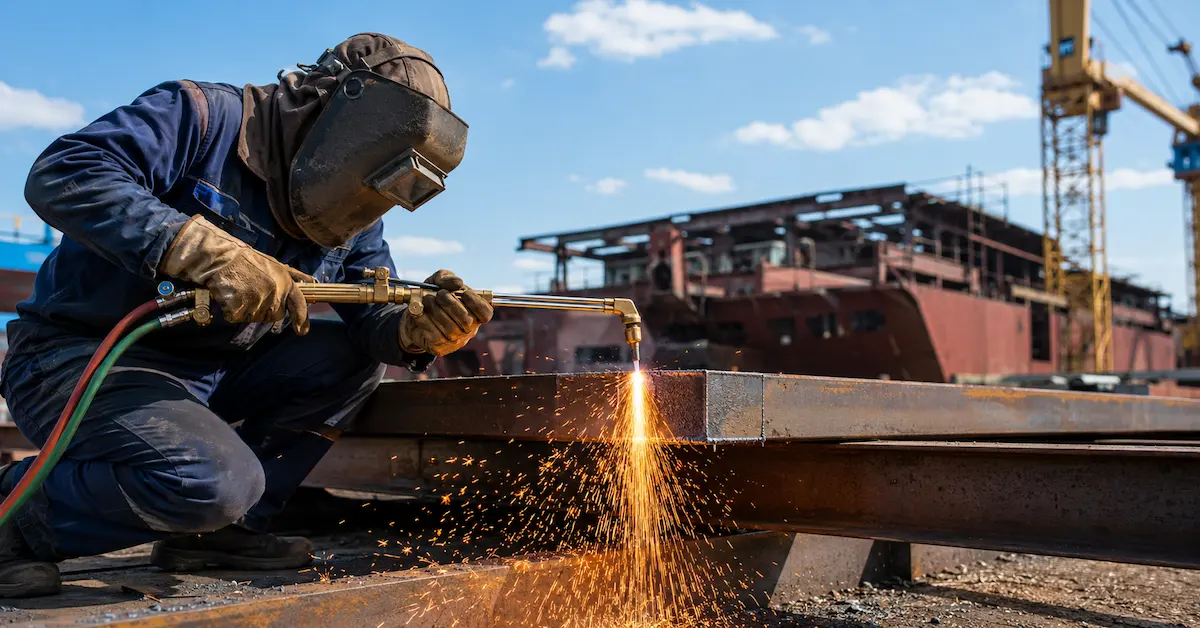


A reliable cutting torch supplier should provide a complete and compatible gas-cutting solution, not only a torch body.
For most B2B buyers, the supplier should be able to offer:
- Manual and heavy-duty cutting torches
- Matched cutting tips
- Oxygen and fuel-gas regulators
- Hoses, fittings, and connectors
- Safety accessories
- Replacement valves, seals, and repair parts
- OEM and private-label packaging
- Technical and export documentation
- Stable repeat-order support
Before approving a supplier, confirm that the torch matches the intended fuel gas, cutting application, tip series, hose connection, and destination-market requirements.
The approved sample must also represent future bulk production. Materials, valve performance, dimensions, accessories, labels, and packaging should not change without the buyer’s written approval.
For distributors, the best supplier is not necessarily the company offering the lowest quotation. It is the partner that reduces quality complaints, compatibility problems, inventory risk, and after-sales costs over multiple orders.
Buyers can first review UWELD’s wider welding and cutting product range before preparing detailed sourcing requirements.

Who Should Use This Cutting Torch Supplier Guide?
This guide is intended for:
- Welding equipment importers
- Industrial tool distributors
- Hardware wholesalers
- Regional welding suppliers
- OEM and private-label brands
- Industrial procurement managers
- Construction and fabrication suppliers
- Companies building a gas-cutting product range
These buyers usually need more than one item. They may need several cutting torch models, compatible tips, regulators, hoses, complete kits, spare parts, packaging options, and repeat-order support.
This guide is less relevant to an individual user purchasing one replacement torch locally. Retail buyers may focus mainly on immediate availability and price. B2B buyers must also evaluate production consistency, documentation, MOQ, logistics, customization, warranty handling, and long-term supply continuity.
What Should a Professional Cutting Torch Supplier Provide?
A cutting torch is only one part of an oxy-fuel cutting system. A professional supplier should understand how the torch interacts with the tip, regulator, hose, fuel gas, pressure control, and application environment.
| Supply Area | Typical Products | Buyer Value |
|---|---|---|
| Cutting torches | Standard, heavy-duty, extended-reach and combination types | Covers different applications and price levels |
| Cutting tips | Different gas types and cutting capacities | Supports correct performance and replacement sales |
| Gas-control products | Oxygen regulators, fuel-gas regulators and gauges | Enables complete system sourcing |
| Hoses and fittings | Twin hoses, connectors and adaptors | Reduces compatibility problems |
| Safety accessories | Flashback arrestors and check valves | Supports safer system configuration |
| Spare parts | Valves, seals, nuts and repair components | Reduces downtime and after-sales pressure |
| Commercial support | Manuals, labels, packaging and OEM service | Helps buyers launch products in local markets |
A wide product range is valuable only when the supplier can correctly match the components.
Buyers should not assume that every torch can use every cutting tip or fuel gas. The supplier should confirm the intended application before issuing a final quotation.
Which Cutting Torch Type Is Right for Your Market?
Selecting a product should begin with application requirements rather than catalog appearance.
Standard Manual Cutting Torches
Standard manual torches are widely used in:
- Fabrication workshops
- Construction projects
- Equipment maintenance
- Agricultural repair
- General steel cutting
Important purchasing factors include balanced weight, smooth valve adjustment, tip availability, durable connections, and easy maintenance.
Heavy-Duty Cutting Torches
Heavy-duty models are suitable for:
- Shipbuilding
- Steel service centers
- Foundries
- Demolition
- Heavy fabrication
- Industrial repair
These applications may require stronger construction, longer operating life, and better performance under frequent use.
However, a heavier torch is not automatically a better torch. Buyers should also evaluate ergonomics, balance, handle temperature, valve position, and replacement-part availability.
Extended-Reach Cutting Torches
Extended-reach models help operators maintain more distance from heat, molten material, or difficult work areas.
They may be suitable for scrap processing, foundry work, heavy repair, and applications involving large steel structures.
Buyers should confirm that additional length does not make the tool difficult to control.
Combination Welding and Cutting Kits
Combination kits may include:
- Torch handle
- Cutting attachment
- Welding nozzles
- Cutting tips
- Regulators
- Hoses
- Accessories
- Carrying case
These kits are suitable for hardware retailers, maintenance suppliers, mobile repair teams, and distributors seeking a complete packaged product.
| Torch Type | Main Advantage | Best-Fit Market | Key Question |
|---|---|---|---|
| Standard manual | Flexible and widely applicable | Workshops and distributors | Are tips and spare parts readily available? |
| Heavy-duty | Suitable for intensive work | Shipbuilding and steel processing | Can it withstand frequent industrial use? |
| Extended-reach | Greater distance from heat | Scrap cutting and heavy repair | Is it still balanced and controllable? |
| Combination kit | Complete packaged solution | Retail and maintenance channels | Are all components correctly matched? |
| Machine torch | Supports mechanized cutting | Industrial cutting systems | Does it fit the intended equipment? |
What Technical Specifications Should Buyers Confirm?
A useful quotation request should include more than a picture or model number.
Buyers should send the destination market, application, fuel gas, expected cutting capacity, connection standard, preferred torch type, packaging requirements, order quantity, and customization needs.
| Specification | What to Confirm | Risk if Ignored |
|---|---|---|
| Fuel gas | Acetylene, propane, natural gas, or approved alternative | Wrong tip or gas-mixing configuration |
| Cutting capacity | Expected steel thickness and work intensity | Poor performance or unnecessary cost |
| Torch length | Standard or extended reach | Poor ergonomics and application mismatch |
| Inlet connection | Thread and fitting standard | Incompatible hoses and regulators |
| Tip system | Tip series, sizes, gas type and availability | Difficult local replacement |
| Valve design | Position, movement, sealing and serviceability | Leakage or adjustment complaints |
| Head angle | Access and application suitability | Difficult operation in actual work |
| Included accessories | Tips, nuts, adaptors and spare parts | Inaccurate quotation comparison |
| Packaging | Box, case, master carton and private label | Damage or poor retail presentation |
| Documentation | Manual, warnings, parts list and specifications | Compliance and after-sales problems |
Exact specifications vary by product model. A responsible supplier should not claim that one torch is ideal for every gas, market, and cutting application.
How Do Materials and Workmanship Affect Quality?
Material names alone do not prove quality. Buyers should evaluate how materials are selected, machined, assembled, sealed, finished, and tested.
Torch Body and Gas Passages
Brass and copper-based components are commonly used in gas-control equipment. Buyers should confirm whether material specifications are controlled and whether internal gas passages are clean and accurately machined.
Poor internal finishing may affect gas flow, sealing, and long-term reliability.
Valves and Valve Seats
Valve quality affects flame adjustment and user confidence.
A good valve should:
- Turn smoothly
- Maintain its adjusted position
- Close securely
- Remain serviceable
- Perform consistently between units
Rough threads, inconsistent valve seats, weak seals, or poor assembly may create leakage complaints and difficult adjustment.
Cutting Head and Tip Connection
The cutting head and tip seat must align correctly. The tip should fit securely without excessive force.
Buyers should also check whether frequent tip replacement damages the thread or creates looseness.
Handle and Ergonomics
A professional tool should remain comfortable while the operator is wearing gloves.
Evaluate:
- Weight distribution
- Handle shape
- Valve position
- Knob identification
- Surface finish
- Reach and balance
A decorative surface should not hide poor machining, sharp edges, or weak assembly.
Batch Consistency
A good sample is not enough.
For distributors, the real quality standard is whether the bulk order matches the sample in:
- Materials
- Dimensions
- Valve feel
- Tip fit
- Appearance
- Accessories
- Labels
- Packaging
What Quality-Control Process Should a Supplier Follow?
The phrase “100% inspected” is not detailed enough.
Buyers should ask what is inspected, when it is inspected, how the result is recorded, and what happens when a product fails.
| QC Stage | Typical Inspection | Why It Matters |
|---|---|---|
| Incoming inspection | Materials, seals, valves, tubes and tips | Stops unsuitable parts entering production |
| Machining inspection | Threads, valve seats, gas passages and dimensions | Improves sealing and interchangeability |
| Assembly inspection | Component fit, orientation and valve movement | Reduces variation between units |
| Functional inspection | Leakage, flow, valve operation and connection fit | Confirms basic operating integrity |
| Controlled flame test | Flame behavior and product configuration | Verifies functional matching |
| Final inspection | Appearance, quantity, accessories and labels | Prevents shipment errors |
| Packing inspection | Carton strength, protection and shipping marks | Reduces transport damage |
| Pre-shipment review | Comparison with approved sample | Protects bulk-order consistency |
For a new supplier, the buyer should create an approved sample record. It may include product photos, dimensions, labels, packaging, accessories, and agreed inspection criteria.
For larger orders, a buyer-arranged or third-party pre-shipment inspection can provide additional control.
Information about UWELD’s business and manufacturing positioning is available on the About UWELD page.
What Safety and Documentation Details Must Be Checked?
Cutting torches control oxygen and fuel gas, so buyers must review both product quality and destination-market requirements.
Relevant documents may include:
- Product specifications
- Approved drawings
- Operating instructions
- Safety warnings
- Replacement-parts list
- Cutting-tip information
- Inspection records
- Packaging information
- Traceability labels
- Applicable compliance documents
Do not rely only on certification logos shown in a catalog. Buyers should confirm which product the document covers, whether it applies to the exact model, and whether it is accepted in the destination market.
The supplier should also confirm:
- Connection standards
- Warning language
- Measurement units
- Gas names
- Product labels
- Instruction language
- Packaging marks
These details reduce customs delays, distributor complaints, and incorrect product use.
How Should Buyers Evaluate Samples, MOQ, Capacity, and Lead Time?
MOQ varies according to the model, packaging, customization, production process, and component availability.
Standard products in existing packaging normally allow more flexibility than fully customized kits.
Sample Approval
The sample stage should verify:
- Product configuration
- Tip compatibility
- Connection fit
- Valve operation
- Appearance
- Packaging
- Labels
- Documentation
Testing should be carried out by qualified personnel in a controlled professional environment.
Trial Order
A trial order reveals issues that one sample cannot show, including:
- Batch consistency
- Carton strength
- Label accuracy
- Accessory completeness
- Delivery communication
- Production control
For a new partnership, a trial order is often safer than immediately launching a large private-label order.
Bulk Capacity and Lead Time
Before placing a bulk order, ask about:
- Monthly production capacity
- Current production schedule
- Peak-season constraints
- Critical component availability
- Packaging preparation time
- Inspection time
- Expected shipment date
A very short promised lead time is not an advantage when inspection or material control is skipped.
Repeat Orders
For distributors, repeatability matters more than one-time speed.
The supplier should retain the approved product, packaging, label, and accessory specifications. Any material or component substitution should require buyer approval.
What Determines Cutting Torch Price?
Cutting torch pricing may be affected by:
- Material specification
- Torch size and length
- Valve design
- Tip system
- Included accessories
- Functional testing
- Order quantity
- Product finish
- Packaging
- Branding
- Documentation
- Commercial terms
Buyers should compare quotations on an equal basis.
One quotation may include tips, inner boxes, manuals, spare parts, and export cartons, while another may include only the torch body.
A complete sourcing-cost review should include:
| Cost Area | Buyer Consideration |
|---|---|
| Product price | What is included in the unit price? |
| Accessories | Are tips, adaptors, and spare parts included? |
| OEM cost | Are logo, labels, manuals, and boxes charged separately? |
| Inspection | Is batch inspection included? |
| Packaging | Is it suitable for export and local resale? |
| Freight | What shipping term is being used? |
| Import charges | Duties, taxes, clearance, and local delivery |
| After-sales cost | Returns, warranty parts, and emergency shipments |
| Inventory cost | Minimum order and spare-parts stock |
The lowest unit price may create a higher total cost when it results in complaints, returns, incompatible parts, or unstable repeat orders.
What Can an OEM Cutting Torch Supplier Customize?
An experienced OEM cutting torch supplier can support buyers with:
- Logo marking
- Product color
- Handle design
- Knob identification
- Model labels
- Packaging artwork
- Instruction manuals
- Barcodes
- Tool cases
- Accessory combinations
- Complete cutting kits
More complex technical changes may require engineering review, testing, tooling, and a higher MOQ.
A practical OEM workflow should include:
- Define the target market and application.
- Select the torch, tip system, and accessories.
- Confirm packaging, labels, manuals, and branding.
- Produce and evaluate a sample.
- Approve all technical and visual details.
- Begin bulk production with agreed QC checkpoints.
- Complete pre-shipment inspection.
- Retain the approved specification for repeat orders.
Product markings, gas references, warning text, accessories, and packaging should all match the destination market.
OEM and project requirements can be submitted through UWELD solutions.
Supplier vs Manufacturer vs Trading Company
The word “factory” does not automatically guarantee better service.
Buyers should evaluate actual control over specifications, quality, documentation, and after-sales support.
| Partner Type | Main Strength | Possible Limitation | Suitable Buyer |
|---|---|---|---|
| Direct manufacturer | Strong production control | Product range may be narrower | Large repeat orders and technical customization |
| Integrated supplier | Wider system and category support | Control must be verified for every product | Distributors buying complete product lines |
| Trading company | Flexible multi-factory sourcing | Traceability may be more complex | Small mixed orders with proper QC management |
An integrated supplier may be more suitable when the buyer needs cutting torches, tips, regulators, hoses, accessories, and kits from one source.
A direct manufacturer may be more suitable when the buyer needs large-volume production or substantial technical modification.
The correct choice depends on the order, not on the company label alone.
Cutting Torch Supplier Evaluation Checklist
Before approving a new supplier, confirm the following:
- The destination market and application are clearly defined.
- Fuel gas, cutting range, connection, and tip series are confirmed.
- Product specifications and packaging details are documented.
- Samples have been evaluated under consistent conditions.
- Valve operation, tip fit, finish, balance, and serviceability are acceptable.
- The supplier has explained its QC process.
- MOQ, lead time, capacity, and payment terms are clear.
- Packaging, manuals, labels, and spare parts are approved.
- Pre-shipment inspection criteria have been agreed.
- An approved reference sample is retained for repeat orders.
This process makes supplier comparison more objective and reduces communication problems between purchasing, quality, engineering, and sales teams.
Common Risks When Sourcing Cutting Torches
Choosing Only by Price
This may lead to weaker materials, unstable machining, incomplete accessories, or insufficient inspection.
Approving Only the Appearance
A torch may look correct but still have poor valve operation, incompatible tips, incorrect connections, or weak sealing.
Ignoring Local Connections
A model accepted in one market may not match another market’s hose, regulator, fitting, or user preference.
Failing to Plan Spare Parts
Distributors should stock replacement tips, seals, valves, and related accessories. Without spare parts, a small problem may become a major warranty case.
Overcomplicating the First OEM Order
Changing the product, packaging, accessories, manuals, and technical structure at the same time increases risk.
It is often better to approve the core product first and expand customization in controlled stages.
No Written Reorder Standard
Without an approved specification file, future orders may contain different materials, finishes, labels, or accessories.
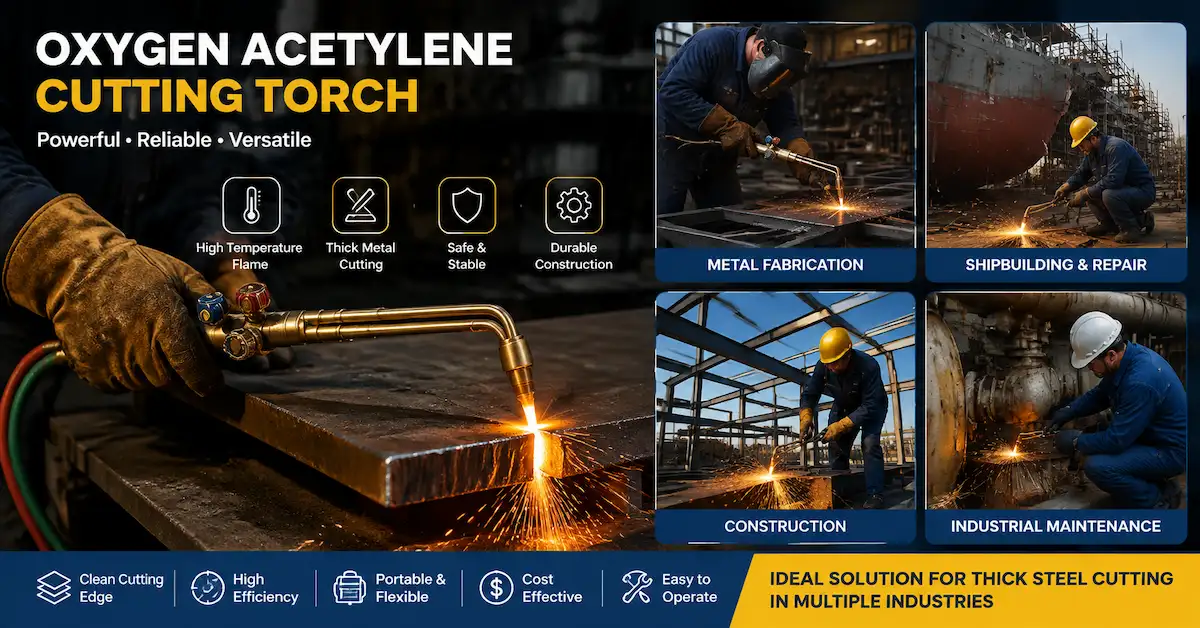
Where Are Cutting Torches Commonly Used?
Cutting torch products serve many industries and sales channels:
- Metal fabrication
- Construction
- Shipbuilding
- Steel processing
- Industrial maintenance
- Agricultural repair
- Heavy-equipment repair
- Welding distribution
- Hardware wholesale
- OEM industrial tool brands
The product assortment should match the channel.
A welding distributor may need several torch grades and a complete replacement-tip range. A hardware chain may prefer boxed combination kits. A heavy-industry supplier may prioritize extended-reach and serviceable models.
Why Consider UWELD as Your Cutting Torch Supplier?
UWELD supports global buyers across welding, heating, and gas-cutting categories.
Rather than treating a cutting torch as an isolated product, UWELD can help buyers consider the complete system, including:
- Cutting torches
- Cutting tips
- Regulators
- Hoses
- Connections
- Accessories
- Kits
- Spare parts
- OEM packaging
Support may include product matching, distributor-oriented combinations, OEM/private-label projects, quality coordination, export cooperation, and repeat-order planning.
Explore the UWELD product center, review related sourcing knowledge on the UWELD blog, or submit your requirements through UWELD solutions.
FAQ About Cutting Torch Suppliers
1. What products should a cutting torch supplier offer?
A complete supplier should provide cutting torches, matched tips, regulators, hoses, fittings, safety accessories, repair parts, kits, manuals, and packaging support.
2. How can buyers check cutting torch quality?
Request samples, verify connections and tip compatibility, review valve operation and workmanship, inspect documentation, and compare the bulk order against an approved reference sample.
3. What information is needed for a quotation?
Provide the destination market, application, fuel gas, cutting requirement, connection standard, torch type, tip system, packaging, quantity, customization, and delivery schedule.
4. Is the lowest cutting torch price the best option?
Not always. Buyers should compare included accessories, inspection, packaging, spare parts, documentation, freight, and the potential cost of warranty claims or returns.
5. Can cutting torches be private labeled?
Yes. Common options include logo marking, colors, model labels, packaging, manuals, barcodes, cases, and customized accessory combinations.
6. Why are spare parts important?
Replacement tips, valves, seals, and fittings reduce downtime, simplify distributor support, and create repeat-sales opportunities.
7. Should buyers choose a manufacturer or an integrated supplier?
A manufacturer may offer stronger direct production control. An integrated supplier may provide a broader product system. Buyers should compare actual QC, specification control, and support.
8. What documents should an importer request?
Request product specifications, instructions, parts information, inspection records when applicable, packing details, and compliance documents required by the destination market.
9. How long does an OEM order take?
Lead time depends on sample approval, packaging development, tooling, production capacity, order quantity, component availability, and inspection requirements.
10. How can UWELD support distributors?
UWELD can support product selection, gas-cutting system matching, OEM packaging, accessory combinations, quality coordination, export cooperation, and repeat-order planning.
Conclusion
Choosing the right cutting torch supplier is a supply-chain decision, not a simple unit-price comparison.
A reliable supplier should provide compatible products, consistent workmanship, clear documentation, practical quality control, stable spare-parts availability, OEM support, and dependable repeat-order service.
Before placing an order, buyers should clearly define:
- Target market
- Fuel gas
- Cutting application
- Connection standard
- Tip system
- Product range
- Order quantity
- Packaging
- Documentation
- OEM requirements
Samples should be evaluated against written criteria, and the approved product should become the standard for bulk production and future reorders.
The right supplier can also reduce hidden costs. Accurate machining, stable valve operation, correct system matching, durable packaging, available spare parts, and responsive support protect both distributor margins and customer trust.
For importers, wholesalers, industrial suppliers, and private-label brands, the most valuable partner is the one that understands the product, the application, and the commercial responsibilities behind every shipment.
Contact UWELD through the solutions page and share your market, product specifications, expected quantity, packaging preferences, OEM requirements, and delivery plan. UWELD can help you build a cutting torch and gas-cutting product package suited to your distribution or industrial supply business.