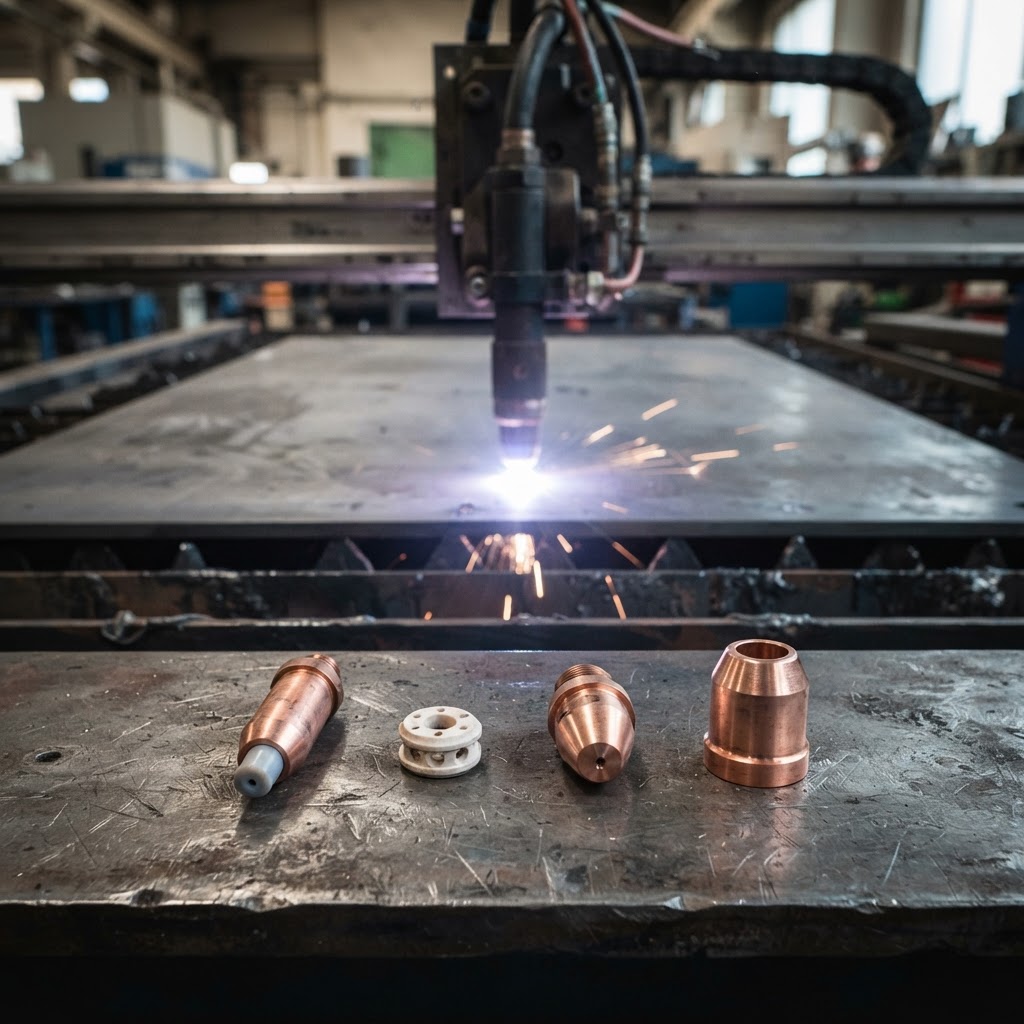


Plasma cutter consumables are the replaceable parts inside the torch — electrode, nozzle, swirl ring, and shield or retaining cap — that shape and constrict the arc. They are designed to wear, but most short-life complaints on a shop floor trace back to pierce height, wet air, or the wrong part for the amperage, not to the parts themselves. Fix those three inputs and a typical set will last noticeably longer and cut cleaner while it does.
What Plasma Cutter Consumables Do in the Arc
The torch is a small, controlled reaction chamber. Plasma gas enters, gets swirled, is ionised by an arc struck between the electrode and the workpiece, and is forced through a narrow orifice that concentrates the energy. Every consumable in that stack has one job, and each fails in a recognisable way. Understanding the stack is what lets you replace one part instead of guessing at the whole torch.
| Consumable | Job in the arc | Wear signs | Retire when |
|---|---|---|---|
| Electrode | Holds the hafnium insert that emits the arc; copper body sinks heat | Deep pit or crater in the insert, discoloured or cracked copper shoulder | Pit is roughly 1.6 mm (1/16 in) deep, or arc starts become unreliable |
| Swirl ring | Spins the plasma gas so the arc stays centred and the nozzle cools evenly | Enlarged or blocked gas holes, melted or scorched body | Gas holes are visibly out of round, partly blocked, or the ring is heat-damaged |
| Nozzle (tip) | Constricts the arc to the orifice size that matches the amperage | Orifice out of round, enlarged, nicked, or spattered on the face | Orifice is oval, chipped, or the cut shows heavy bevel and dross |
| Shield / retaining cap | Holds the stack together and directs shield gas around the nozzle | Spatter build-up, cross-threads, warped or cracked cap | Spatter cannot be cleaned off, threads are damaged, or the cap no longer seats |
The electrode insert is the part that actually carries the arc. In air and oxygen plasma it is normally hafnium; the copper around it is there to pull heat away so the insert does not melt. Each start consumes a little of that insert, which is why pierce count — not cutting minutes alone — is the number that predicts electrode life. The nozzle orifice then decides how tightly the arc is squeezed: run a 45 A nozzle at 65 A and the orifice erodes quickly, the kerf widens, and the cut edge rolls over.
Why the parts are matched as a set
Electrode, swirl ring, nozzle, and shield are designed as a stack for a specific torch body, amperage, and gas. Mixing a partly worn electrode with a new nozzle is a common false economy: the worn insert changes the arc length, the new orifice runs hotter than it should, and both parts die early. Replace the cutting pair — electrode and nozzle — together, and inspect the plasma cutter swirl ring at the same time.
How Long Do Plasma Cutter Consumables Last?
There is no single number, and any supplier who quotes one without asking about your cut program is guessing. Consumable life is driven by how many times the arc starts, at what current, on what material, with what air, and with what torch height. A machine cutting long straight runs at moderate amperage can log far more arc-on hours from one set than a machine doing hundreds of short pierces into 12 mm plate, where each pierce delivers a thermal shock to the nozzle face.
A useful way to think about plasma torch consumable life is to track pierces and arc-on time separately, then calculate cost per pierce and cost per metre of cut. When cost per pierce climbs while your settings have not changed, something upstream has drifted — usually air quality, height control, or a worn swirl ring. Manufacturers publish expected pierce counts for their own torch and power-supply combinations, so use those figures as the baseline for your machine rather than a generic claim from a forum.
The Six Things That Kill Consumables Early
1. Piercing too close to the plate
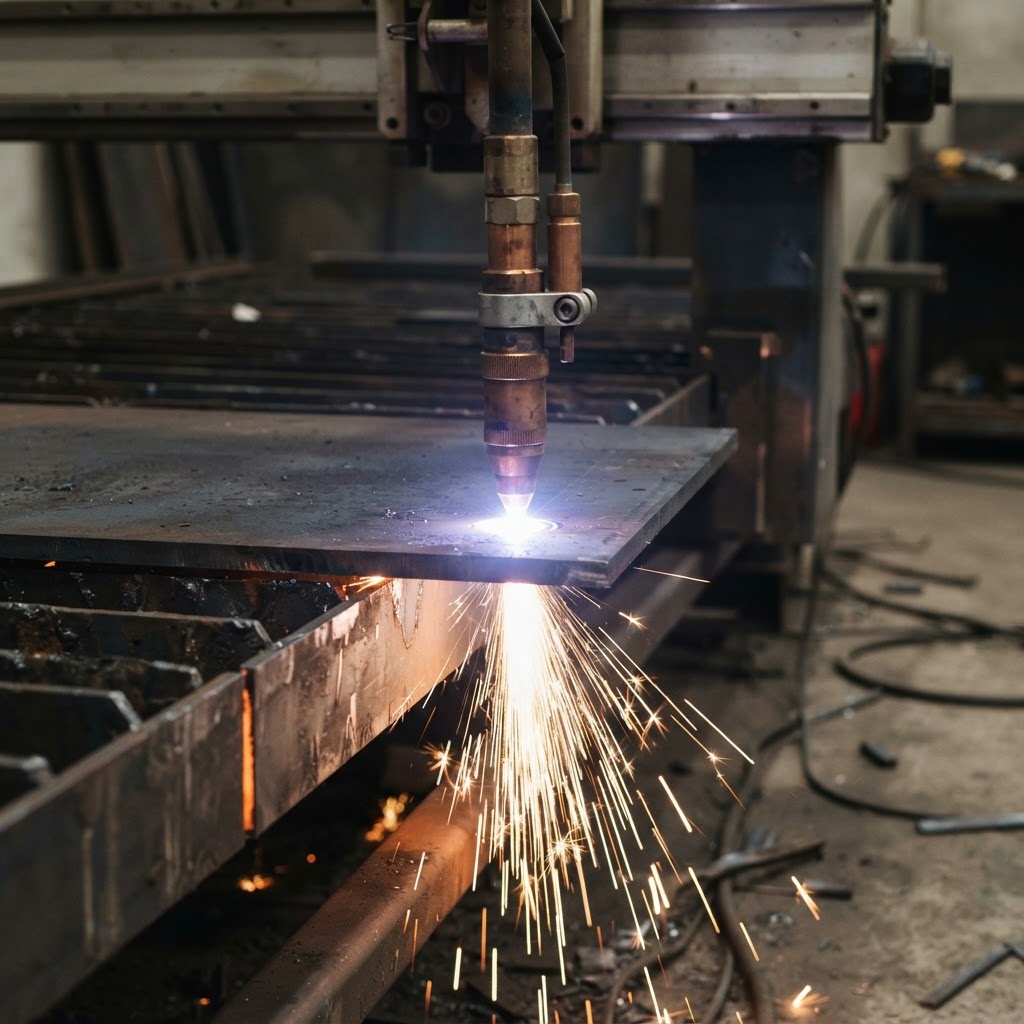
Piercing is the single most damaging event in the life of a nozzle. Molten metal and spatter blow back toward the torch face, and if the torch is at cut height the nozzle takes the hit directly. Pierce higher than you cut: Hypertherm's consumable guidance puts pierce height at roughly twice the cut height, and its torch height control guidance describes a working range of 150–200% of cut height. Pierce high, then drop to cut height before the torch moves into the part.
2. Wet or oily air
Water and oil in the plasma gas attack the electrode insert and disturb the arc. Moisture causes hard starts, erratic arc transfer, and a pitted insert long before its normal wear point. Plasma cutting air quality is therefore a consumable variable, not a housekeeping detail. A refrigerated dryer plus a coalescing filter at the machine inlet is the minimum; a desiccant dryer is the safer choice in humid climates or where the compressor runs hot. Drain the receiver and filter bowls on a schedule, not when someone remembers.
3. Amperage and orifice mismatch
Every nozzle has a current window. Running below it gives a soft, wandering arc that spatters; running above it erodes the orifice and overheats the shield. The same applies to fine-cut consumables used on thick plate, or standard consumables pushed onto thin sheet where a smaller orifice belongs. Set amperage and consumable from the manufacturer's cut chart for the material and thickness, then adjust speed — not the orifice — to fix dross.
4. Wrong torch height and standoff
Cut height affects bevel, dross, and nozzle load at the same time. Too high and the arc spreads, the kerf widens and the edge bevelled; too low and spatter bridges the gap between nozzle and plate. On a CNC table, a torch height control that samples voltage keeps this consistent as the plate warps. On a hand torch, drag shields let the tip ride the work at low amperage, but higher-amperage torches need a standoff guide to hold the correct distance.
5. Starting and stopping in the cut
Every pilot arc and transfer is a wear event. Programming a lead-in into scrap, chaining cuts where the process allows, and avoiding restarts in the middle of a kerf all reduce the number of pierces per part. On thicker plate, a pierce delay that is too short forces the arc to struggle through the plate and throws spatter back at the nozzle.
6. The wrong consumable family, or a copy part
Torch families look similar but are not interchangeable. A P31 torch head and a P80 torch head use different consumable sets, and fitting the wrong one damages the stack or produces a bad cut even if it physically threads on. Low-cost copy consumables are the second half of this problem: orifice drilling and insert bonding tolerances decide whether the part behaves like the original. For production work, buy from a supplier who can state which torch family and amperage each part is built for.
Shop-Floor Diagnostic Table
| Symptom | Most likely cause | First action |
|---|---|---|
| Hard starting, arc will not transfer | Worn electrode insert, damp air | Inspect electrode pit; check filter bowl and dryer |
| Heavy dross on one side | Torch out of square, wrong cut height, speed too slow | Square the torch, verify cut height, raise speed in steps |
| Kerf wider than usual | Nozzle orifice eroded | Replace nozzle with the correct amperage part |
| Arc wander or double arc | Damaged swirl ring or cracked nozzle | Replace swirl ring and nozzle, inspect shield cap |
| Consumables fail in hours, not days | Piercing at cut height, moisture, over-current | Raise pierce height, service air, check amperage setting |
Cut Quality Is a Consumable Signal
Plasma cutting cut quality is measurable, not a matter of opinion. ISO 9013:2017 classifies thermal cuts by geometrical tolerances — perpendicularity, kerf width, and drag — so a shop can specify a quality class instead of arguing about a sample. When the class your process used to hold starts slipping, look at the consumables before touching the cut chart: a slightly oval nozzle changes kerf width and bevel on every part that follows.
How to Make Plasma Cutter Consumables Last: A Setup Checklist
- Confirm the stack. Match electrode, swirl ring, nozzle, and shield to the torch body and the amperage you will actually run.
- Set plasma cutting pierce height first. Start at 1.5–2× cut height, then tune pierce delay until the arc punches through cleanly without spatter.
- Drop to cut height before moving. Do not travel while the torch is still at pierce height.
- Program lead-ins into scrap. Keep pierces off the finished edge and chain cuts where the nest allows.
- Fix the air before blaming the parts. Dry, oil-free air at the flow the torch requires; check the machine inlet filter weekly.
- Log pierces. A simple counter per consumable set turns "they wear out fast" into a number you can compare month to month.
- Inspect at every change. Electrode pit depth, orifice roundness, swirl ring holes, and shield spatter — two minutes, four parts.
When to Replace, and What Not to Do
Replace the plasma cutter electrode and nozzle as a pair when the insert pit reaches roughly 1.6 mm (1/16 in), or sooner if starts become unreliable. Replace the nozzle earlier if the orifice is out of round, nicked, or the cut edge shows a sudden increase in bevel. Discard a swirl ring with blocked or enlarged gas holes — it is cheap and it protects the two parts either side of it. Do not sand, drill, or ream a nozzle back into service: the orifice geometry is the part's entire function, and an opened orifice over-draws current and damages the electrode.
Also resist the urge to run one fresh part against one worn part. If the electrode is finished, the nozzle has almost certainly seen the same arc hours. Changing both keeps the arc length and heat load where the design intended.
Matching Consumables to Your Torch Platform
Consumable life starts with the torch head itself. The UWELD P31 plasma machine cutting torch head is built for CNC table systems, with a body designed for rapid nozzle and electrode replacement during high-speed cutting; the P80 head is the heavier-duty option for automated tables running intensive cutting programs. Both are available with customization and OEM supply for distributors building their own torch range. If you are still deciding which platform fits your table, the plasma cutting torch supplier guide covers P31/P80 compatibility and CNC readiness in more detail.
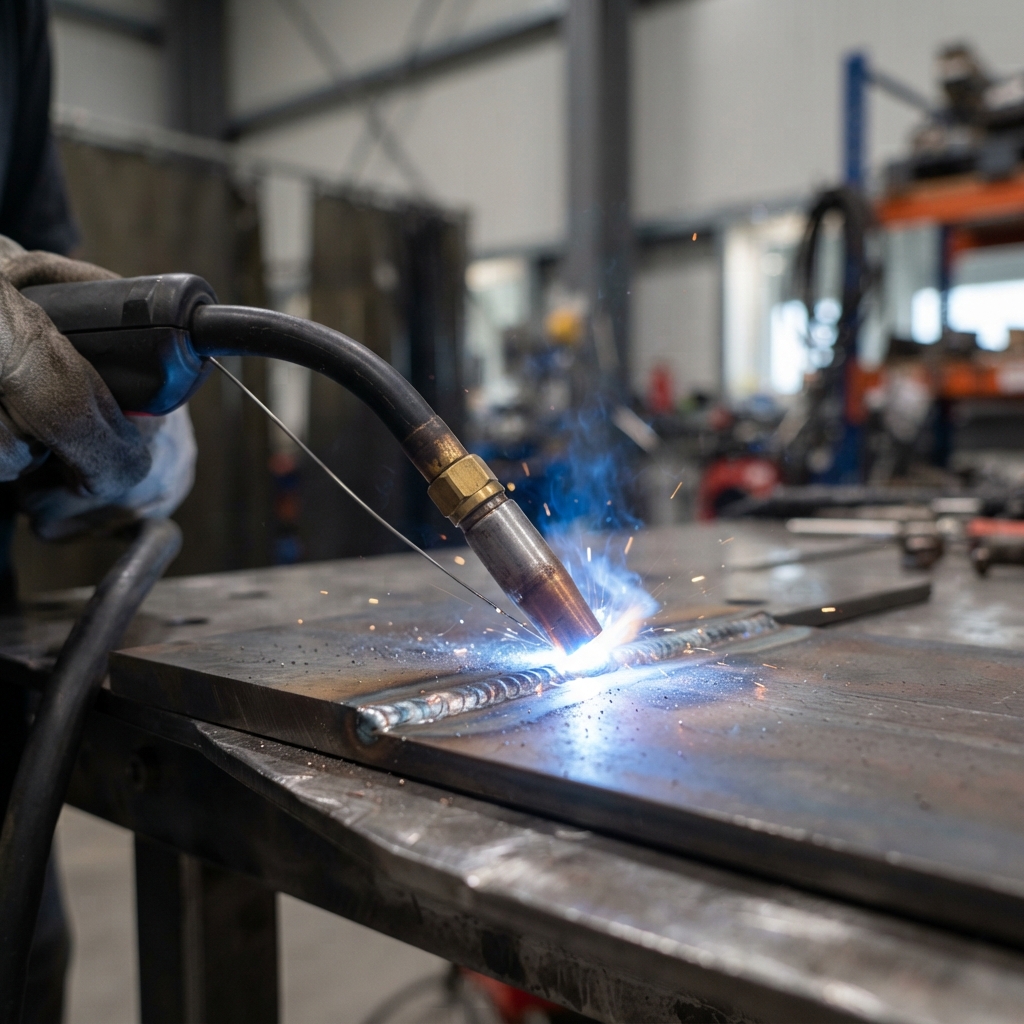
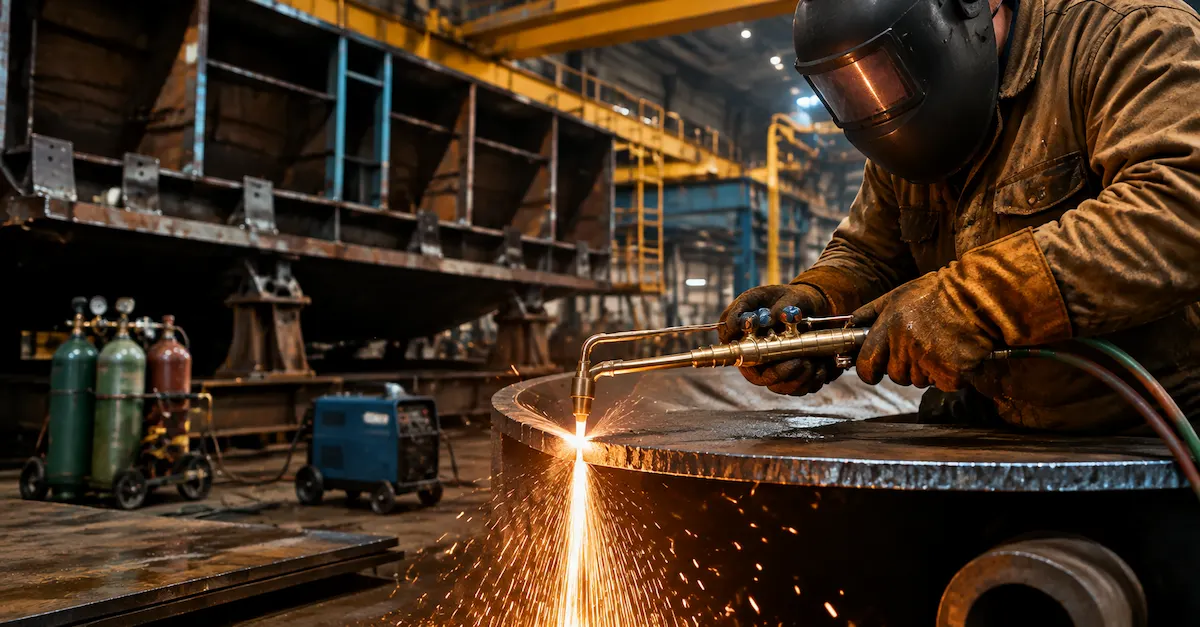
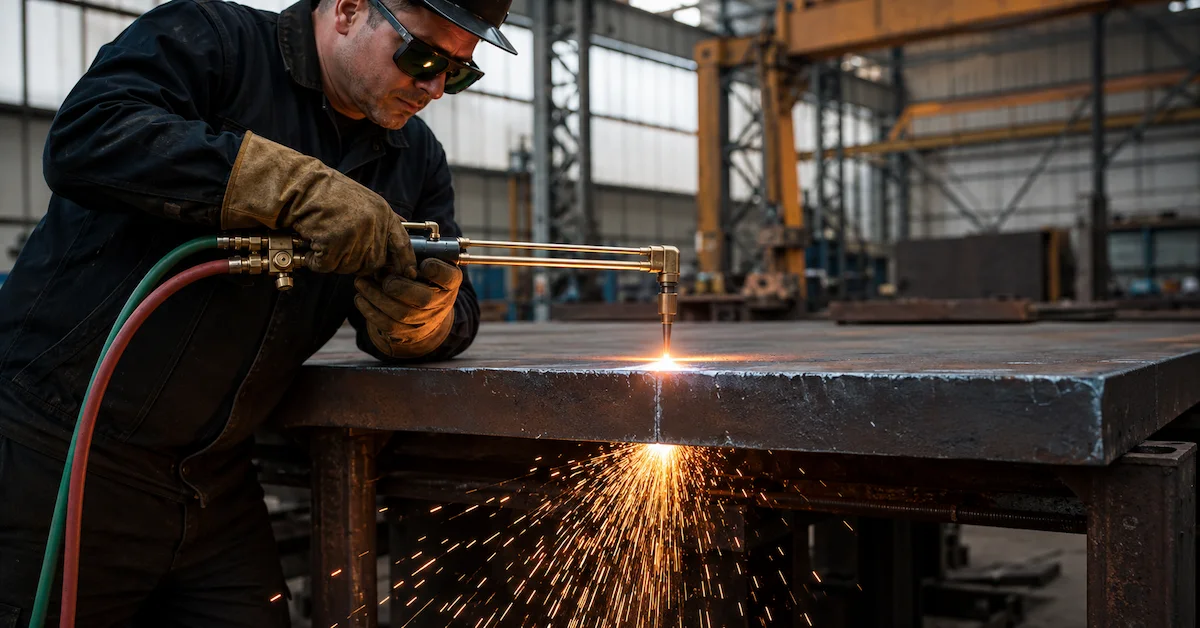
Two related reads for shops tightening up process control: MIG welding porosity causes and fixes covers the same worn-consumable logic on the welding side, and cutting torch practice for metal fabrication covers inspection and cut quality for oxy-fuel work. Product pages: P31 plasma torch head and P80 plasma torch head.
Safety Around the Torch
Consumable changes happen at the hottest, dirtiest end of the process. Isolate power before opening a torch, allow the stack to cool, and wear eye protection when handling spattered parts. Fume, UV radiation, and fire risk are covered by OSHA 29 CFR 1910.252, which sets the general requirements for welding and cutting, including PPE and protection of combustible material. Ventilation and fume control belong in the same preventive routine as the air filter — both protect people, and one of them protects the consumables too.
FAQ
What consumables does a plasma cutter use?
A typical torch uses an electrode, a swirl ring, a nozzle (tip), and a shield or retaining cap. Some torch designs add a separate shield gas cup or a drag shield. Each part is specific to the torch body and the amperage range.
How long do plasma cutter consumables last?
Life is counted in pierces more than hours. A set may last hundreds of pierces on thin sheet at low amperage and far fewer on thick plate with frequent piercing. Track your own machine's pierce count per set and use the manufacturer's published figure as the baseline.
What are plasma cutter consumables made of?
Electrodes are copper bodies with a hafnium insert for air and oxygen plasma. Nozzles and shields are usually copper or copper alloy, and swirl rings are commonly a high-temperature ceramic or composite. Materials are chosen for thermal conductivity and arc resistance, not for cost alone.
Are plasma cutter consumables interchangeable?
No. Parts are matched to a torch family and an amperage range. P31 and P80 torch heads, for example, take different consumable sets. A part that threads on is not proof of compatibility — check the torch model and the cut chart before fitting.
Why are my consumables wearing out so fast?
Check pierce height first, then air quality, then amperage against the nozzle rating. Piercing at cut height, moisture in the air line, and running a nozzle above its current window account for most premature failures. A blocked swirl ring is the next most common cause.
Can I sharpen or ream a plasma nozzle?
No. The orifice diameter and roundness control arc constriction and current density. Any reaming enlarges the hole, widens the kerf, and overloads the electrode. Replace the nozzle instead.
Do I need different consumables for different thicknesses?
Yes, in most cases. Thicker material needs a larger orifice and higher amperage; thin sheet cuts best with fine-cut consumables at lower current. Follow the cut chart for the material and thickness rather than using one set for everything.
Does a plasma cutter need dry air?
It needs clean, dry, oil-free air. Moisture pits the electrode insert and causes hard starting, and oil contaminates the orifice. A dryer plus a coalescing filter at the machine inlet is the minimum practical setup.
What is the difference between a drag tip and a standoff tip?
A drag tip is designed to ride on the workpiece, usually at lower amperage. A standoff tip runs at a fixed distance above the plate and needs a guide or torch height control. Using a drag tip at high amperage transfers heat into the shield and shortens its life.
How do I know when to change the electrode versus the nozzle?
Look at the insert: a pit around 1.6 mm (1/16 in) deep means the electrode is done. Look at the orifice: an oval, enlarged, or nicked hole means the nozzle is done. In practice, change both together so the arc length and heat load stay balanced.
Conclusion
Plasma cutter consumables fail early for reasons you can see and measure: a pierce that starts too low, air that carries moisture, a nozzle pushed past its current rating, or a swirl ring nobody inspected. Set pierce height at 1.5–2× cut height, keep the air dry, match the stack to the torch and amperage, and log pierces per set. That routine usually costs less than the parts it saves.
If you are sourcing plasma torch heads or consumable sets for a CNC table, or want to check which torch family fits your power supply, contact our team with your machine details and cut program and we will help you match the parts.