

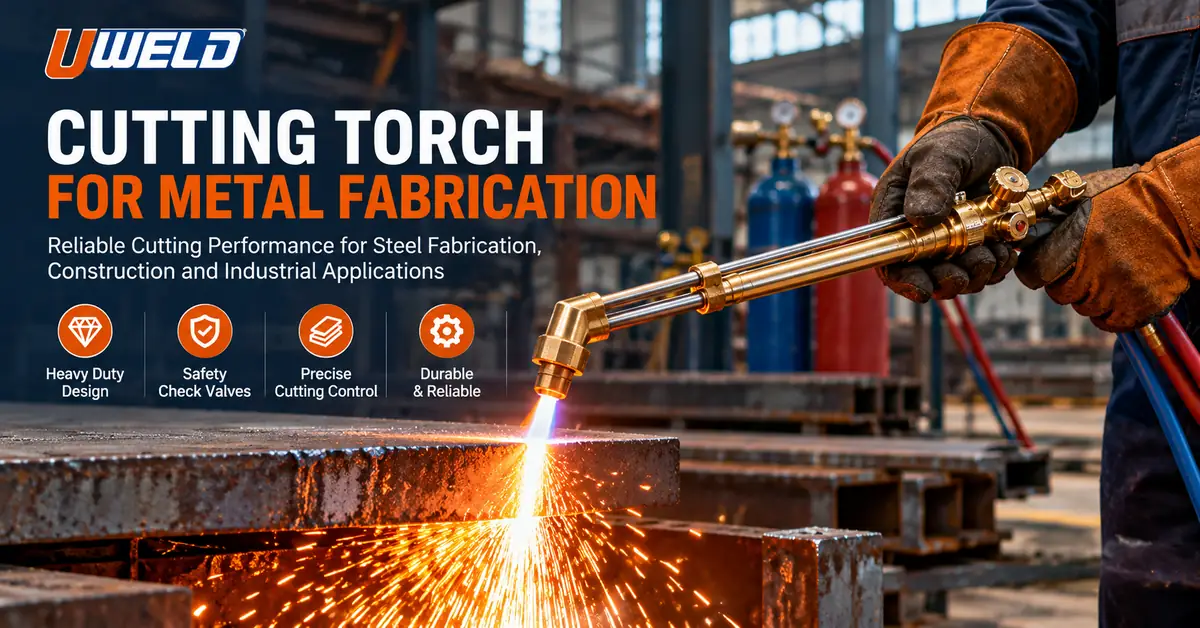
A cutting torch for metal fabrication is an essential tool for separating carbon steel, preparing structural components, removing damaged sections, and supporting industrial repair operations. Oxy-fuel cutting equipment remains particularly useful where portable operation, thick steel cutting, and flexible workshop applications are important.
However, successful metal fabrication depends on more than lighting a torch and moving it across a steel plate. The cutting system must match the material, fuel gas, nozzle, regulator, working conditions, and required cut quality.
For fabrication workshops, equipment distributors, and industrial procurement teams, understanding proper equipment selection and operating requirements helps reduce compatibility problems, unnecessary consumable replacement, and production interruptions.
This guide explains the fabrication workflow, equipment inspection requirements, common cutting defects, and technical purchasing considerations. It also introduces relevant products from UWELD's gas cutting equipment range for buyers evaluating professional tools and wholesale supply options.
Why Is a Cutting Torch Important in Metal Fabrication?
Oxy-fuel cutting uses oxygen and a suitable fuel gas to separate steel through controlled oxidation.
The fuel-gas flame preheats the workpiece to its ignition temperature. A concentrated cutting oxygen stream then reacts with the heated iron, producing oxides that are removed from the cutting path.
Unlike a process that primarily melts metal, conventional oxy-fuel cutting depends on the chemical behavior of the workpiece.
This makes it especially suitable for carbon steel and certain low-alloy steels.
Common Fabrication Applications
| Fabrication Task | Typical Application | Main Equipment Requirement |
|---|---|---|
| Steel plate cutting | Separating plate into workable sections | Suitable thickness capability and nozzle |
| Structural steel fabrication | Cutting beams, channels, and brackets | Controlled cutting and operator access |
| Weld preparation | Preparing edges before fabrication welding | Appropriate cut geometry and surface condition |
| Equipment repair | Removing damaged steel components | Portable equipment and reliable gas control |
| Heavy fabrication | Cutting larger steel sections | Suitable cutting capacity and durable construction |
| On-site modifications | Adjusting fabricated steel assemblies | Portable configuration and workplace safety controls |
A torch is not always the most suitable cutting technology.
For stainless steel, aluminum, highly precise sheet-metal profiles, or high-volume repetitive cutting, plasma, laser, or mechanical cutting may offer better technical suitability.
For most buyers, the correct decision starts with understanding the actual metal fabrication task rather than comparing torch prices alone.
What Equipment Is Needed for Oxy-Fuel Metal Fabrication?
A professional oxy-fuel system consists of several interconnected components.
Each one affects operating safety, gas compatibility, cut quality, and maintenance requirements.
Main Equipment and Technical Requirements
| Component | Function | What Industrial Buyers Should Verify |
|---|---|---|
| Cutting torch | Controls preheating gases and cutting oxygen | Model, head configuration, valves, length |
| Oxygen cylinder or supply | Provides oxygen for preheating and cutting | Supply capacity and approved equipment |
| Fuel-gas cylinder or supply | Provides acetylene, propane, or another approved fuel | Gas type and system compatibility |
| Oxygen regulator | Controls oxygen delivery pressure | Rated ranges, connections, gas approval |
| Fuel-gas regulator | Controls fuel delivery pressure | Gas compatibility and operating limits |
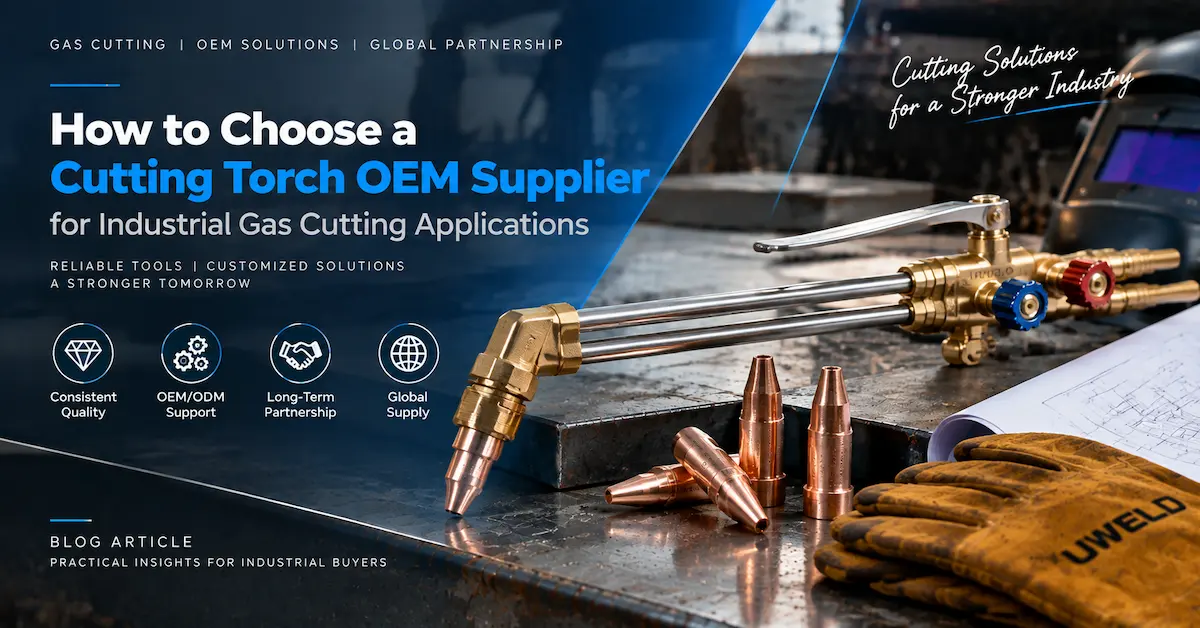
| Cutting nozzle | Forms preheat flames and directs cutting oxygen | Nozzle series, size, seat design, fuel type |
| Gas hoses and fittings | Deliver gases to the torch | Service ratings, dimensions, connections |
| Flashback protection | Helps protect against specified gas-system hazards | Gas type, installation position, device functions |
| Personal protective equipment | Protects the operator | Eye, face, hand, body, and respiratory protection as required |
The cutting torch should be evaluated as part of a complete system.
For example, a high-quality torch body cannot compensate for an incompatible nozzle, incorrectly specified regulator, or defective hose.
Why Cutting Nozzle Compatibility Matters
The cutting nozzle performs two important functions:
-
Distributing preheating flames to prepare the steel surface.
-
Directing the cutting oxygen stream through the material.
Different nozzle designs may be required for acetylene and propane applications.
Buyers should confirm the torch model, nozzle seat, fuel-gas compatibility, material thickness range, and replacement part availability before placing an order.
UWELD provides additional technical purchasing information in its cutting torch nozzle selection guide.
How to Prepare a Metal Fabrication Workshop for Torch Cutting
Safe cutting begins before a flame is introduced.
Fabrication shops should establish an approved operating procedure covering equipment inspection, gas supply, hot-work preparation, operator training, and emergency response.
The following workflow is intended as a planning and inspection guide for trained personnel. It does not replace the equipment manufacturer's operating instructions or workplace-specific safety procedures.
Step 1: Confirm the Material and Cutting Requirements
Start by reviewing the work order.
Identify the steel grade, normal material thickness, required cut geometry, and condition of the workpiece.
Important questions include:
-
Is the material suitable for conventional oxy-fuel cutting?
-
Does the task require a straight cut, curved cut, or bevel preparation?
-
Will the cutting surface require subsequent welding or machining?
-
Are there coatings, contaminants, enclosed sections, or other hazards?
-
Can the workpiece and separated pieces be adequately supported?
These checks help determine the appropriate torch, nozzle, operating procedure, and quality requirements.
Step 2: Inspect the Torch and Gas Supply Equipment
Before operation, trained personnel should inspect the complete assembly according to the applicable procedures.
Inspection should cover the torch body, valves, gas passages, regulators, hoses, fittings, cutting nozzle, and installed protective devices.
Pay particular attention to visible mechanical damage, worn components, incorrect gas connections, and signs of previous overheating.
A suspected leak must be investigated using an approved leak-detection method. Never use an open flame to search for gas leaks.
Damaged or unsuitable components should be removed from service until properly evaluated.
Step 3: Prepare the Work Area
Metal fabrication cutting creates sparks, hot slag, radiant heat, and potentially harmful fumes.
Before cutting, the workplace should have:
-
Suitable ventilation or local exhaust extraction.
-
Appropriate fire prevention measures.
-
Removal or protection of combustible materials.
-
Stable support for the workpiece.
-
Safe access and escape routes.
-
Required protective clothing and eye protection.
-
Appropriate hot-work authorization and fire-watch arrangements.
Additional controls may be necessary when cutting coated steel, enclosed structures, or components with an unknown service history.
Never cut sealed containers or vessels with an uncertain history without a specifically approved procedure.
Step 4: Verify the Approved Equipment Configuration
The torch, cutting nozzle, regulators, hoses, gas supply, and protective accessories must be compatible.
Working pressures and gas settings are not universal.
They vary according to the fuel, nozzle size, cutting thickness, torch design, and manufacturer specifications.
Qualified personnel should use the approved model-specific pressure chart and operating manual.
Incorrect assumptions about settings can create poor cutting performance and serious safety hazards.
How Does the Cutting Operation Work in a Fabrication Shop?
Once the equipment has been inspected and the worksite is prepared, the cutting operation follows a controlled sequence defined by the manufacturer and workplace procedure.
Stage 1: Establish the Required Preheating Conditions
A trained operator prepares and ignites the torch using the manufacturer's prescribed method and an approved ignition device.
The fuel-gas and oxygen system produces preheating flames that raise the steel surface toward its ignition temperature.
The correct flame characteristics depend on the fuel-gas and nozzle configuration.
The preheating process must establish suitable thermal conditions without unnecessarily damaging the top surface of the steel.
Stage 2: Initiate the Cutting Reaction
When the workpiece reaches the required condition, the operator introduces the cutting oxygen stream according to the equipment instructions.
The oxygen reacts with the hot steel, generating heat through oxidation.
The oxygen jet also helps expel the resulting oxides and slag from the cutting kerf.
Cutting quality depends on maintaining suitable oxygen delivery and stable process conditions.
Stage 3: Guide the Cut Along the Fabrication Path
During cutting, the operator maintains an appropriate relationship between torch position, nozzle distance, travel speed, and the cutting path.
The exact technique depends on material thickness, nozzle design, and whether the task is straight cutting, contour cutting, or edge preparation.
For production teams, repeatability is particularly important.
The goal is to produce a cut that meets the required geometry and finishing allowance without unnecessary rework.
Stage 4: Complete the Approved Shutdown Procedure
After the cutting operation, the equipment must be shut down using the specific manufacturer's procedure.
This includes the prescribed torch and gas-supply shutdown sequence, pressure isolation, equipment inspection, and safe storage arrangements.
Do not assume that shutdown instructions from a different torch model or fuel-gas system are interchangeable.
The worksite should also be checked for residual heat, smoldering material, and fire hazards before the operation is considered complete.
How to Identify Good and Poor Cutting Quality
For fabrication businesses, cut quality affects the next production stage.
A poor-quality cut may require additional grinding, machining, straightening, or edge preparation before welding.
Typical indicators of acceptable oxy-fuel cutting include reasonably consistent geometry, an appropriate cut surface, manageable drag lines, and limited adhering slag.
However, acceptance requirements must reflect the actual fabrication specification.
Common Cutting Defects and Inspection Priorities
| Cutting Problem | Potential Contributing Factors | Recommended Evaluation |
|---|---|---|
| Heavy slag along the bottom edge | Inadequate slag removal, unsuitable cutting conditions | Inspect cutting oxygen delivery and nozzle suitability |
| Rounded or melted top edge | Excessive localized heating or unsuitable operating conditions | Review approved preheat and travel conditions |
| Rough or irregular cut face | Nozzle damage, unstable flow, inconsistent movement | Inspect nozzle, gas delivery, and operation |
| Excessively angled drag lines | Cutting oxygen jet lag or unsuitable travel conditions | Evaluate approved cutting settings and thickness |
| Incomplete separation | Incorrect cutting capability or process interruption | Recheck material thickness and equipment configuration |
| Uneven kerf width | Torch alignment, nozzle condition, inconsistent positioning | Inspect equipment geometry and process stability |
| Repeated flame instability | Potential gas, equipment, or process fault | Stop operation and arrange qualified inspection |
These observations help guide diagnosis but do not identify a single cause with certainty.
Why Cut Quality Matters to Purchasing Managers
Poor cutting performance can increase production cost in several ways:
-
Additional edge grinding and preparation.
-
Higher consumable replacement frequency.
-
Excessive material waste.
-
Additional inspection and rework.
-
Interrupted fabrication schedules.
-
Increased equipment maintenance requirements.
A lower-priced cutting torch is not necessarily the lower-cost purchasing choice if it creates compatibility problems or frequent downtime.
Acetylene vs Propane: Which Fuel Is Better for Metal Fabrication?
Both oxygen-acetylene and oxygen-propane systems can be used for suitable carbon steel cutting applications.
The correct fuel depends on equipment configuration, local gas availability, preheating requirements, and operating economics.
| Evaluation Factor | Oxygen-Acetylene | Oxygen-Propane |
|---|---|---|
| Preheating characteristics | Concentrated high-temperature flame | Different heat distribution characteristics |
| Steel fabrication | Suitable with approved equipment | Suitable with approved equipment |
| Cutting nozzle | Acetylene-compatible nozzle | Propane-compatible nozzle |
| Purchasing considerations | Gas supply, preheat requirements, system cost | Gas supply, preheat requirements, system cost |
| Regulator requirement | Approved acetylene regulator | Approved propane regulator |
| Typical buyer concern | Preheat performance and operating flexibility | Fuel availability and overall running cost |
Fabrication shops should not evaluate fuel choice on flame temperature alone.
The cutting oxygen jet performs the primary oxidation and material-removal functions, while the preheating flame establishes the conditions needed for that reaction.
A supplier should therefore help buyers verify the entire gas cutting configuration.
How to Choose the Right UWELD Cutting Torch for Metal Fabrication
UWELD offers gas cutting equipment for professional applications, including heavy-duty hand cutting torches, straight cutting torches, regulators, nozzles, and related accessories.
For industrial procurement, the choice should reflect actual working requirements instead of relying on general descriptions such as "professional" or "heavy duty."
UWELD Cutting Torch Model Comparison
| UWELD Model | Published Product Characteristics | Potential Fabrication Use |
|---|---|---|
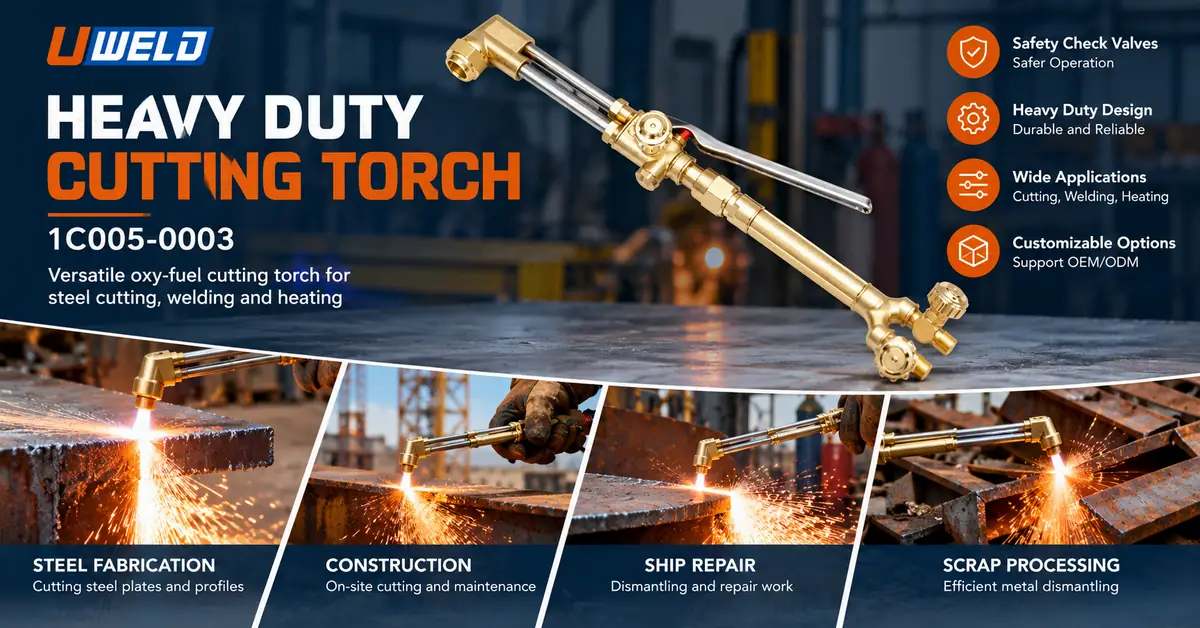
| 1C005-0003 Heavy Duty Cutting Torch | Heavy-duty configuration, safety check valves, available handle variant and customization options | General industrial steel cutting and repair |
| 1C005-0012 Straight Cutting Torch | Straight torch with triangular stainless steel tubes and dual needle valves | Fabrication work requiring a straight-style torch |
| 1C005-0001 Heavy Duty Straight Cutting Torch | 915 mm straight cutting torch; product page specifies a steel cutting thickness range of 1/8–5 inches | Applications where extended torch length and rated capability are relevant |
These characteristics are based on the respective product listings. Actual operating limits depend on the complete configuration, including the nozzle, gas type, and approved operating conditions.
Buyers should confirm the current specifications before treating different models as interchangeable.
Featured UWELD Product: 1C005-0003
The UWELD Heavy Duty Cutting Torch 1C005-0003 is a relevant option for industrial buyers seeking a configurable cutting torch product.
The official product listing describes a heavy-duty design with safety check valves and available customization options.
For procurement teams, the most important next step is to confirm the desired torch configuration, compatible nozzle, fuel-gas requirements, connection type, and applicable safety accessories.
Check valves should not be assumed to replace all flashback protection requirements.
Alternative UWELD Straight Cutting Models
The UWELD 1C005-0012 Straight Cutting Torch offers a different structural arrangement featuring triangular stainless steel tubes and dual needle valves.
For longer-reach applications, buyers can also review the UWELD 1C005-0001 Heavy Duty Straight Cutting Torch.
These products illustrate why model selection should be based on configuration, operator access, and working requirements rather than the product name alone.
What Materials and Manufacturing Details Should Buyers Inspect?
A professional fabrication torch should be evaluated through its actual component design, not simply its appearance.
Important inspection areas include the torch head, tubes, gas valves, seals, lever mechanism, and threaded connections.
For example, brass components and stainless steel tubes may be used in specific torch designs, but exact materials should be verified against each model's technical documentation.
Manufacturing and Quality Checklist
| Inspection Area | Why It Matters |
|---|---|
| Torch head construction | Affects structural integrity and service durability |
| Valve operation | Supports controlled adjustment and handling |
| Gas passage manufacturing | Influences flow consistency and assembly quality |
| Connection accuracy | Helps prevent incompatible or poorly fitted components |
| Nozzle interface | Determines correct consumable matching |
| Assembly inspection | Helps identify production defects |
| Leakage testing | Important for verifying assembled gas-system integrity |
| Product identification | Supports traceability and repeat-order consistency |
UWELD describes manufacturing, quality control, and customization capabilities through its industrial solutions page.
For bulk orders, buyers should request the specific test methods and records applicable to the selected products.
What About Certifications?
Certification requirements vary by equipment type and destination market.
EN ISO 5172 is one relevant standard for gas welding equipment blowpipes, where applicable.
However, purchasers must verify which exact products, configurations, and documents are covered by a supplier's declarations.
An ISO 9001 quality management certification does not automatically establish individual product conformity.
For industrial importers, the most reliable approach is to request current model-specific documentation before approving a shipment.
How to Reduce Cutting Torch Operating Costs
The purchase price is only one part of the total cost of ownership.
Metal fabrication workshops also incur costs associated with gas consumption, cutting tips, maintenance, edge finishing, operator labor, and production interruptions.
Main Cost Factors
| Cost Category | What Buyers Should Consider |
|---|---|
| Equipment purchase | Initial torch and accessory costs |
| Fuel and oxygen | Local gas pricing and process requirements |
| Consumables | Nozzle replacement intervals and availability |
| Maintenance | Valves, seals, connections, and inspections |
| Rework | Grinding, cleaning, and correcting unacceptable cuts |
| Downtime | Interruptions caused by equipment failures |
| Training | Operator competency and standard work procedures |
| Inventory | Spare parts stock and repeat-order lead time |
One useful purchasing approach is to compare the equipment's suitability for the intended work rather than select solely by the lowest quotation.
Why Spare Parts Availability Is Important
Fabrication shops depend on their equipment being ready for production.
Buyers should confirm whether replacement nozzles, seals, and other serviceable components are available for the selected model.
For distributors, spare parts planning also improves their ability to support customers after the initial sale.
Wholesale and OEM Cutting Torch Solutions for Fabrication Equipment Buyers
Importers and industrial equipment distributors frequently need products that are compatible with the requirements of their local market.
In addition to product performance, commercial purchasing decisions may involve packaging, labels, documentation, branding, and order consistency.
UWELD supports wholesale and OEM/ODM cooperation for welding and cutting equipment.
Depending on the project, customization discussions may cover branding, packaging, product identification, accessories, and feasible configuration adjustments.
Recommended RFQ Information
| RFQ Requirement | Information to Provide |
|---|---|
| Intended application | Workshop fabrication, construction, maintenance |
| Steel grade and thickness | Normal cutting range and maximum requirements |
| Fuel gas | Acetylene, propane, or another approved fuel |
| Preferred torch | Model or required configuration |
| Torch dimensions | Length, head angle, handling requirements |
| Compatible nozzle | Nozzle series, seat, size, fuel type |
| Gas connections | Required standards and dimensions |
| Destination market | Country and relevant technical requirements |
| Order quantity | Trial quantity and forecast bulk orders |
| Customization | Logo, packaging, labeling, documentation |
| Quality requirements | Inspection records and applicable certificates |
| Delivery requirements | Requested schedule and shipping conditions |
MOQ and lead times depend on product and customization requirements and should be confirmed during quotation.
Buyers seeking technical details, samples, or bulk pricing can contact UWELD with their specifications.
Frequently Asked Questions About Cutting Torches for Metal Fabrication
1. What is the best cutting torch for a metal fabrication workshop?
The best choice depends on the steel grade, thickness, cutting frequency, fuel-gas supply, and required cut quality. Buyers should compare compatible torch and nozzle configurations rather than select a model solely because it is described as heavy duty.
2. Can an oxy-fuel cutting torch cut thick steel plates?
Yes. Appropriately specified oxy-fuel systems can cut thick carbon steel sections. Actual capability depends on the torch, nozzle, oxygen supply, material, and manufacturer-rated configuration.
3. Can the same cutting torch be used with acetylene and propane?
Some torch systems support multiple approved fuel configurations, but compatible nozzles, regulators, and accessories must be selected for each fuel. Never assume interchangeability without checking the manufacturer documentation.
4. What safety checks are needed before using a cutting torch?
Trained personnel should inspect the equipment, confirm approved gas compatibility, check for leaks, prepare the hot-work area, and verify the required protective equipment and emergency arrangements.
5. What causes a rough cutting edge?
Possible causes include unsuitable oxygen delivery, nozzle damage, incorrect torch alignment, unstable operating conditions, or inconsistent travel. A qualified operator should investigate the complete system.
6. Why is my cutting torch producing excessive slag?
Excessive slag can result from poor slag removal, unsuitable cutting conditions, or incompatible equipment. The nozzle, oxygen supply, material thickness, and approved process settings should be reviewed.
7. Is oxy-fuel cutting suitable for stainless steel or aluminum?
Conventional oxy-fuel cutting is generally unsuitable for these materials because their oxidation characteristics differ from those of carbon steel. Plasma or laser cutting may be more appropriate.
8. What should distributors check before purchasing cutting torches in bulk?
Important factors include model specifications, fuel compatibility, valve construction, nozzle matching, inspection procedures, spare parts, technical documentation, pricing, and repeat-order consistency.
9. Does UWELD provide OEM cutting torch customization?
UWELD supports customization discussions for welding and cutting products. Available configurations, branding options, packaging, MOQ, and production conditions must be confirmed for the selected model and project.
10. How can I get a cutting torch quotation from UWELD?
Provide the intended fabrication application, steel thickness, fuel gas, preferred model, nozzle and connection requirements, purchase quantity, and destination market. Visit the UWELD contact page to request product information and a quotation.
Conclusion
Choosing the right cutting torch for metal fabrication requires attention to the complete cutting system, not just the torch body.
Material compatibility, nozzle selection, gas supply, workplace preparation, operating procedures, and cut quality all influence equipment suitability and overall fabrication costs.
For professional metal fabrication workshops, consistent results depend on correctly specified equipment, trained operators, suitable inspection practices, and reliable replacement parts.
For importers, distributors, and OEM buyers, supplier evaluation should also consider technical documentation, manufacturing quality, product consistency, customization options, and long-term support.
UWELD offers industrial gas cutting products and related equipment for professional applications, including heavy-duty cutting torches and customized sourcing options.
Explore UWELD's gas cutting product range or request a quotation for your metal fabrication equipment requirements.