

Why Choosing the Right Gas Regulator Supplier Matters
A reliable gas regulator supplier plays an important role in ensuring safe and stable performance in welding and cutting systems. Although regulators may appear to be simple pressure-control components, they directly influence gas flow stability, torch performance, operating efficiency, and workplace safety.
For distributors, importers, and industrial buyers, selecting a regulator supplier is not only about comparing product prices. A complete evaluation should consider:
- Gas compatibility
- Pressure requirements
- Flow performance
- Material suitability
- Product consistency
- Certification requirements
- Manufacturing capability
- OEM and customization support
The wrong regulator selection can lead to unstable pressure control, reduced equipment performance, increased maintenance requirements, and unnecessary replacement costs.
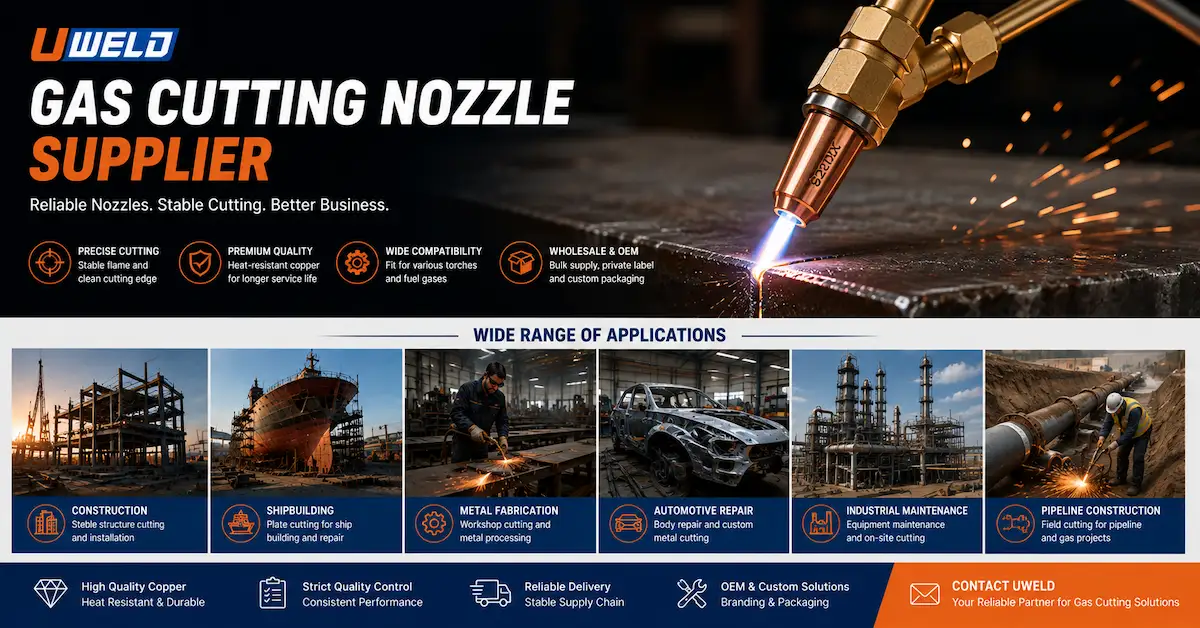
UWELD provides welding and cutting equipment solutions including regulators, gas cutting torches, accessories, and related products for professional applications. Buyers can explore the UWELD gas cutting solutions for industrial sourcing requirements.
What Does a Professional Gas Regulator Supplier Provide?
A professional supplier should provide more than a standard regulator catalog.
For B2B buyers, a qualified supplier should support:
Product Selection Support
Different applications require different regulator configurations.
A supplier should help buyers evaluate:
- Gas type
- Working pressure
- Required flow rate
- Application environment
- Connection requirements
- End-user expectations
Manufacturing Capability
Industrial buyers should evaluate whether a supplier can maintain consistent quality during repeated orders.
Important factors include:
- Production control
- Component inspection
- Assembly accuracy
- Functional testing
- Final quality inspection
Complete Gas Control Solutions
A strong supplier should understand how regulators work together with:
- Cutting torches
- Welding torches
- Gas hoses
- Nozzles
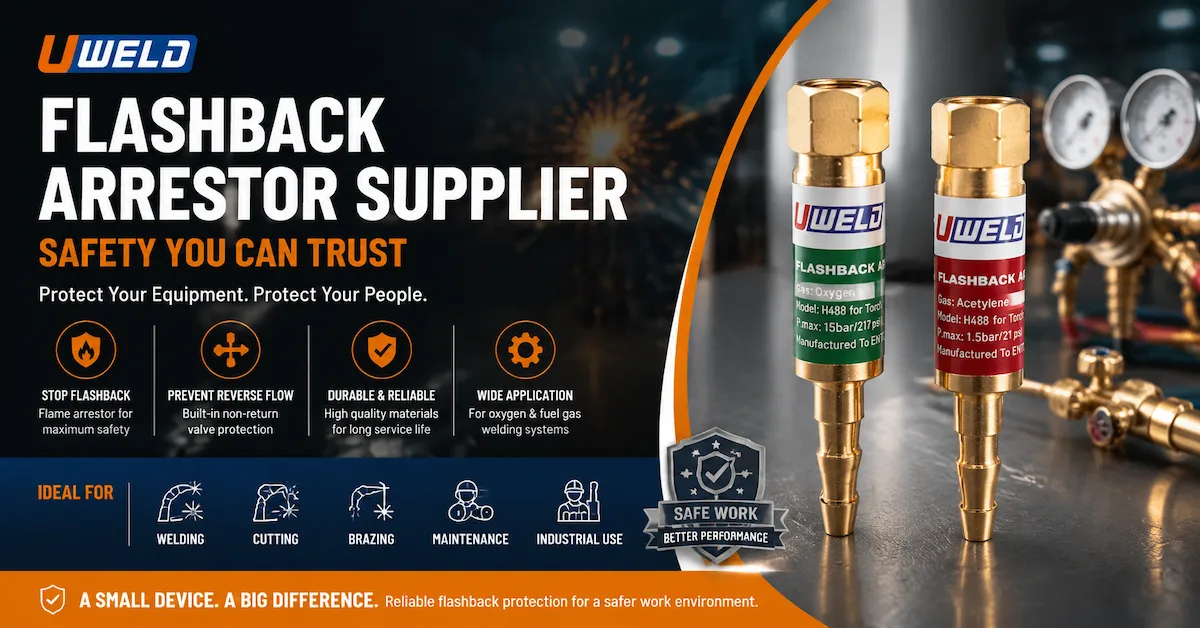
- Flashback protection devices
- Other accessories
A regulator should always be considered as part of a complete gas system.
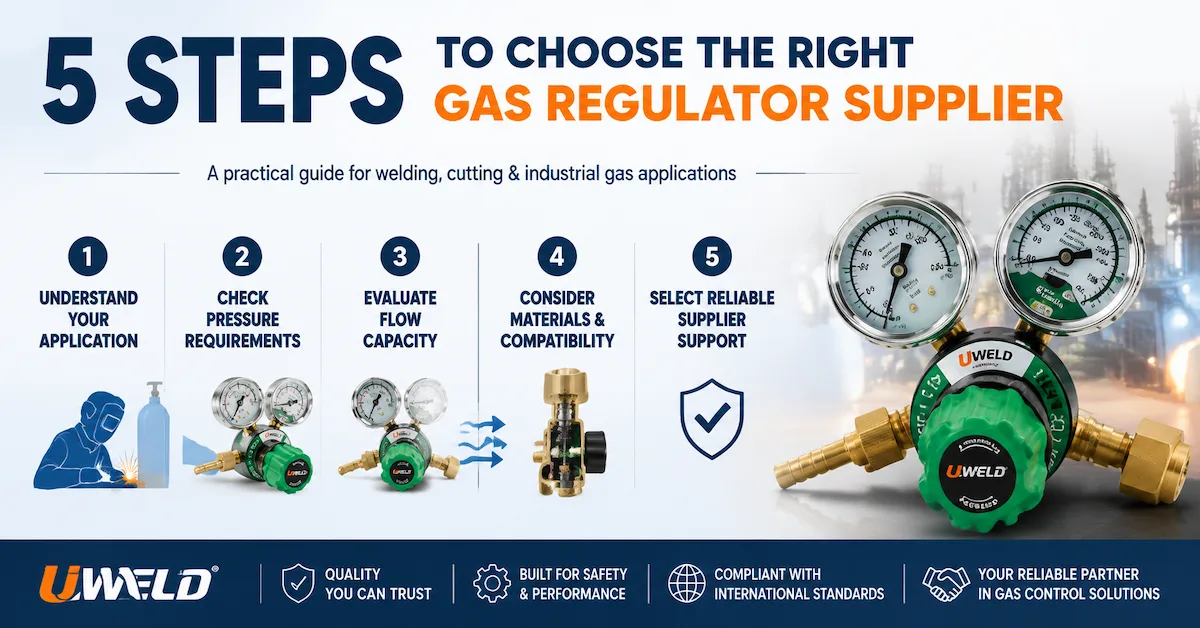
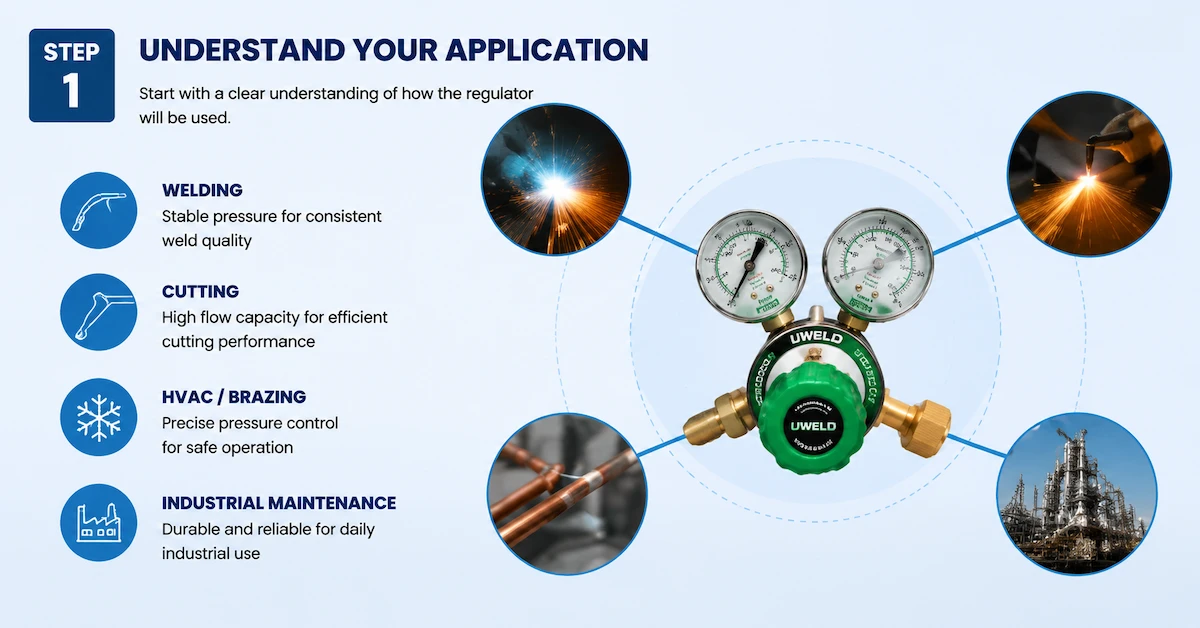
Step 1: Understand the Application Before Selecting a Gas Regulator
The first step in choosing a gas regulator supplier is understanding the actual application.
Different industries have different requirements.
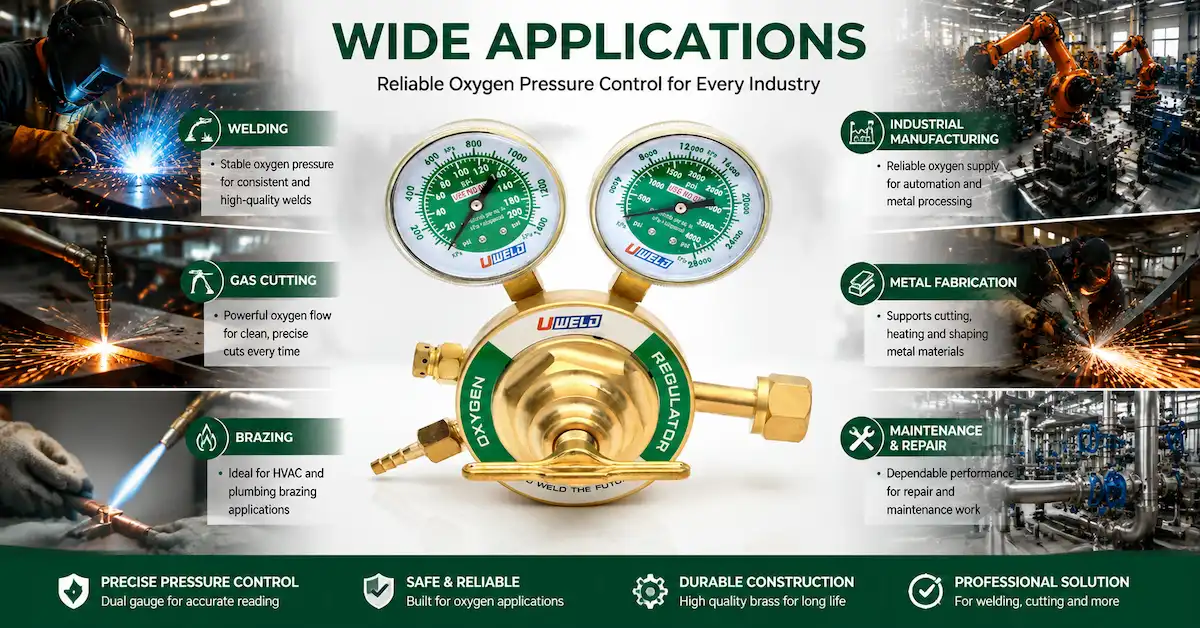
Welding Applications
Welding users usually focus on:
- Stable gas supply
- Accurate pressure adjustment
- Reliable operation
- Compatibility with welding equipment
Gas Cutting Applications
Cutting applications often require:
- Higher gas flow capability
- Suitable pressure ranges
- Compatibility with oxygen and fuel gases
- Stable performance during continuous operation
HVAC and Brazing Applications
HVAC technicians may prioritize:
- Portable solutions
- Easy adjustment
- Fuel compatibility
- Field reliability
Industrial Maintenance
Maintenance teams usually need:
- Durable construction
- Flexible applications
- Easy replacement
- Long service life
Understanding the final application helps buyers avoid selecting a regulator based only on appearance or price.
Step 2: Confirm Gas Type and Pressure Requirements
A regulator must match the gas system it serves.
Common industrial gases include:
- Oxygen
- Acetylene
- Propane/LPG
- Other application-specific gases
Oxygen Regulators
Oxygen regulators are commonly used in welding and cutting systems where controlled oxygen supply is required.
Important evaluation factors include:
- Maximum inlet pressure
- Outlet pressure range
- Flow capability
- Gauge configuration
- Connection type
Fuel Gas Regulators
Fuel gas regulators must match the specific fuel application.
Buyers should confirm:
- Gas compatibility
- Pressure range
- Connection standards
- Operating environment
A professional gas regulator supplier should clearly identify product compatibility rather than leaving buyers to determine it themselves.
Step 3: Evaluate Pressure and Flow Performance
Pressure control is the primary function of a regulator.
However, selecting a regulator requires understanding both pressure and flow requirements.
Inlet Pressure
Buyers should consider:
- Maximum cylinder pressure
- Normal operating pressure
- Pressure variation during use
Outlet Pressure
The required outlet pressure depends on:
- Torch requirements
- Welding process
- Cutting application
- Gas consumption
Flow Rate
A regulator should provide enough gas flow without unstable pressure changes.
Important questions include:
- What is the expected working flow?
- Will the demand change during operation?
- Is the regulator suitable for continuous use?
For industrial buyers, a regulator that cannot maintain stable output under changing demand may reduce overall system efficiency.
Step 4: Select the Right Regulator Design
Different regulator designs are suitable for different applications.
Single-Stage Regulators
Single-stage regulators reduce pressure in one step.
Advantages:
- Simple structure
- Easy operation
- Suitable for general applications
Two-Stage Regulators
Two-stage designs provide additional pressure control stability.
Advantages:
- More consistent output pressure
- Reduced pressure fluctuation
- Suitable for applications requiring improved stability
The correct choice depends on:
- Application requirements
- Pressure range
- Operating conditions
- User expectations
A knowledgeable gas regulator supplier should recommend the correct configuration rather than simply offering the highest-specification option.
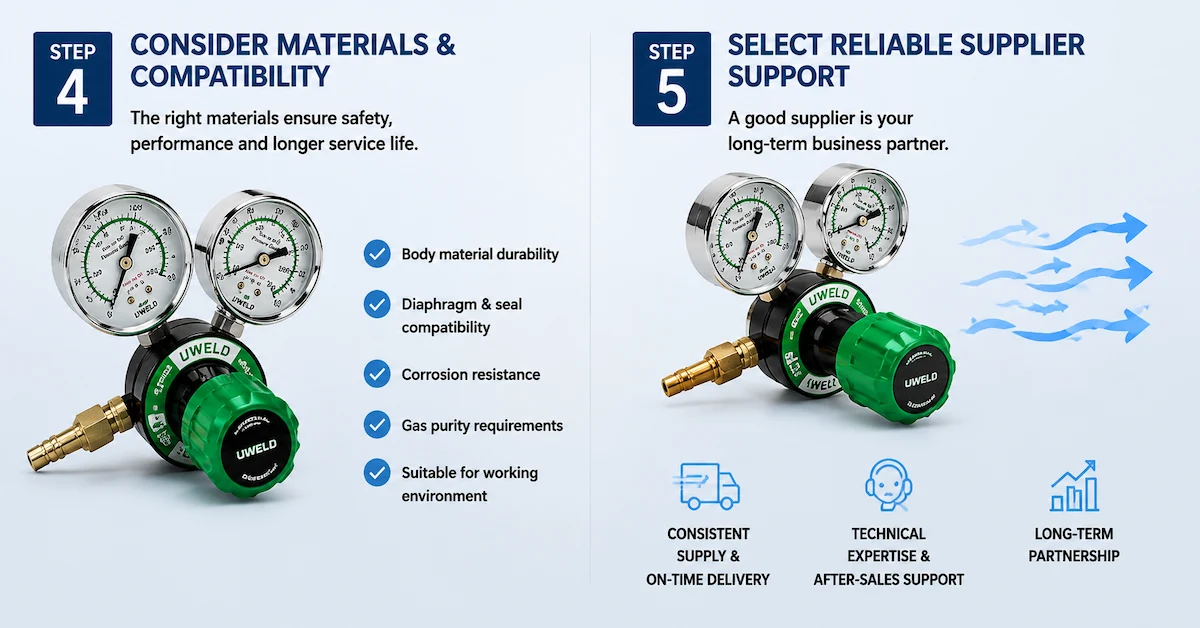
Step 5: Consider Materials and Gas Compatibility
Material selection affects regulator service life and reliability.
Buyers should evaluate:
Body Material
Important considerations include:
- Mechanical strength
- Corrosion resistance
- Manufacturing consistency
Internal Sealing Components
Sealing materials must match the gas environment.
Poor compatibility may cause:
- Faster wear
- Leakage problems
- Reduced service life
Working Environment
Consider:
- Temperature conditions
- Outdoor operation
- Industrial contamination
- Frequency of use
Material compatibility is especially important for buyers supplying professional users with demanding applications.
Gas Regulator Selection Checklist for Buyers
| Evaluation Item | Why It Matters |
|---|---|
| Gas compatibility | Ensures safe and correct operation |
| Pressure range | Matches application requirements |
| Flow capacity | Maintains stable performance |
| Connection type | Prevents installation problems |
| Gauge quality | Improves pressure monitoring |
| Material compatibility | Extends service life |
| Product documentation | Supports market requirements |
| Spare parts availability | Reduces downtime |
Common Gas Regulator Problems Caused by Wrong Selection
Choosing the wrong regulator can create operational problems.
Unstable Outlet Pressure
Possible causes:
- Incorrect regulator selection
- Insufficient flow capability
- Application mismatch
Poor Gas Efficiency
Possible causes:
- Incorrect pressure adjustment
- Incompatible components
- Improper system setup
Frequent Replacement
Possible causes:
- Poor material compatibility
- Wrong operating environment
- Low-quality components
Professional buyers should evaluate the total operating cost instead of only the initial purchase price.
How Should Distributors Evaluate a Gas Regulator Supplier?
For distributors and importers, supplier capability is as important as product specifications.
Check Product Range
A suitable supplier should support related products such as:
- Oxygen regulators
- Fuel gas regulators
- Cutting torches
- Welding accessories
- Gas control components
Review Quality Control
Important questions include:
- Are products inspected before shipment?
- Are specifications controlled between batches?
- Are samples available?
- Are quality records maintained?
Confirm Export Experience
International buyers should consider:
- Documentation support
- Packaging requirements
- Shipping experience
- Market requirements
OEM and Private Label Gas Regulator Solutions
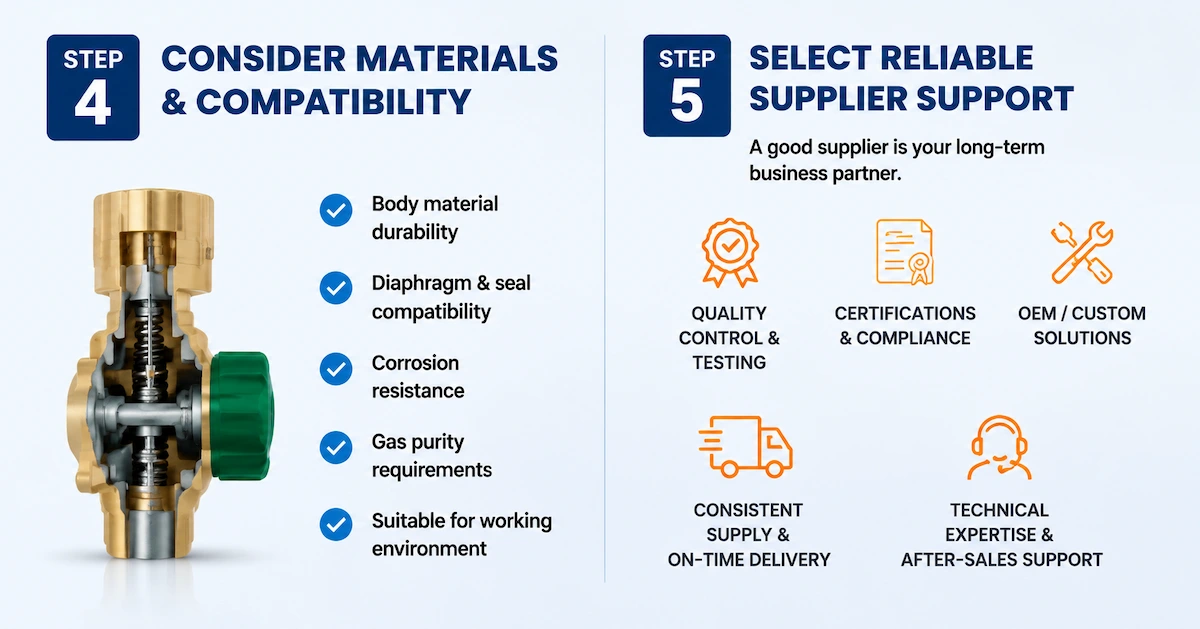
OEM cooperation allows distributors and brands to create differentiated product lines.
Possible customization options may include:
- Brand logo
- Packaging design
- Product labels
- Accessory combinations
- Product configuration
Before starting an OEM project, buyers should confirm:
- Target market
- Required specifications
- Certification requirements
- Expected quantity
- Packaging needs
A capable gas regulator supplier should support both standard products and customized business requirements.
Quality Control and Certification Considerations
Quality control is essential for industrial gas equipment.
A professional supplier should manage:
Incoming Inspection
Checking:
- Raw materials
- Components
- Supplier consistency
Assembly Inspection
Verifying:
- Correct assembly
- Connection accuracy
- Component matching
Functional Testing
Including:
- Pressure performance
- Leakage testing
- Operating inspection
Final Inspection
Before shipment:
- Product appearance
- Accessories
- Packaging
- Quantity
UWELD emphasizes quality management and manufacturing control across its welding and cutting product portfolio.
For international buyers, certification requirements should always be verified according to the exact product model and target market.
FAQ About Gas Regulator Supplier Selection
What should I look for in a gas regulator supplier?
A reliable supplier should provide suitable product selection support, stable manufacturing quality, technical information, documentation, OEM capability, and long-term supply support.
How do I choose a gas regulator for welding and cutting?
Select according to gas type, pressure requirements, flow demand, torch compatibility, application environment, and operating conditions.
Are oxygen and fuel gas regulators interchangeable?
No. Different gases require suitable regulator designs and compatible components. Always confirm gas compatibility before use.
Why is flow capacity important when choosing a regulator?
Flow capacity determines whether the regulator can maintain stable pressure during operation. An unsuitable regulator may cause unstable performance.
Can gas regulator suppliers provide OEM services?
Many suppliers support OEM solutions including branding, packaging, and customized product combinations depending on project requirements.
What documents should importers request from suppliers?
Importers should review specifications, technical information, compliance documents, packaging details, and quality records where applicable.
How can distributors reduce regulator sourcing risks?
Distributors can reduce risks by testing samples, confirming specifications, evaluating supplier quality systems, and selecting suppliers with stable production capability.
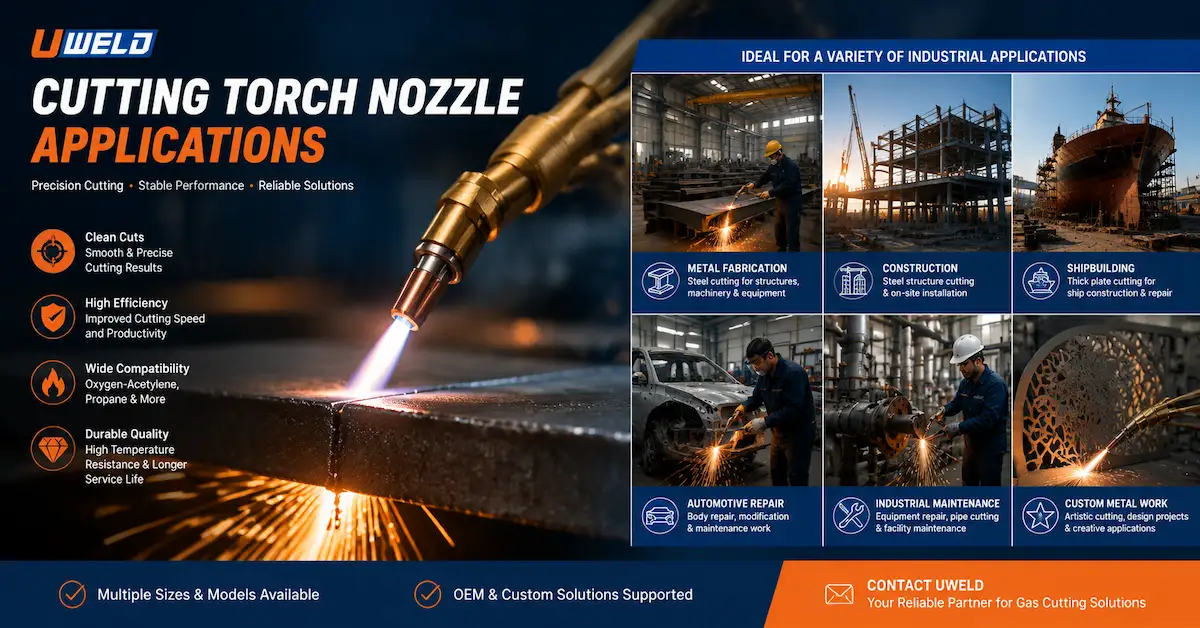
What industries use gas regulators?
Applications include welding, gas cutting, fabrication, construction, HVAC brazing, industrial maintenance, and manufacturing.
How often should gas regulators be replaced?
Replacement depends on usage conditions, maintenance practices, operating environment, and product condition.
How can I contact UWELD for gas regulator sourcing?
Buyers can discuss product selection, wholesale requirements, and OEM solutions through the UWELD contact page.
Conclusion
Selecting the right gas regulator supplier requires evaluating more than product specifications and pricing. Professional buyers should consider application requirements, gas compatibility, pressure control performance, material suitability, quality management, and long-term supply capability.
For distributors, importers, and industrial buyers, the best supplier partnership reduces sourcing risks while providing reliable products for welding, cutting, and industrial applications.
UWELD supplies gas control solutions, welding tools, cutting equipment, and related products for global B2B customers. Explore the UWELD product range or contact UWELD for wholesale and OEM cooperation.