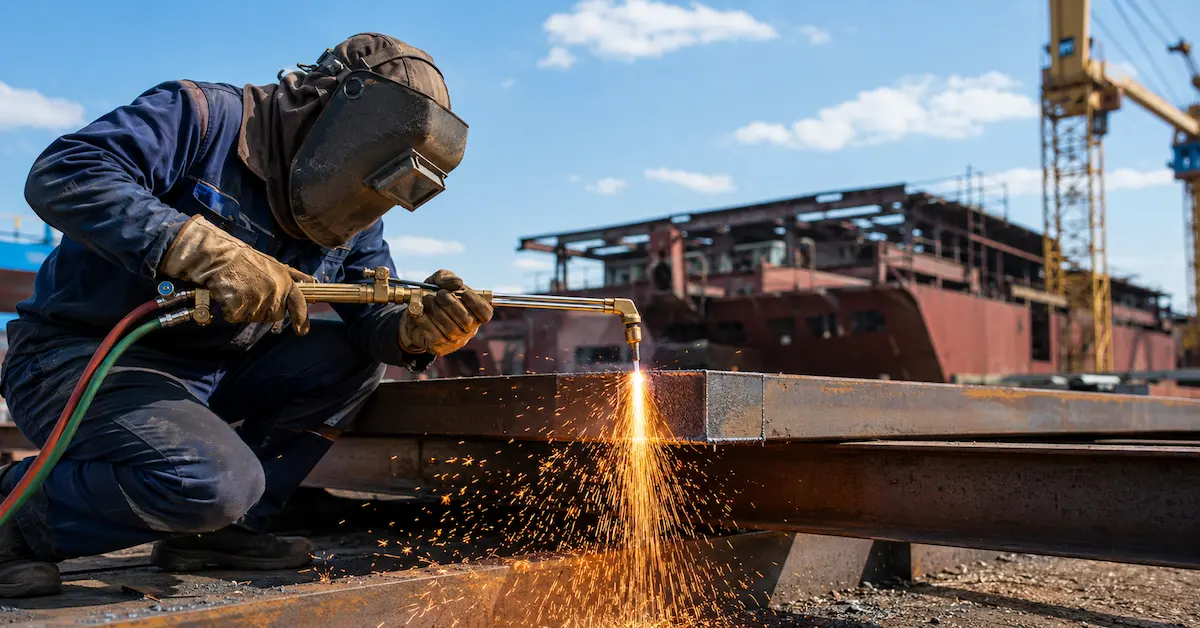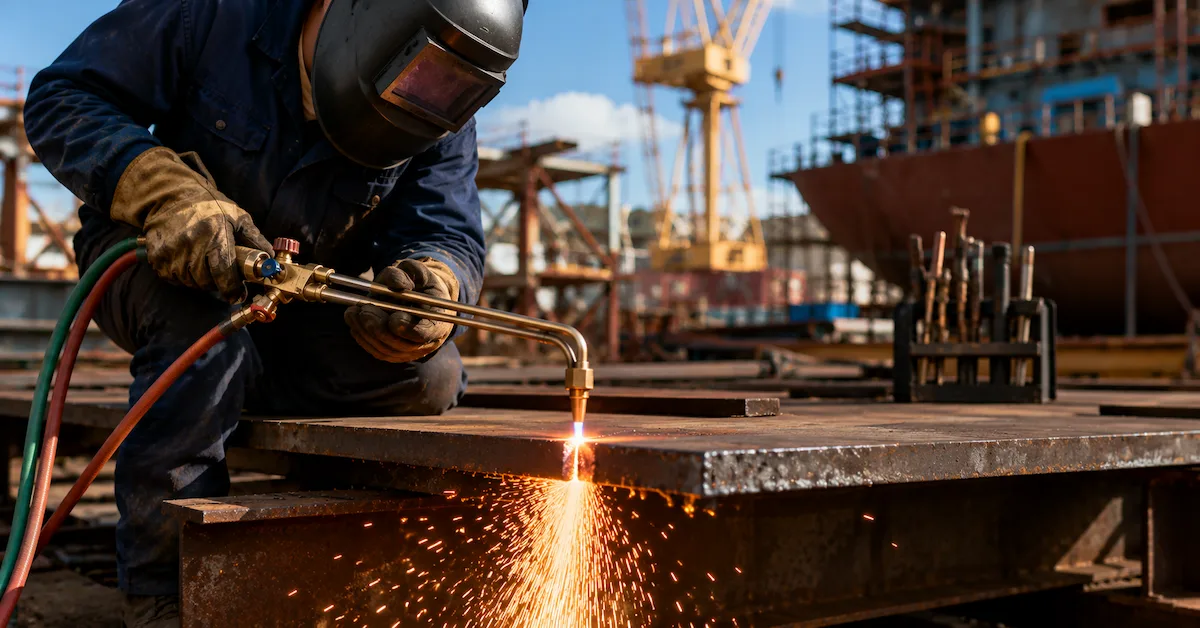


Choosing an ISO welding equipment supplier is an important step for distributors, importers, industrial wholesalers, OEM brands, and project buyers that need reliable welding and cutting products.
However, an ISO certificate should not be treated as a complete guarantee of product performance. ISO 9001 primarily indicates that a supplier operates through a documented quality management system. Buyers must still evaluate product specifications, samples, inspection procedures, batch consistency, packaging, and application suitability.
For welding and cutting products, these controls are especially important. Torches, regulators, hoses, connectors, cables, valves, gauges, tips, nozzles, and safety accessories must perform consistently under heat, pressure, sparks, repeated handling, and demanding job-site conditions.
UWELD supplies welding and cutting solutions across welding tools, gas cutting, gas heating, HVAC/R, safety equipment, regulators, torches, hoses, and related accessories. Buyers can review available categories through the UWELD product center or discuss quality, OEM, and sourcing requirements through UWELD solutions.

Quick Answer: What Should an ISO Welding Equipment Supplier Provide?
A reliable ISO welding equipment supplier should be able to show how its quality system controls the complete order process, including:
- Supplier and raw-material approval
- Incoming component inspection
- Documented production procedures
- Assembly and functional testing
- Calibration of inspection equipment
- Product identification and traceability
- Nonconforming product control
- Corrective and preventive actions
- Packaging and shipment inspection
- Customer complaint handling
- Engineering change management
- Record control for repeat orders
The certificate is only the starting point. The real value lies in how the supplier applies these procedures during production.
What Does ISO Mean for Welding Equipment Buyers?
For B2B buyers, ISO-based quality management should create a more controlled and repeatable sourcing process.
It should help answer questions such as:
- Are approved materials used consistently?
- Are components inspected before assembly?
- Are production instructions documented?
- Are gauges and testing tools calibrated?
- Can the supplier trace a problem to a production batch?
- Are failed products separated from acceptable products?
- Are customer complaints investigated?
- Are product changes communicated before production?
- Can repeat orders maintain the approved specification?
An ISO quality system does not mean that every welding product is automatically certified to every market standard. It means the supplier should have structured procedures for managing quality, records, responsibilities, inspections, and continual improvement.
ISO 9001 Is Not the Same as Product Certification
This distinction is critical for global buyers.
| Quality Evidence | What It Shows | What It Does Not Automatically Prove |
|---|---|---|
| ISO 9001 certificate | The company follows a quality management system | Every product meets a specific technical standard |
| Product certificate | A listed product or model meets stated requirements | Every product in the supplier’s catalog is covered |
| Test report | A sample was tested against defined criteria | All future batches will remain identical |
| Inspection report | A batch passed specified checks | The product meets every destination-market regulation |
| Approved sample | The buyer accepted a reference product | Bulk production will match without quality controls |
Before approving a supplier, buyers should therefore review both the company quality system and the product-specific documents.
For regulators, torches, hoses, welding machines, helmets, and complete kits, different standards or market requirements may apply. The supplier should clearly explain which documents relate to the exact product being quoted.
Why ISO-Based Quality Control Matters in Welding Equipment
Welding and cutting tools contain multiple components that must work together. A small variation can affect performance, compatibility, durability, or safety.
Material Consistency
Metal composition, hose construction, cable insulation, seals, valves, connectors, and molded parts should remain consistent across orders.
A structured quality system should define:
- Approved material specifications
- Approved component suppliers
- Incoming inspection criteria
- Material identification
- Storage conditions
- Replacement-material approval
This helps prevent unapproved substitutions during bulk production.
Assembly Control
Torches, regulators, connectors, and welding accessories often require precise assembly.
Assembly procedures may control:
- Tightening requirements
- Seal installation
- Valve position
- Hose connection
- Cable termination
- Torch alignment
- Gauge installation
- Accessory matching
Documented work instructions reduce differences between operators and production batches.
Functional Testing
Visual appearance alone cannot confirm whether welding equipment works correctly.
Depending on the product, functional checks may include:
- Gas-flow testing
- Pressure adjustment
- Leak checks
- Valve operation
- Gauge response
- Torch ignition
- Flame adjustment
- Electrical continuity
- Connector fit
- Cable performance
- Packaging completeness
Buyers should ask which tests are performed on every unit and which are performed through sampling.
Traceability
Traceability helps identify when, where, and how a product was made.
A useful traceability system may record:
- Production date
- Work order
- Product model
- Material batch
- Component supplier
- Inspection result
- Operator or production line
- Packaging batch
- Shipment reference
When a customer reports a problem, traceability allows the supplier to investigate the affected batch rather than treating the issue as an isolated complaint.
Quality Controls Buyers Should Audit
An ISO welding equipment supplier should be able to explain its quality procedures in practical terms.
Supplier Qualification
The factory should evaluate suppliers of brass components, hoses, cables, valves, gauges, connectors, plastic handles, packaging, and other critical materials.
Questions to ask include:
- How are new component suppliers approved?
- Are incoming materials inspected?
- How is poor supplier performance handled?
- Can materials be substituted without approval?
- Are critical components purchased from controlled sources?
Incoming Inspection
Incoming inspection reduces the risk of defective components entering production.
Inspection may include:
- Material verification
- Dimensional checks
- Thread inspection
- Surface inspection
- Hose marking review
- Cable construction review
- Gauge inspection
- Packaging-material checks
Buyers should identify which components are considered critical and how they are inspected.
In-Process Inspection
In-process checks allow problems to be detected before the entire order is completed.
Examples include:
- First-piece approval
- Assembly checks
- Connection testing
- Valve-operation checks
- Torque confirmation
- Appearance inspection
- Functional sampling
- Accessory-count verification
Final Inspection
Final inspection should confirm that the product and packaging match the approved order.
A final inspection may review:
- Product model
- Quantity
- Function
- Product appearance
- Label accuracy
- Logo placement
- Accessories
- Instructions
- Barcodes
- Inner packaging
- Export cartons
- Shipping marks
For OEM orders, artwork and packaging details should be included in the inspection criteria.
How ISO Quality Systems Support OEM Projects
OEM and private-label projects involve more risk than purchasing standard products because branding, packaging, accessories, and specifications may be different for each buyer.
An ISO-based OEM process should control:
- Buyer requirements
- Product specifications
- Approved samples
- Packaging artwork
- Labels and manuals
- Engineering changes
- Production inspection
- Final approval
- Shipment records
- Repeat-order specifications
Without document control, the supplier may use an outdated label, incorrect accessory, old packaging design, or unapproved component.
UWELD buyers requiring OEM welding equipment, private-label packaging, or customized kits can submit their target market, product category, branding requirements, and estimated order volume through the UWELD solutions page.
Engineering Change Control
Change control is one of the most valuable parts of a structured quality system.
A supplier may need to change:
- Component source
- Material grade
- Connector design
- Cable construction
- Hose supplier
- Valve structure
- Packaging material
- Production method
- Product label
- Accessory configuration
These changes may affect quality, certification, compatibility, or customer expectations.
Buyers should ask:
- Does the supplier notify customers before a change?
- Is a new sample provided?
- Is revalidation required?
- Are certificates or test reports affected?
- Is the previous specification still available?
- How are approved changes recorded?
A reliable supplier should not make critical changes without review.
Nonconforming Product and Corrective Action
Even well-managed factories may encounter defects. The important difference is how the supplier identifies, contains, investigates, and prevents recurrence.
A controlled process should include:
- Identification of failed products
- Separation from approved products
- Investigation of the root cause
- Correction of the immediate issue
- Corrective action to prevent recurrence
- Verification that the action worked
- Documentation of the result
For buyers, this process reduces the risk that rejected units are mixed back into production or that the same problem appears in future orders.
Product Categories That Need Strong Process Control
Welding Torches
For MIG and TIG torches, quality controls may cover:
- Cable construction
- Handle assembly
- Connector compatibility
- Cooling method
- Trigger operation
- Consumable fit
- Electrical connection
- Product labeling
Gas Cutting and Heating Torches
For gas torches, the supplier should control:
- Valve operation
- Gas passages
- Connections
- Tip compatibility
- Flame adjustment
- Handle construction
- Leak testing
- Product markings
Regulators and Gauges
Regulators require careful control of:
- Pressure range
- Inlet and outlet connections
- Gauge installation
- Valve operation
- Body assembly
- Leak testing
- Packaging protection
- Gas identification
Welding Hoses
Hose quality controls may include:
- Hose construction
- Length
- Markings
- Flexibility
- Connection assembly
- Color identification
- Packaging
- Compatibility with regulators and torches
Safety Equipment
Helmets, gloves, protective products, and related accessories require their own material, production, and inspection standards. Buyers should not assume that the quality controls used for torches automatically cover safety products.
ISO Supplier Evaluation Checklist
| Evaluation Area | Evidence to Request | Buyer Benefit |
| Quality system | Valid ISO certificate and scope | Confirms structured management |
| Product specifications | Approved drawings or specification sheets | Reduces specification disputes |
| Incoming inspection | Material and component criteria | Controls supplier-related risk |
| Production control | Work instructions and inspection points | Improves batch consistency |
| Functional testing | Test method and acceptance criteria | Confirms product performance |
| Traceability | Batch or production records | Supports problem investigation |
| Calibration | Calibration records for inspection tools | Improves measurement reliability |
| Change control | Product change procedure | Prevents unapproved substitutions |
| Corrective action | Complaint and defect handling process | Reduces repeat problems |
| Final inspection | Shipment inspection checklist | Confirms order completeness |
Factory Audit Questions for Global Buyers
Before placing a large order, ask the supplier:
- What is the scope of your ISO certificate?
- Which site or factory is covered?
- How are raw-material suppliers approved?
- Which components receive incoming inspection?
- What testing is performed during production?
- What testing is performed before shipment?
- How are measuring tools calibrated?
- How are defective products separated?
- Can products be traced to a production batch?
- How are customer complaints investigated?
- How are material or design changes approved?
- How are OEM specifications controlled?
- Can you provide inspection records with the order?
- Can buyers arrange third-party inspection?
- How do you maintain consistency for repeat orders?
Clear, specific answers are more useful than general statements such as “our quality is good.”
ISO Supplier vs Non-System Supplier
| Evaluation Point | Supplier with Structured ISO System | Supplier Without Clear Quality System |
| Product specifications | Controlled and documented | May rely on verbal instructions |
| Material changes | Reviewed and recorded | May occur without notice |
| Inspection | Defined procedures | Depends on individual experience |
| Traceability | Batch records available | Limited investigation ability |
| Defect handling | Formal nonconformance process | Informal rework or sorting |
| Customer complaints | Root-cause and corrective action | Issue handled case by case |
| OEM control | Approved samples and artwork records | Higher risk of packaging errors |
| Repeat orders | Better specification continuity | Greater batch variation risk |
An ISO certificate alone does not guarantee superior performance, but a well-implemented quality system gives buyers a stronger basis for long-term cooperation.
Application Markets
An ISO welding equipment supplier may support buyers across several industries.
Metal Fabrication
Fabrication workshops need reliable welding torches, cutting tools, regulators, clamps, hoses, tips, and safety products for repeated daily use.
HVAC/R Installation
HVAC/R technicians need portable brazing tools, regulators, hoses, heating torches, and service kits with consistent connections and accessory matching.
Automotive Repair
Automotive workshops use welding and heating tools for exhaust systems, panels, brackets, body repair, and restoration.
Construction and Steel Work
Construction users require rugged tools that can tolerate transportation, outdoor use, repeated handling, and demanding work environments.
Industrial Maintenance
Maintenance teams need reliable repair tools and replacement parts. Batch consistency and repeat supply are especially important for standardized maintenance programs.
Why Global Buyers Consider UWELD
UWELD supports buyers sourcing welding and cutting tools across gas cutting, welding, safety, gas heating, HVAC/R, regulators, torches, hoses, and accessory categories.
For buyers evaluating an ISO welding equipment supplier, UWELD can support discussions involving:
- Product selection
- Quality requirements
- Sample confirmation
- Welding and cutting product categories
- OEM/ODM development
- Private-label packaging
- Inspection planning
- Product documentation
- Distributor supply
- Repeat-order specifications
Buyers can learn more about the company through the About UWELD page, review products through the UWELD product center, or explore additional technical and sourcing information through the UWELD blog.
FAQ: ISO Welding Equipment Supplier
1. What is an ISO welding equipment supplier?
It is a welding equipment supplier operating through an ISO-based quality management system that controls procedures, responsibilities, records, inspections, and continual improvement.
2. Does ISO 9001 mean every welding product is certified?
No. ISO 9001 relates to the company’s quality management system. Individual products may require separate standards, tests, or certifications.
3. Why does ISO matter when purchasing welding tools?
A structured system can improve material control, production consistency, inspection, traceability, complaint handling, and repeat-order reliability.
4. What documents should buyers request?
Buyers may request the ISO certificate, certificate scope, product specifications, inspection criteria, test reports, sample approvals, and final inspection records.
5. Is an ISO certificate enough to approve a supplier?
No. Buyers should also review samples, product documents, manufacturing capability, quality-control procedures, packaging, and delivery performance.
6. How does ISO support OEM welding equipment?
ISO-based document control helps manage buyer specifications, artwork, labels, packaging, samples, engineering changes, and repeat-order consistency.
7. What is product traceability?
Product traceability connects a delivered product to its material batch, production date, inspection result, and shipment records.
8. Why is change control important?
Change control prevents suppliers from replacing materials, components, or designs without evaluating the effect on quality, compatibility, or certification.
9. Can buyers arrange third-party inspection?
Many suppliers allow third-party or buyer-appointed inspections. The inspection scope should be agreed before production.
10. How can I request a quotation from UWELD?
Provide your product list, application, destination country, required quality documents, OEM needs, estimated quantity, and delivery schedule through the UWELD solutions page.
Conclusion
Choosing an ISO welding equipment supplier requires more than verifying a certificate logo. Buyers should evaluate how the supplier applies its quality system to materials, production, testing, traceability, change control, corrective action, OEM projects, packaging, and repeat orders.
A well-managed quality system helps reduce specification errors, batch variation, shipment problems, and after-sales risk. It also gives distributors, importers, and industrial buyers clearer evidence when qualifying a long-term manufacturing partner.
For welding torches, gas cutting tools, regulators, hoses, HVAC/R tools, safety equipment, and OEM welding solutions, buyers can review UWELD’s product categories and submit sourcing requirements through UWELD solutions.