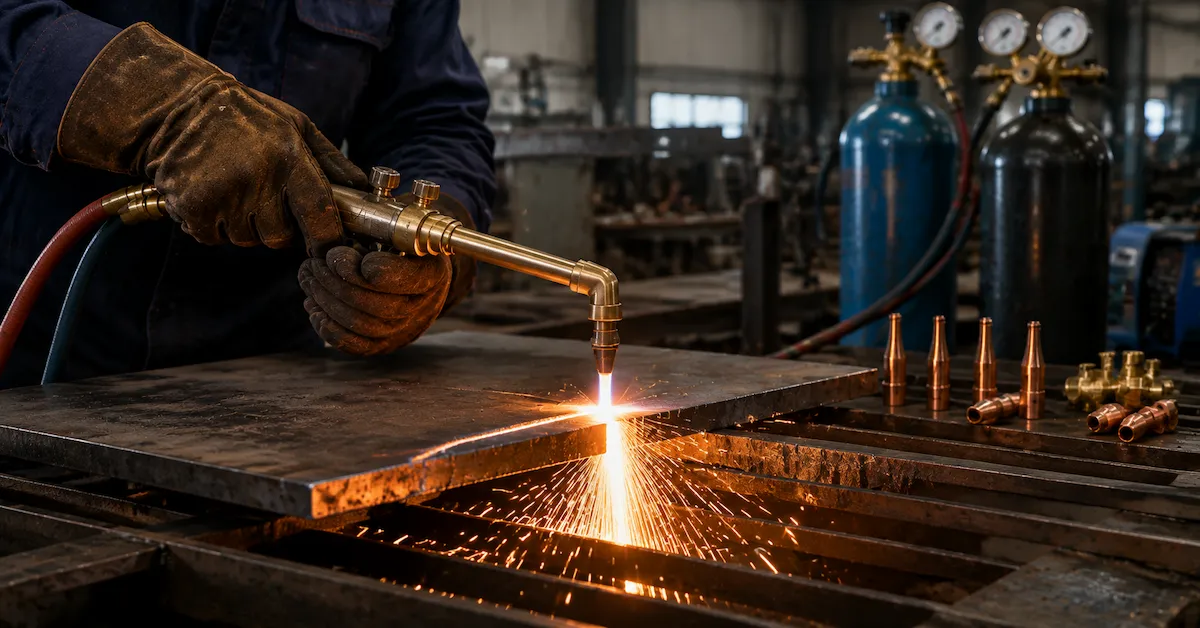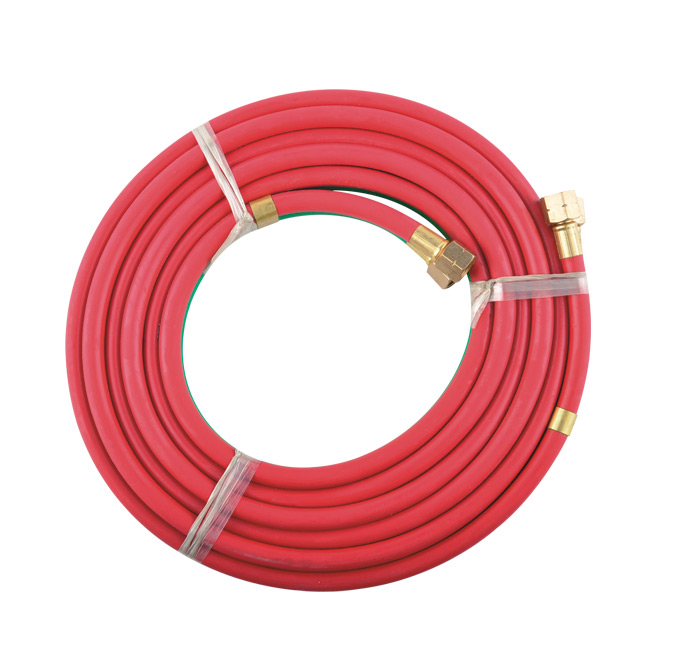


A metal cutting torch is a professional tool designed to cut metal materials by using a controlled heating process combined with a high-energy cutting stream.
In most industrial applications, metal cutting torches use oxygen-fuel technology, where a heating flame raises the metal temperature and a cutting oxygen stream removes the oxidized material.
Metal cutting torches are widely used in:
- Metal fabrication
- Construction
- Shipbuilding
- Industrial maintenance
- Steel processing
- Equipment repair
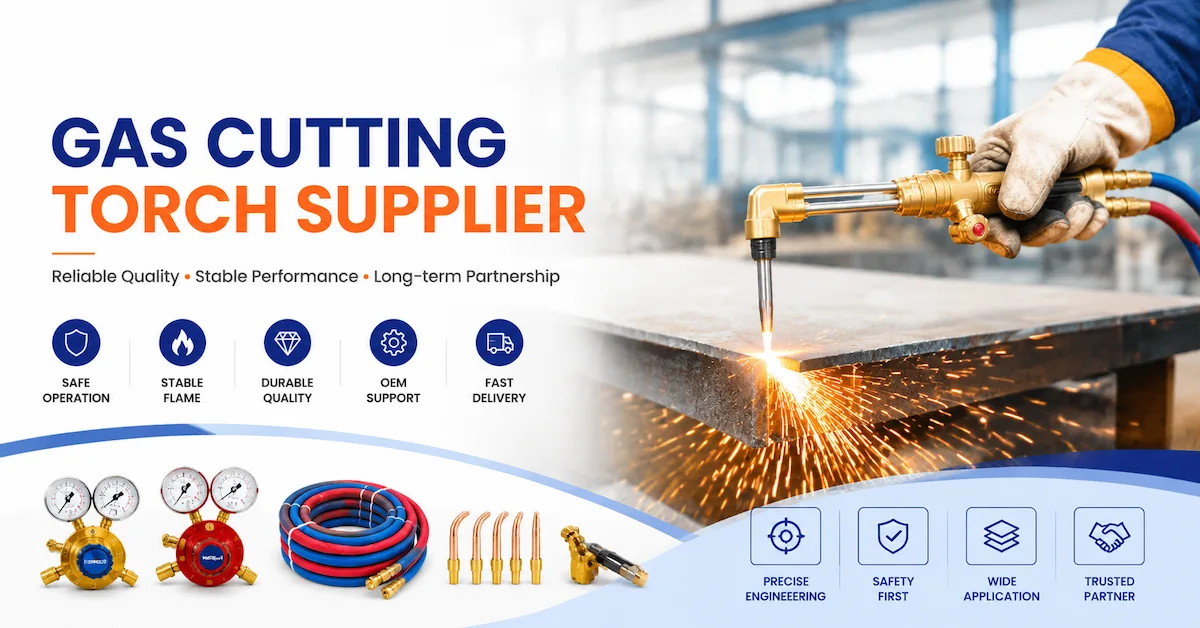
A reliable metal cutting solution depends on more than the torch itself. Buyers should evaluate the complete system, including:
- Cutting torch
- Cutting tip
- Gas regulator
- Gas hose
- Safety accessories
- Replacement parts
For industrial buyers, choosing the right torch requires understanding material thickness, gas compatibility, working environment, and expected usage frequency.
UWELD provides professional welding and cutting solutions including gas cutting torches, regulators, hoses, accessories, and OEM solutions. Buyers can explore the UWELD product range or discuss sourcing requirements through UWELD solutions.
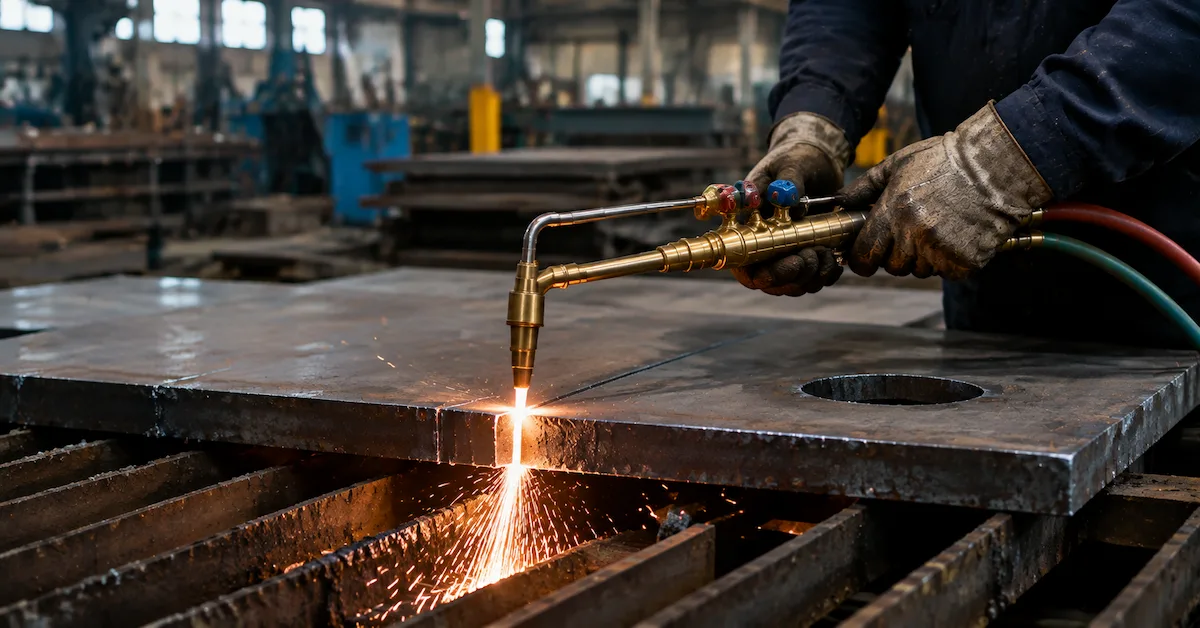
How Does a Metal Cutting Torch Work?
A metal cutting torch works through a controlled thermal cutting process.
The basic cutting process includes three stages.
Heating the Metal Surface
The torch first creates a high-temperature flame that heats the metal surface.
During this stage:
- Fuel gas combines with oxygen
- A concentrated flame is produced
- The metal reaches the required ignition temperature
The quality of the heating flame affects:
- Cutting speed
- Flame stability
- Gas consumption
- Cutting efficiency
Introducing Cutting Oxygen
After the metal reaches the correct temperature, the operator activates the cutting oxygen flow.
The oxygen stream:
- Reacts with the heated metal
- Produces oxidation
- Removes molten material
- Creates the cutting path
The cutting oxygen pressure and flow influence:
- Cutting quality
- Edge condition
- Material thickness capability
Creating the Final Cut
A stable cutting process requires:
- Correct torch selection
- Proper cutting tip
- Suitable gas pressure
- Good operator control
Because every component affects performance, buyers should consider the complete cutting system instead of purchasing individual parts separately.
Types of Metal Cutting Torches
Different industries require different cutting torch configurations.
Oxygen Acetylene Cutting Torch
Oxygen acetylene cutting torches are among the most common metal cutting solutions.
Advantages include:
- Portable operation
- Flexible application
- Suitable for thick steel cutting
- Simple equipment structure
Common applications:
- Fabrication workshops
- Repair operations
- Construction sites
- Maintenance work
These torches remain popular because they can be used in locations where large automated cutting equipment is not practical.
Heavy Duty Cutting Torch
Heavy-duty cutting torches are designed for demanding industrial applications.
Typical users include:
- Shipyards
- Steel processing companies
- Heavy fabrication plants
- Industrial maintenance teams
Important features:
- Stronger construction
- Higher durability
- Stable operation
- Support for intensive usage
For heavy industrial users, service life and reliability are usually more important than initial purchase cost.
Propane Cutting Torch
Propane cutting torches are used in some industrial applications where fuel cost and availability are important considerations.
Buyers should confirm:
- Gas compatibility
- Cutting tip requirements
- Pressure settings
- Application suitability
The correct configuration depends on the torch design and operating environment.
Plasma Cutting Torch (Comparison)
Although plasma cutting is different from gas cutting, it is often compared with metal cutting torches.
| Cutting Method | Main Advantage | Typical Application |
|---|---|---|
| Metal cutting torch | Portable and suitable for thick steel | Fabrication and repair |
| Plasma cutting | Fast and precise | Industrial production |
| Laser cutting | High accuracy | Automated manufacturing |
The best choice depends on:
- Material type
- Thickness
- Cutting speed requirements
- Budget
- Working environment
What Metals Can a Metal Cutting Torch Cut?
Metal cutting torches are mainly used for ferrous metals.
Carbon Steel
Carbon steel is one of the most common materials.
Applications include:
- Structural components
- Machinery parts
- Steel fabrication
Structural Steel
Construction and infrastructure projects often use cutting torches for:
- Steel beams
- Frames
- Support structures
Heavy Steel Plate
Heavy steel cutting is common in:
- Shipbuilding
- Heavy equipment
- Industrial repair
For thick materials, buyers should select suitable heavy-duty models and cutting tips.
Main Components of a Metal Cutting Torch
A complete metal cutting torch system includes several important components.
Torch Body
The torch body controls gas flow and operator handling.
Important factors:
- Material quality
- Gas passage design
- Valve structure
- Ergonomic design
Cutting Tip
The cutting tip directly affects cutting performance.
It influences:
- Flame shape
- Cutting speed
- Gas consumption
- Cutting thickness
Buyers should confirm:
- Tip type
- Gas compatibility
- Replacement availability
Valves
Valves control:
- Oxygen flow
- Fuel gas flow
- Cutting oxygen operation
Reliable valves should provide:
- Smooth adjustment
- Stable sealing
- Long service life
Regulators
Regulators control gas pressure.
A professional system requires suitable:
- Oxygen regulator
- Fuel gas regulator
Important checks:
- Pressure range
- Gauge accuracy
- Connection standards
Gas Hoses
Hoses deliver gas from cylinders to the torch.
Buyers should evaluate:
- Pressure rating
- Length
- Flexibility
- Connection compatibility
How to Choose the Right Metal Cutting Torch?
Selecting a metal cutting torch requires understanding the actual application.
Choose Based on Material Thickness
| Material Thickness | Recommended Solution |
| Thin metal | Standard cutting torch |
| Medium steel | Industrial torch |
| Thick steel plate | Heavy-duty cutting torch |
Buyers should provide normal working requirements instead of only maximum cutting capability.
Choose Based on Application
| Application | Key Requirement |
| Workshop fabrication | Flexible operation |
| Construction | Portable and durable |
| Shipbuilding | Heavy-duty performance |
| Maintenance | Easy handling |
Choose Based on Gas Compatibility
Confirm:
- Fuel gas type
- Oxygen pressure
- Cutting tip selection
- Regulator matching
Incorrect gas configuration can reduce performance and create safety concerns.
Quality Factors Buyers Should Check
For industrial applications, product quality directly affects productivity.
Material Quality
Important components include:
- Brass body
- Copper parts
- Valves
- Seals
Material consistency influences:
- Durability
- Safety
- Service life
Machining Precision
Manufacturing accuracy affects:
- Gas flow
- Thread connection
- Component compatibility
Important checks:
- Thread accuracy
- Internal passages
- Component dimensions
Valve Reliability
Valve performance affects:
- Flame adjustment
- Gas control
- User experience
Tip Compatibility
Confirm:
- Correct tip series
- Replacement availability
- Cutting range
Safety Considerations for Metal Cutting Torches
Gas cutting equipment requires proper operation and maintenance.
Important safety considerations include:
- Correct gas pressure
- Proper hose connection
- Leakage inspection
- Suitable storage
- Flashback protection where required
A professional supplier should provide proper product information and operating guidance.
Metal Cutting Torch Applications
Metal Fabrication
Metal fabrication companies use cutting torches for:
- Steel cutting
- Structural preparation
- Workshop production
- Repair operations
Requirements:
- Stable cutting performance
- Reliable accessories
- Easy maintenance
Shipbuilding
Shipyards use cutting torches for:
- Steel plate cutting
- Structural modification
- Repair work
Requirements:
- Heavy-duty capability
- Long working life
- Stable operation
Construction
Construction applications include:
- Steel structure cutting
- Field adjustment
- Installation support
Requirements:
- Portable design
- Reliable performance
Industrial Maintenance
Maintenance teams use metal cutting torches for:
- Equipment repair
- Component removal
- Emergency cutting
Availability of spare parts is important for reducing downtime.
Scrap Processing
Scrap industries require cutting tools for:
- Metal dismantling
- Steel separation
- Equipment recycling
These applications often require durable and flexible equipment.
Metal Cutting Torch Buying Guide for Different Buyers
Different buyers have different priorities.
For Distributors
Focus on:
- Product range
- Spare parts
- Packaging
- Market demand
A supplier should support multiple models and accessories.
For Importers
Focus on:
- Factory capability
- Documentation
- Shipping support
- OEM services
For Industrial Users
Focus on:
- Cutting performance
- Reliability
- Maintenance
- Application suitability
OEM Metal Cutting Torch Solutions
OEM services help companies develop their own product lines.
Customization options include:
- Logo printing
- Product labels
- Packaging
- Manuals
- Tool kits
- Custom combinations
OEM benefits:
- Brand development
- Market differentiation
- Higher customer recognition
A professional OEM supplier should support:
- Product requirement confirmation
- Sample evaluation
- Packaging approval
- Bulk production
- Quality inspection
- Shipment
Common Mistakes When Buying Metal Cutting Torches
Choosing Only Based on Price
Low-cost products may result in:
- Poor performance
- Short service life
- Increased replacement costs
Ignoring Application Requirements
The correct torch depends on:
- Material
- Thickness
- Gas type
- Working environment
Choosing the Wrong Cutting Tip
Incorrect tips can reduce:
- Cutting quality
- Efficiency
- Product lifespan
Skipping Sample Testing
Samples help verify:
- Performance
- Compatibility
- Packaging
Not Planning Spare Parts
Professional buyers should consider:
- Tips
- Valves
- Seals
- Accessories
Why Choose UWELD for Metal Cutting Torch Solutions?
UWELD supports global buyers with professional welding and cutting solutions.
Capabilities include:
- Metal cutting torches
- Gas cutting equipment
- Cutting accessories
- Regulators
- Hoses
- OEM solutions
- Distributor support
Buyers can explore products through the UWELD product center, learn more through the About UWELD page, or contact the team through UWELD solutions.
FAQ: Metal Cutting Torch
1. What is a metal cutting torch?
A metal cutting torch is a tool used to cut metal materials through thermal cutting processes, commonly using oxygen-fuel technology.
2. What metals can a cutting torch cut?
It is mainly used for carbon steel and other suitable ferrous metals.
3. What gases are used with metal cutting torches?
Common systems use oxygen with fuel gases such as acetylene or propane depending on the torch design.
4. How do I choose a cutting torch?
Consider material thickness, application, gas type, cutting capacity, and working environment.
5. What affects cutting quality?
Factors include torch selection, cutting tip, gas pressure, operator technique, and material condition.
6. Can metal cutting torches be customized?
Yes. OEM options include branding, packaging, manuals, and product kits.
7. Why are cutting tips important?
Tips control flame characteristics, cutting speed, gas usage, and cutting thickness.
8. What quality checks should buyers request?
Check materials, machining, valves, leakage testing, and final inspection.
9. Are spare parts important?
Yes. Replacement tips, valves, and seals support long-term use.
10. How can buyers choose a supplier?
Evaluate product quality, technical support, OEM capability, QC systems, and supply stability.
Conclusion
Choosing the right metal cutting torch requires understanding both the cutting application and the equipment requirements.
For industrial buyers, distributors, and importers, the most important factors include:
- Correct torch selection
- Material compatibility
- Cutting capacity
- Gas configuration
- Quality manufacturing
- Spare parts availability
- Supplier reliability
A professional metal cutting torch solution is not only about cutting ability. It is about providing stable performance, safe operation, and long-term value.
By selecting the right equipment and working with a reliable supplier, businesses can reduce downtime, improve productivity, and provide better solutions to their customers.
UWELD provides professional welding and cutting solutions for global buyers, including metal cutting torches, gas cutting equipment, OEM services, and industrial supply support.
Explore the UWELD product center or contact UWELD solutions to discuss your metal cutting requirements.