

Introduction: The Importance of Welding Hoses in Gas Welding Systems
In gas welding systems, the welding hose is responsible for transporting fuel gas and oxygen from the supply source to the welding torch. Although often viewed as a simple accessory, the welding hose plays a critical role in ensuring stable gas flow, operational safety, and overall welding performance.
For industrial users and B2B buyers, understanding welding hose design and quality is essential for maintaining safe and reliable welding operations.
What Is a Welding Hose and How It Functions
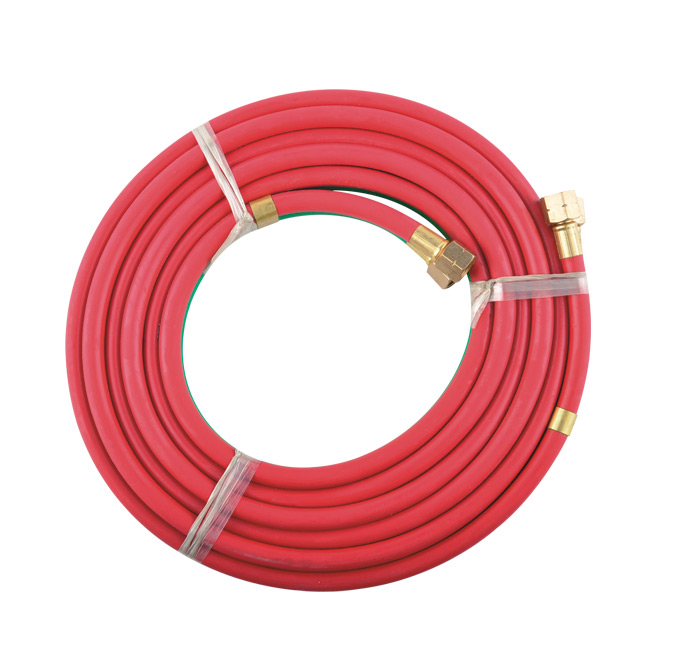
A welding hose is a flexible conduit designed to carry pressurized gases under controlled conditions. In welding applications, hoses must handle continuous gas flow, pressure variation, and physical movement during operation.
Industrial welding hoses are typically color-coded to distinguish between different gases, helping prevent incorrect connections and improving on-site safety.
How Welding Hose Design Affects Welding Performance
Gas Flow Stability and Pressure Resistance
Welding hoses are engineered with reinforced internal layers that help maintain consistent gas flow even under fluctuating pressure. Stable gas delivery ensures that the welding torch receives a steady supply, which is necessary for consistent flame behavior.
Insufficient pressure resistance or poor internal construction can result in uneven flame output and reduced welding quality.
Flexibility and Operator Movement
During welding tasks, hoses must bend and move without restricting gas flow. Proper flexibility allows operators to reposition tools freely while maintaining uninterrupted gas delivery.
A well-designed welding hose balances flexibility with structural strength, reducing the risk of kinks or internal damage.
Materials Used in Industrial Welding Hoses
Industrial welding hoses are commonly manufactured from rubber or synthetic elastomers reinforced with textile or fiber layers. These materials provide resistance to pressure, abrasion, and environmental exposure.
Quality material selection ensures that welding hoses can withstand heat, oil, and mechanical stress commonly encountered in industrial environments.
Safety Considerations in Welding Hose Applications
Safety is a primary concern when handling pressurized gases. Welding hoses must provide secure connections, leak resistance, and compatibility with standard safety devices such as flashback arrestors.
Proper hose construction helps reduce the risk of gas leakage, backfire incidents, and premature hose failure, contributing to a safer working environment.
Common Industrial Applications of Welding Hoses
Welding hoses are widely used in metal fabrication workshops, construction sites, equipment maintenance facilities, shipyards, and training centers. In these settings, hoses are often exposed to frequent handling and challenging conditions.
Reliable welding hoses support continuous operation and help minimize downtime caused by hose-related failures.
What B2B Buyers Should Evaluate When Sourcing Welding Hoses
For distributors and industrial procurement teams, evaluating welding hoses involves assessing pressure ratings, material durability, connector quality, and compliance with relevant standards.
Consistent hose quality across batches is especially important for B2B buyers managing multiple job sites or long-term supply programs.
Conclusion: Welding Hoses as Critical Safety Components
In gas welding systems, welding hoses should be regarded as critical safety and performance components rather than simple accessories. Their design, materials, and construction directly influence gas delivery stability and operational safety.
By understanding welding hose functionality and quality requirements, B2B buyers can make informed sourcing decisions that support reliable and safe welding operations.