

Quick Answer: How to Import Welding Equipment from China?
Importing welding equipment from China usually involves several key steps:
- Define your product requirements and target market
- Find and evaluate qualified Chinese suppliers
- Check factory capability and quality systems
- Request samples and confirm specifications
- Discuss OEM or private-label requirements
- Confirm MOQ, pricing, and production schedule
- Conduct quality inspection before shipment
- Prepare import documents and arrange shipping
For distributors, importers, and industrial buyers, the biggest risks are usually not finding products, but choosing the wrong supplier, receiving inconsistent quality, or importing equipment that does not match local market requirements.
A reliable China welding equipment supplier should provide product knowledge, manufacturing capability, quality control, export experience, OEM support, and long-term supply stability.
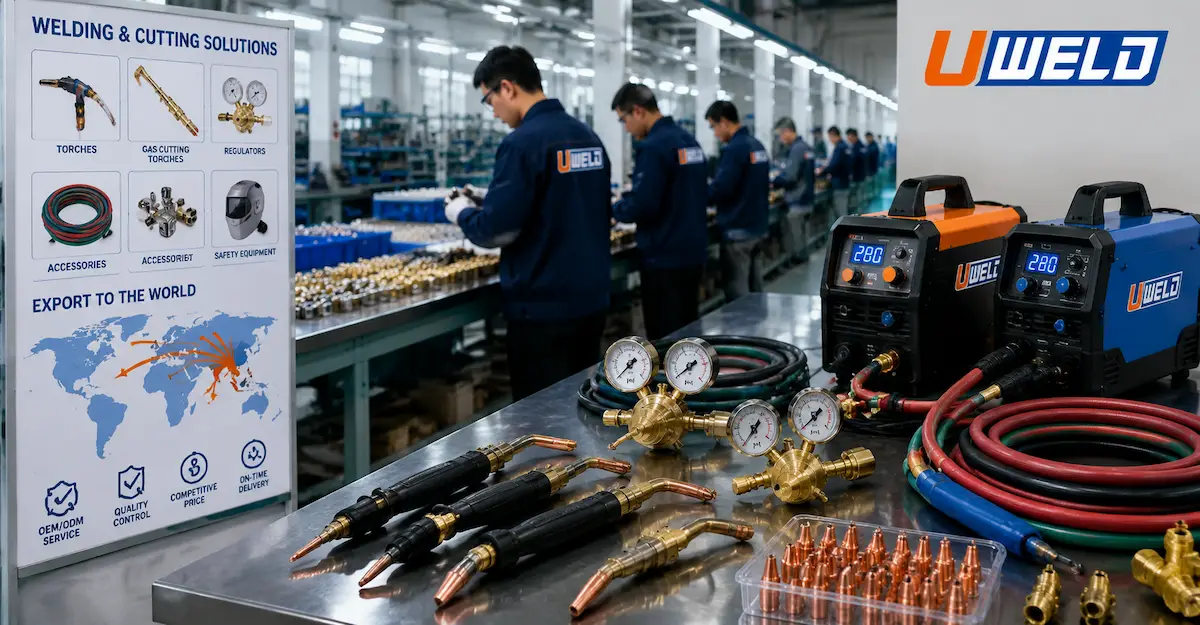
UWELD provides professional welding and cutting solutions for global buyers, including welding tools, gas cutting equipment, heating tools, HVAC/R solutions, regulators, safety products, and accessories. Buyers can explore available categories through the UWELD product center or discuss sourcing requirements through UWELD solutions.
Why Global Buyers Import Welding Equipment from China
China has become an important sourcing destination for welding equipment because of its mature manufacturing supply chain, broad product categories, flexible OEM capability, and competitive production capacity.
For international buyers, importing welding equipment from China can provide several advantages:
Wide Product Selection
Chinese suppliers can provide a broad range of welding and cutting products, including:
- Welding torches
- Gas cutting tools
- Regulators
- Welding hoses
- Heating and brazing tools
- Welding accessories
- Safety equipment
- Custom welding kits
This allows distributors and importers to source multiple product categories from fewer suppliers.
OEM and Private Label Opportunities
Many global buyers are not only looking for standard products. They want to build their own brands.
Chinese welding equipment suppliers often support:
- Logo customization
- Product packaging
- Instruction manuals
- Barcode labels
- Tool kits
- Product combinations
- Market-specific configurations
OEM capability allows importers to create differentiated product lines instead of competing only on price.
Flexible Production Capability
Compared with some markets where customization requires higher minimum quantities, many Chinese manufacturers offer flexible solutions for:
- Sample development
- Small trial orders
- Bulk production
- Repeat supply
This is valuable for distributors testing new product categories.
Mature Export Supply Chain
Experienced Chinese suppliers usually understand:
- Export packaging
- Shipping documents
- International communication
- Product labeling
- Container loading
- Destination market requirements
However, buyers still need to carefully evaluate suppliers before placing orders.
What Welding Equipment Can You Import from China?
Before contacting suppliers, buyers should define what type of welding equipment they need.
Different customers require different product categories.
Welding Tools
Welding tools are widely purchased by distributors, repair workshops, and industrial users.
Common products include:
- TIG torches
- MIG torch accessories
- Welding clamps
- Electrode holders
- Contact tips
- Nozzles
- Welding accessories
When importing welding tools, buyers should confirm:
- Compatibility
- Replacement parts
- Product specifications
- Application environment
- Packaging requirements
Gas Cutting Equipment
Gas cutting products are common in fabrication, construction, repair, and industrial maintenance.
Typical products include:
- Cutting torches
- Cutting tips
- Gas regulators
- Flashback arrestors
- Welding hoses
- Cutting kits
Buyers should pay attention to:
- Gas compatibility
- Pressure requirements
- Connection standards
- Cutting capacity
- Safety features
A complete gas cutting solution should include matched components rather than individual products purchased separately.
Heating and Brazing Tools
Heating tools are commonly used in:
- HVAC/R installation
- Refrigeration repair
- Plumbing
- Maintenance
Products may include:
- Brazing torches
- Heating torches
- Gas control accessories
- Portable kits
For HVAC/R distributors, compact and complete kits are often easier to sell than individual components.
Welding Safety Equipment
Safety products help buyers create a complete welding product catalog.
Common items include:
- Welding helmets
- Gloves
- Protective accessories
- Safety equipment
These products also create additional sales opportunities for distributors.
How to Find a Reliable Welding Equipment Supplier in China
Finding suppliers is easy. Finding the right supplier is the difficult part.
A professional supplier evaluation should include product capability, manufacturing ability, quality control, and business support.
Check Supplier Product Range
A supplier with broader product coverage can reduce sourcing complexity.
Check whether the supplier can support:
| Product Category | Supplier Capability |
|---|---|
| Welding tools | Torches, accessories, replacement parts |
| Gas cutting | Torches, tips, regulators, hoses |
| Heating tools | Brazing and HVAC/R solutions |
| Safety products | Helmets, gloves, protection |
| OEM products | Packaging and customization |
A supplier that understands complete solutions is usually more valuable than a company selling only individual items.
Verify Manufacturing Capability
Before cooperation, buyers should understand whether they are working with:
- A manufacturer
- A trading company
- A distributor
Important questions include:
- How long has the factory operated?
- What products are manufactured internally?
- What production equipment is available?
- How is quality controlled?
- Can they support repeat orders?
Buyers can learn more about UWELD’s company background through the About UWELD page.
Evaluate Export Experience
Export experience reduces international purchasing risks.
A qualified supplier should understand:
- Export packaging
- Product documentation
- International shipping
- Customer communication
- Market requirements
Ask:
- Which countries do you supply?
- Can you provide export documents?
- Have you worked with distributors before?
- Can you support customized packaging?
Review OEM Capability
For brands and distributors, OEM support is often a key decision factor.
A capable supplier should support:
- Logo printing
- Packaging design
- Labels
- Manuals
- Product kits
- Custom combinations
How to Verify a Welding Equipment Factory Before Ordering
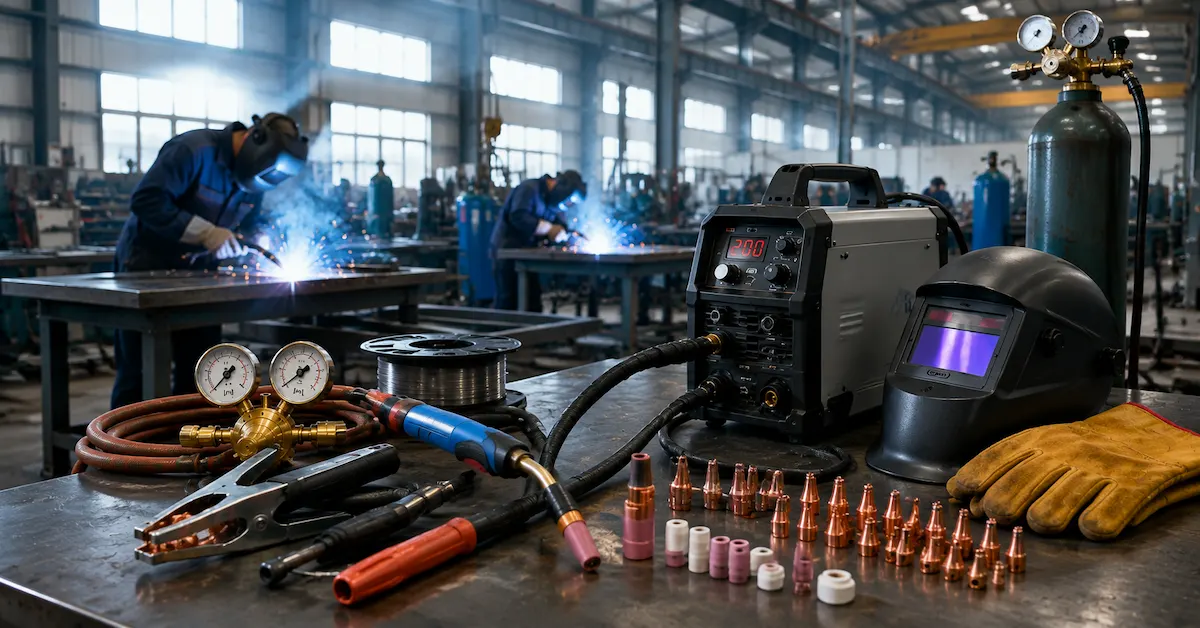
A factory visit or audit is not always possible, but buyers should still evaluate manufacturing capability.
Factory Audit Checklist
| Evaluation Area | What Buyers Should Check |
| Production area | Manufacturing environment and equipment |
| Quality department | Inspection process and testing tools |
| Warehouse | Material and finished product management |
| Packaging area | Export packing capability |
| Documentation | Product records and specifications |
| Production capacity | Ability to support order volume |
Production Capability
A reliable welding equipment manufacturer should have:
- Defined production procedures
- Skilled workers
- Controlled assembly process
- Testing equipment
- Packaging standards
Production capability affects both first orders and future repeat orders.
Quality Control System
Quality control is one of the most important parts of importing welding equipment.
A professional supplier should control:
Incoming Material Inspection
Checking:
- Metal components
- Valves
- Hoses
- Connectors
- Accessories
Production Inspection
Checking:
- Assembly quality
- Component matching
- Product appearance
- Functional performance
Final Inspection
Checking:
- Product quantity
- Packaging
- Labels
- Accessories
- Shipment condition
Understanding MOQ When Importing Welding Equipment
MOQ (Minimum Order Quantity) is an important factor for importers.
Different suppliers may have different MOQ requirements depending on:
- Product type
- Customization level
- Packaging requirements
- Production process
Standard Orders
For standard products, MOQ is usually lower because the supplier already has existing production processes.
Advantages:
- Faster production
- Lower development cost
- Easier market testing
OEM Orders
OEM orders usually require higher MOQ because they may involve:
- Custom packaging
- Labels
- Product changes
- Special configurations
However, OEM products provide stronger brand differentiation.
Trial Orders
Many importers start with:
- Sample orders
- Small batches
- Market testing
This helps evaluate:
- Product acceptance
- Customer feedback
- Supplier reliability
OEM and Private Label Welding Equipment from China
OEM is one of the biggest advantages of sourcing welding equipment from China.
A private-label project may include:
Logo and Branding
Options:
- Product logo
- Packaging logo
- Labels
- Manuals
Product Packaging
Customization may include:
- Color boxes
- Tool cases
- Carton design
- Barcode labels
- Product instructions
Custom Product Kits
Many distributors prefer complete solutions.
Examples:
- Gas cutting kit
- HVAC brazing kit
- Welding accessory kit
- Maintenance tool set
Customized kits improve product value and simplify customer purchasing.
Quality Control When Importing Welding Equipment
Quality control should happen before the products leave the factory.
A professional inspection process may include:
Incoming Material Inspection
Verify:
- Material quality
- Component specifications
- Supplier consistency
Production Inspection
Check:
- Assembly process
- Product matching
- Functional performance
Functional Testing
Depending on product type:
- Leakage testing
- Pressure testing
- Flame testing
- Connection testing
Final Shipment Inspection
Before shipping, confirm:
- Quantity
- Packaging
- Product appearance
- Accessories
- Documents
A pre-shipment inspection can significantly reduce import risks.
Documents Required to Import Welding Equipment
International buyers may need several documents.
Common documents include:
Commercial Invoice
Includes:
- Product description
- Quantity
- Price
- Buyer and seller information
Packing List
Includes:
- Package quantity
- Weight
- Dimensions
- Product details
Bill of Lading
Used for sea freight and shipping confirmation.
Certificate of Origin
May be required by customs authorities.
Product Specifications
Important for:
- Import approval
- Distributor sales
- Customer support
Compliance Documents
Depending on the market, buyers may require:
- Test reports
- Product certifications
- Safety documents
- Technical files
Requirements vary by country and product category.
Shipping Welding Equipment from China
Shipping method depends on order size, urgency, and budget.
Sea Freight
Best for:
- Bulk orders
- Full containers
- Distributor inventory
Advantages:
- Lower cost
- Suitable for heavy products
Air Freight
Suitable for:
- Samples
- Urgent orders
- Small quantities
Advantages:
- Faster delivery
Express Shipping
Suitable for:
- Product samples
- Small replacement parts
Before shipping, buyers should confirm:
- Packaging
- Insurance
- Shipping terms
- Delivery schedule
Common Mistakes When Importing Welding Equipment from China
Choosing Only Based on Price
Low prices may create:
- Poor quality
- Higher return rates
- Customer complaints
Skipping Sample Testing
Samples help verify:
- Product performance
- Compatibility
- Packaging
Ignoring Spare Parts
Replacement parts are important for long-term customer support.
Not Confirming Documents
Missing documents can delay customs clearance.
Not Planning Repeat Supply
A supplier should support future orders with consistent specifications.
Why Choose UWELD for Importing Welding Equipment from China?
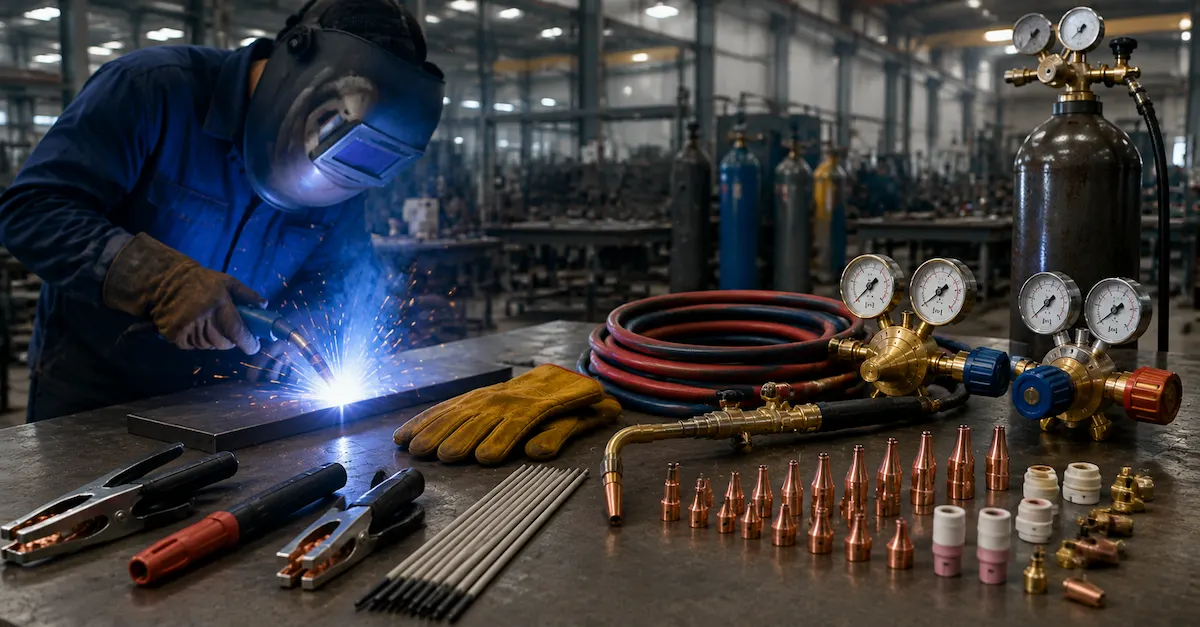
UWELD supports global importers, distributors, and industrial buyers looking for reliable welding and cutting solutions.
UWELD can support:
- Welding tools
- Gas cutting equipment
- Heating and brazing tools
- HVAC/R solutions
- Safety products
- OEM/private-label projects
- Product matching
- Quality-focused supply
- Export cooperation
Buyers can explore product categories through the UWELD product center, learn more through the UWELD blog, or contact the team through UWELD solutions.
FAQ: Import Welding Equipment from China
1. Is importing welding equipment from China profitable?
Yes, many distributors import welding equipment from China because of product variety, manufacturing capability, and OEM flexibility. Profitability depends on supplier selection, market demand, and product positioning.
2. How do I find welding equipment suppliers in China?
You can search suppliers through online platforms, industry directories, trade shows, and manufacturer websites. Always verify factory capability before ordering.
3. What MOQ should I expect?
MOQ depends on product type, customization, packaging, and supplier policy. Standard products usually require lower MOQ than OEM products.
4. Can I import OEM welding equipment from China?
Yes. Many suppliers support private labels, customized packaging, product kits, and brand development.
5. What documents are required?
Common documents include commercial invoice, packing list, bill of lading, certificate of origin, product specifications, and required compliance documents.
6. How do I control quality?
Use samples, factory evaluation, production inspection, and pre-shipment inspection before importing bulk orders.
7. How long does shipping take?
Shipping time depends on destination, transport method, and order size. Sea freight is usually slower but more economical for bulk orders.
8. Should I visit the factory before ordering?
A factory visit can help, but online audits, video inspections, samples, and third-party inspections can also reduce risk.
9. Can suppliers provide samples?
Yes. Most professional suppliers can provide samples before bulk production.
10. How do I start importing welding equipment from China?
Start by defining your product requirements, finding qualified suppliers, testing samples, confirming specifications, and planning shipping and documentation.
Conclusion
Importing welding equipment from China can provide significant opportunities for distributors, importers, and industrial buyers, but success depends on choosing the right supplier and controlling every stage of the sourcing process.
The most important factors include:
- Supplier evaluation
- Factory capability
- MOQ planning
- OEM support
- Quality control
- Shipping preparation
- Import documentation
A reliable China welding equipment supplier should help buyers not only purchase products but also build a stable long-term supply chain.
For welding tools, gas cutting equipment, heating solutions, OEM projects, and distributor supply, UWELD provides professional support for global buyers.
Explore the UWELD product center or contact UWELD solutions to discuss your importing requirements.