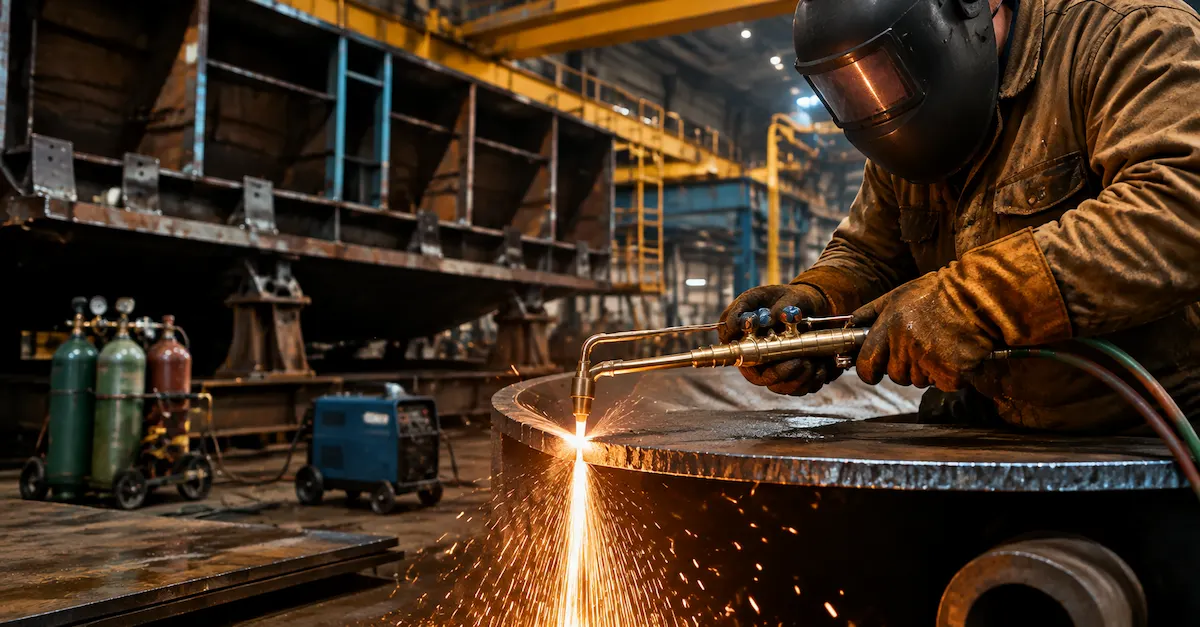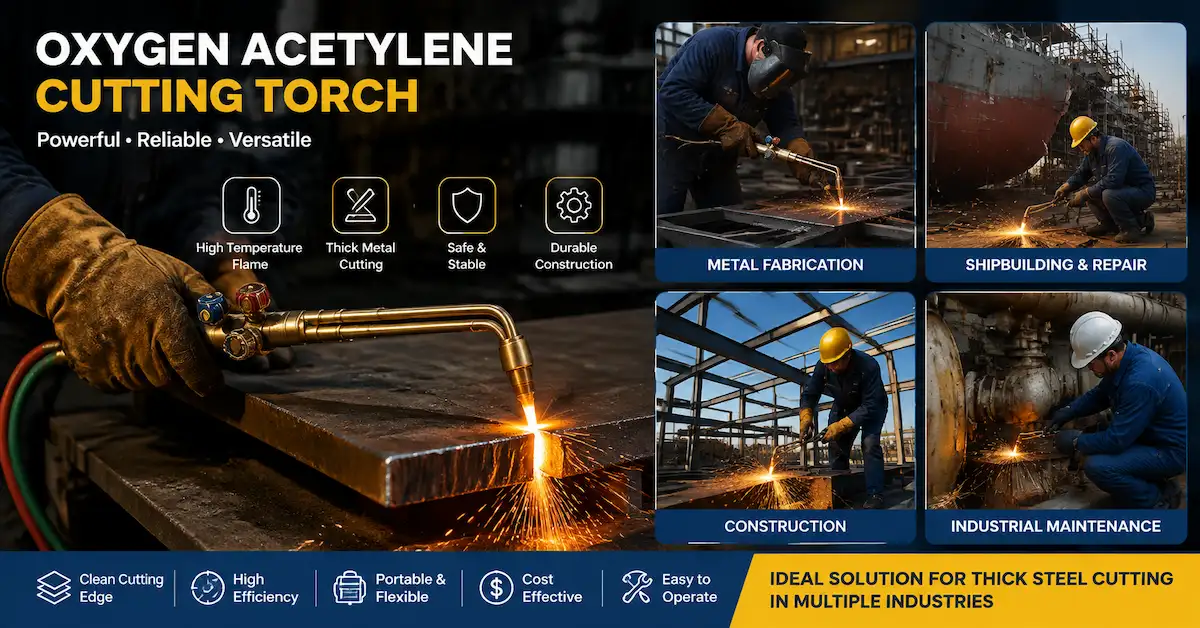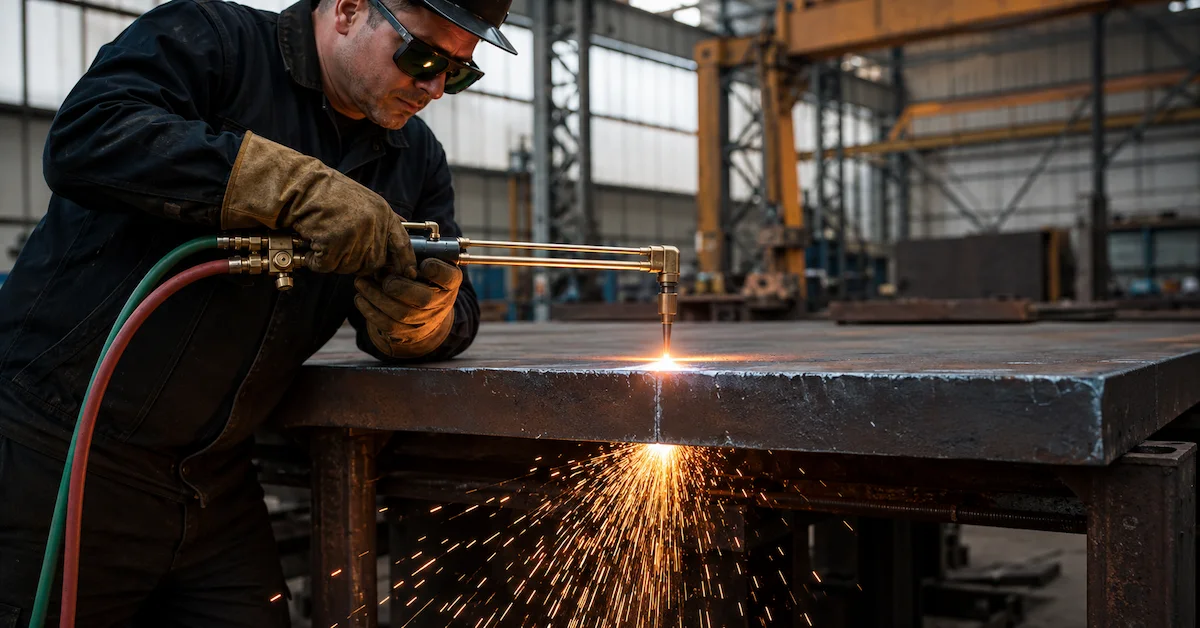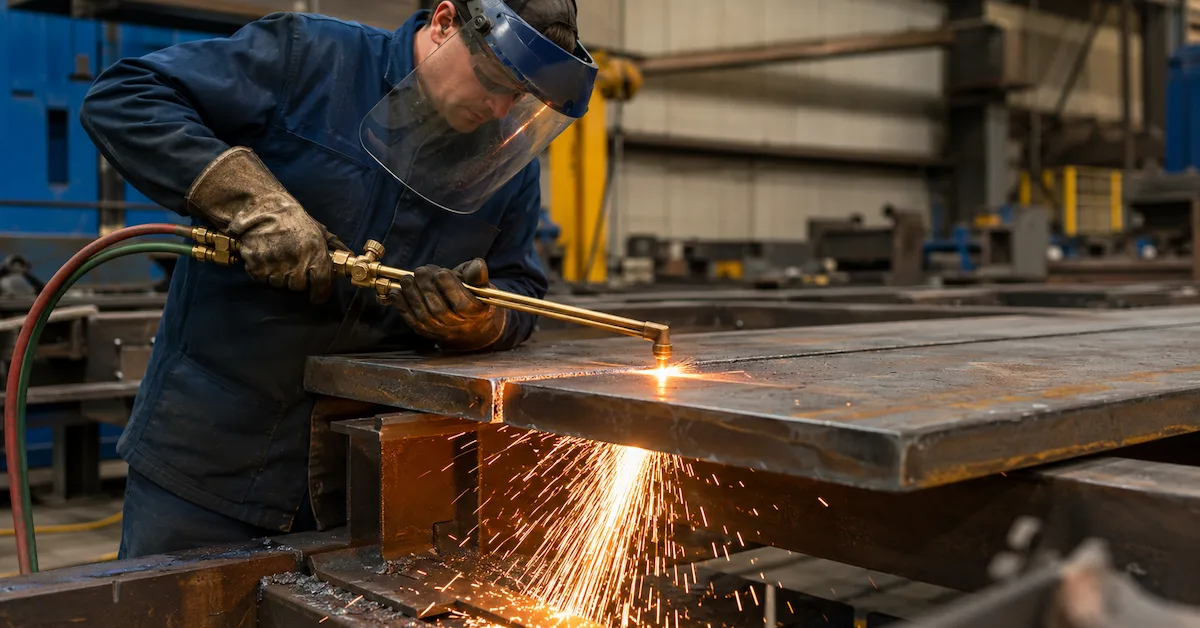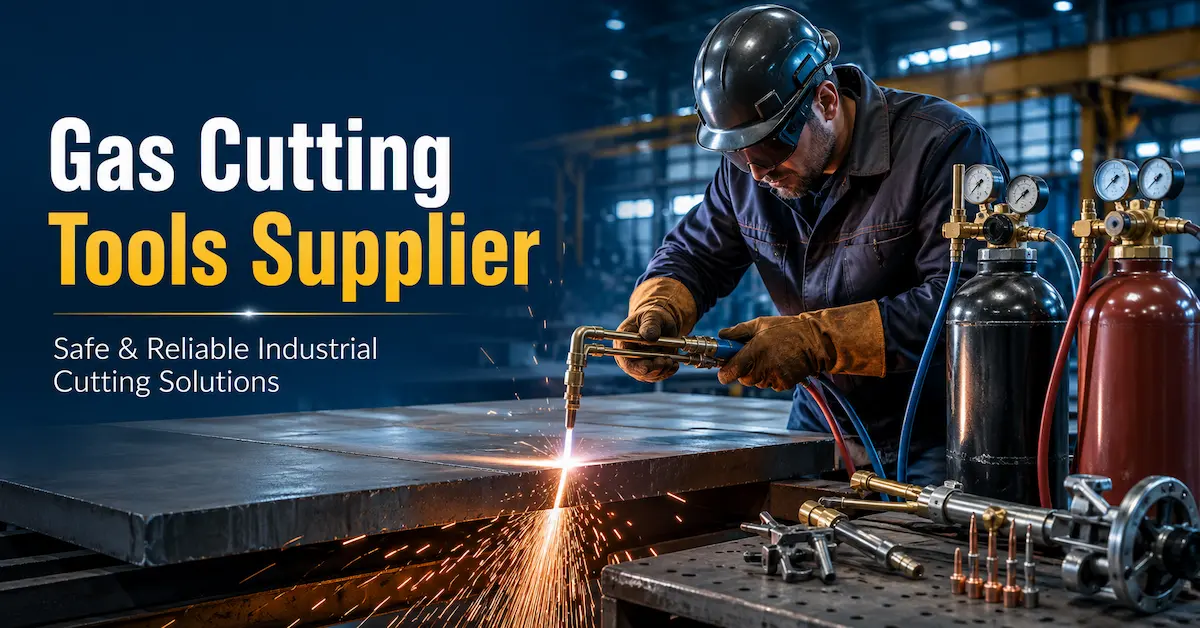


Choosing a reliable gas cutting tools supplier is an important decision for welding distributors, metal fabrication companies, hardware importers, construction contractors, ship repair businesses, and industrial maintenance teams.
Gas cutting tools operate with fuel gas, oxygen, heat, and pressurized components. A poorly matched torch, cutting tip, regulator, hose, or connector can reduce cutting performance and create avoidable operating risks. Buyers therefore need more than a low quotation. They need a supplier that understands gas compatibility, cutting capacity, connection requirements, product testing, replacement parts, and end-user applications.
UWELD supplies professional welding and cutting solutions for global buyers, including gas cutting torches, cutting accessories, regulators, heating tools, hoses, safety products, and related components. Buyers can review available categories through the UWELD product center or discuss sourcing requirements through UWELD solutions.
What Does a Gas Cutting Tools Supplier Provide?
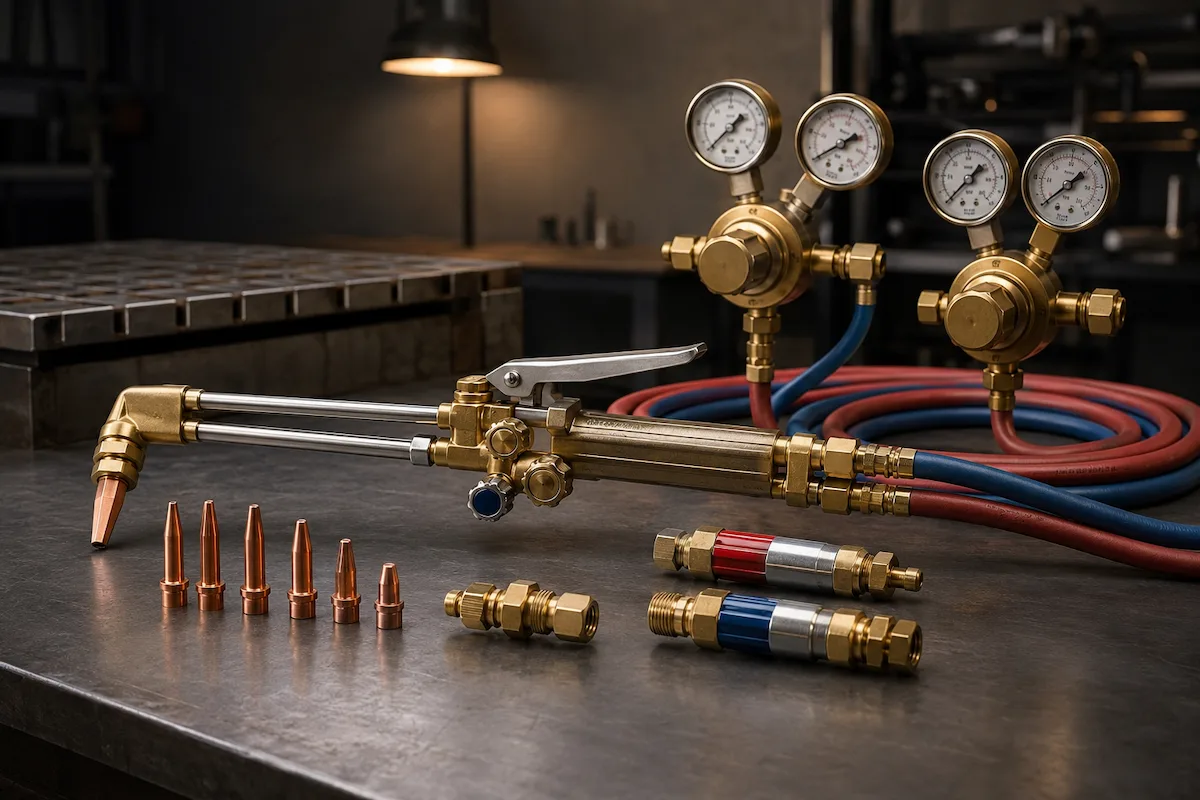
A gas cutting tools supplier provides the tools and supporting components used in oxy-fuel cutting systems.
A complete product range may include:
- Manual cutting torches
- Heavy-duty cutting torches
- Cutting attachments
- Combination welding and cutting torches
- Cutting tips and nozzles
- Oxygen regulators
- Fuel-gas regulators
- Twin welding hoses
- Flashback arrestors
- Check valves
- Hose connectors and fittings
- Torch repair parts
- Complete gas cutting kits
The supplier should understand how these products work together. Selecting each item separately without checking compatibility can lead to incorrect pressure ranges, unsuitable connections, unstable flames, or missing replacement components.
Who Needs Professional Gas Cutting Tools?
Gas cutting tools are used across a wide range of industrial environments.
| Buyer or User | Typical Application | Primary Purchasing Need |
|---|---|---|
| Welding equipment distributors | Product resale and local distribution | Complete range and repeat supply |
| Metal fabrication workshops | Steel plate and structural cutting | Durable tools and stable performance |
| Construction contractors | On-site cutting and repair | Portable, rugged equipment |
| Shipbuilding and ship repair | Heavy steel processing | Industrial-duty cutting tools |
| Machinery maintenance teams | Equipment repair and removal | Flexible tools and spare parts |
| Hardware importers | Wholesale and retail distribution | Packaging, documents, OEM support |
| Steel service centers | Plate preparation and processing | Cutting capacity and consistency |
| Industrial manufacturers | Production and maintenance support | Reliable product matching |
A suitable supplier should recommend products based on the actual application rather than offering the same configuration to every buyer.
Core Products to Evaluate from a Gas Cutting Tools Supplier
Gas Cutting Torches
The cutting torch is the main operating tool in an oxy-fuel cutting system. Buyers should evaluate more than the torch’s appearance or weight.
Important selection points include:
- Compatible fuel gas
- Cutting thickness range
- Torch length
- Head angle
- Valve operation
- Handle construction
- Connection type
- Cutting oxygen control
- Replacement tip availability
- Repair-part availability
A torch used for light workshop cutting may require a different configuration from one used for heavy structural steel or ship repair.
For distributors, offering several clearly positioned models is often more effective than stocking many similar torches without a clear application difference.
Cutting Tips and Nozzles
The cutting tip directly affects flame shape, oxygen flow, cutting speed, kerf quality, and cutting thickness.
Buyers should confirm:
- Tip series
- Compatible torch model
- Fuel-gas type
- Cutting thickness range
- Oxygen-pressure requirement
- Tip material
- Orifice consistency
- Replacement availability
Different fuel gases may require different tip designs. A professional gas cutting tools supplier should clearly identify which tip matches each torch and application.
Distributors should also stock replacement tips because they generate repeat sales and help end users maintain cutting performance.
Gas Regulators
Regulators control the pressure delivered from the gas cylinder to the cutting system.
Important purchasing factors include:
- Gas type
- Maximum inlet pressure
- Working pressure range
- Inlet connection
- Outlet connection
- Gauge range
- Gauge readability
- Adjustment stability
- Body construction
- Packaging protection
Connection standards may differ between markets. Buyers should provide the destination country before confirming regulator models.
A regulator should not be selected only because it visually matches another product. Pressure range, gas identification, and connection type must suit the intended system.
Welding Hoses and Connections
Twin welding hoses connect regulators to the torch. Hose selection affects portability, flexibility, system compatibility, and daily handling.
Buyers should review:
- Hose length
- Inner diameter
- Hose markings
- Color identification
- Flexibility
- Connection type
- Assembly quality
- Fitting accuracy
- Protective packaging
The supplier should confirm that the hose fittings match both the selected regulators and cutting torch.
Longer hoses may provide greater working range, but they can also increase storage and handling requirements. Buyers should select lengths according to actual workshop or job-site conditions.
Flashback Arrestors and Check Valves
Safety devices are important parts of professional gas cutting systems.
Buyers should ask whether the system requires:
- Torch-mounted flashback arrestors
- Regulator-mounted flashback arrestors
- Reverse-flow check valves
- Market-specific safety configurations
The exact configuration depends on the equipment design, gas system, application, and local requirements.
A responsible supplier should explain the available options rather than treating safety components as optional accessories without technical context.
Complete Gas Cutting Kits
Complete kits are popular among distributors, hardware stores, contractors, and repair teams because they simplify purchasing.
A typical kit may include:
- Cutting torch
- Oxygen regulator
- Fuel-gas regulator
- Twin hose
- Cutting tips
- Goggles or protective accessories
- Spark lighter
- Tip cleaner
- Wrench
- Storage case
Before ordering a kit, buyers should confirm that every component is compatible and suitable for the destination market.
A visually complete kit is not necessarily technically complete. The included regulator connections, hose fittings, tips, and torch configuration must work together correctly.
How to Match Gas Cutting Tools to the Application
A reliable gas cutting tools supplier should ask several questions before recommending products.
Which Fuel Gas Will Be Used?
Common fuel-gas options may require different tips, pressures, or torch configurations. Buyers should identify the fuel gas before product selection.
The supplier should confirm:
- Torch compatibility
- Tip type
- Regulator configuration
- Hose connection
- Required safety devices
What Material and Thickness Will Be Cut?
Cutting requirements differ between thin steel sections, medium plates, and heavy structural steel.
Buyers should provide:
- Material type
- Minimum thickness
- Maximum thickness
- Expected cutting frequency
- Workshop or field environment
This information helps the supplier recommend the correct torch and cutting-tip range.
Where Will the Tools Be Used?
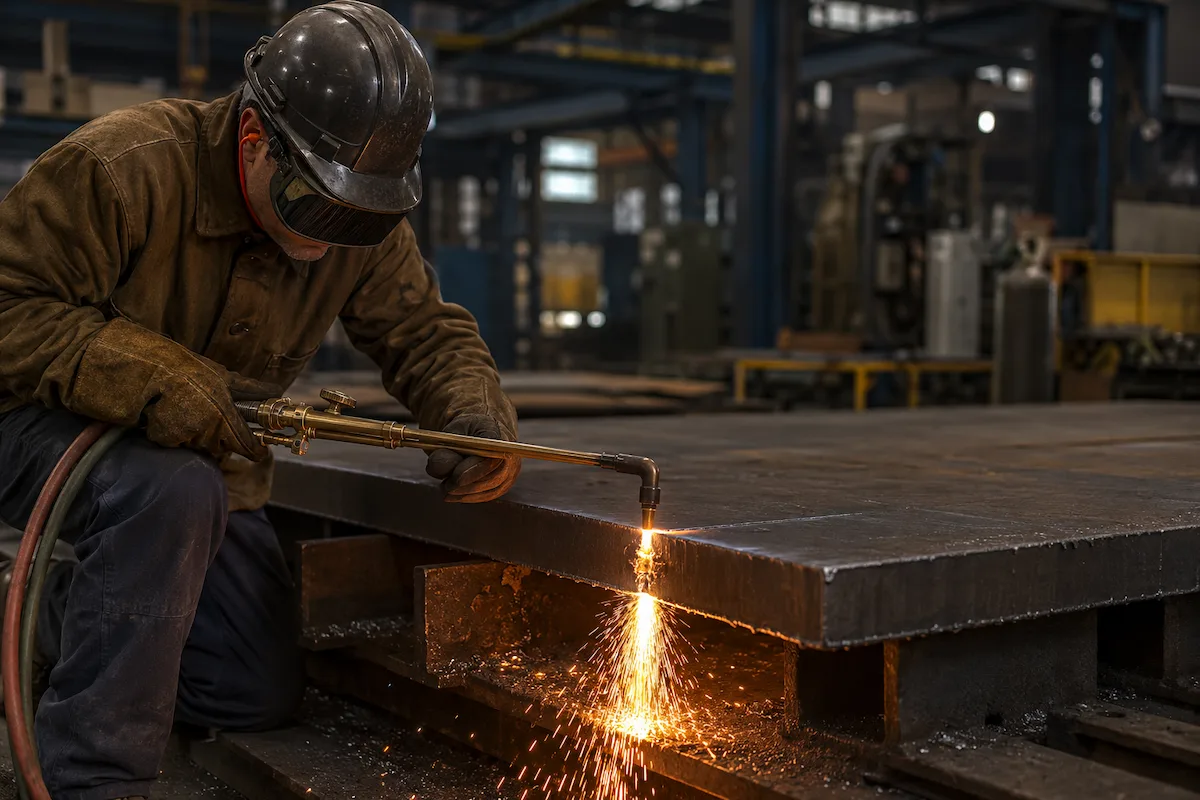
A fabrication workshop may prioritize cutting capacity and durability. A construction contractor may prioritize portability and easy transport.
Common environments include:
- Indoor fabrication workshops
- Outdoor construction sites
- Shipyards
- Steel processing facilities
- Repair workshops
- Industrial maintenance departments
The operating environment affects torch length, hose length, packaging, storage, and accessory selection.
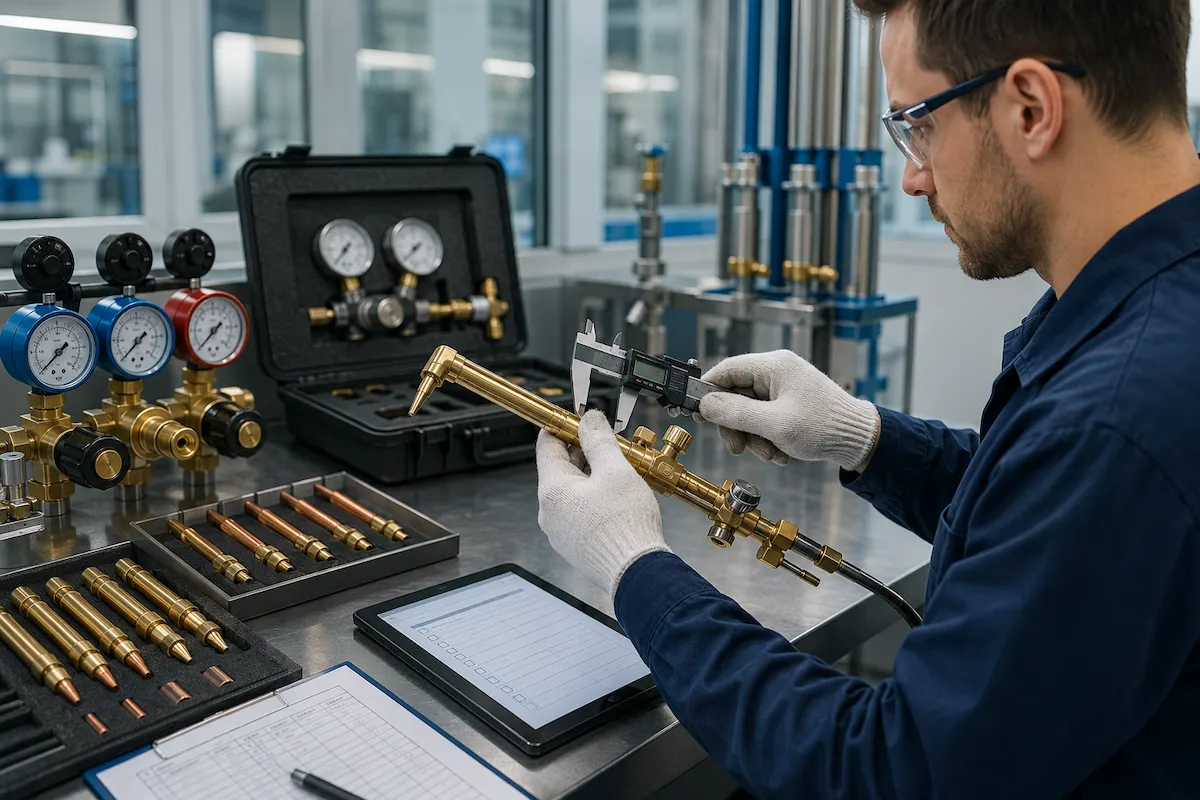
Quality Control Requirements for Gas Cutting Tools
Gas cutting products work with heat and pressurized gas. Buyers should understand how the supplier controls product quality.
Raw-Material Inspection
Important components may include:
- Brass torch bodies
- Copper cutting tips
- Valves
- Seals
- Gauges
- Hoses
- Connectors
- Handles
The supplier should have clear material and component requirements.
Thread and Connection Inspection
Incorrect threads or poorly manufactured fittings can prevent components from connecting correctly.
Inspection should cover:
- Thread dimensions
- Connection accuracy
- Surface condition
- Fitting compatibility
- Assembly condition
Valve and Control Testing
Torch valves should operate smoothly and provide reliable gas control.
Buyers should ask how the supplier checks:
- Valve opening and closing
- Adjustment smoothness
- Internal sealing
- Cutting oxygen control
- Handle and lever operation
Leak and Functional Testing
Visual inspection alone is not enough for gas cutting products.
Depending on the product, testing may cover:
- Gas leakage
- Pressure stability
- Regulator adjustment
- Gauge response
- Hose assembly
- Torch flame control
- Tip performance
- Connection sealing
Buyers should confirm which tests are performed on every product and which are performed through batch sampling.
Packaging Inspection
Gauges, threads, valves, and cutting tips can be damaged during transport.
Export packaging should protect:
- Gauge faces
- Threaded connections
- Torch heads
- Valve controls
- Cutting tips
- Hose fittings
- Product surfaces
For complete kits, the supplier should also verify accessory quantity and placement before shipment.
Gas Cutting Tools Supplier Evaluation Checklist
| Evaluation Area | Questions to Ask |
| Product range | Can the supplier provide torches, tips, regulators, hoses, and accessories? |
| Application knowledge | Can the supplier recommend products based on gas, material, and thickness? |
| Compatibility | Are all system components technically matched? |
| Quality control | Are valves, threads, pressure components, and packaging inspected? |
| Testing | Are leak, pressure, and functional tests performed? |
| Documentation | Are specifications, instructions, and available compliance documents provided? |
| Spare parts | Are tips, valves, seals, gauges, and fittings available? |
| OEM support | Can products and packaging be customized? |
| Delivery | Can the supplier support stable repeat orders? |
| Technical service | Can the supplier answer application and compatibility questions? |
Common Purchasing Risks
Choosing the Lowest Price Without Checking Specifications
A low quotation may exclude important accessories, use a different material, or provide a configuration that does not match the target market.
Compare quotations based on:
- Exact model
- Material
- Product configuration
- Accessories
- Packaging
- Testing
- Documentation
- Spare parts
Ordering Incorrect Regulator Connections
Regulator and hose connections may vary between markets. Confirm destination-country requirements before approving samples.
Mixing Incompatible Torches and Tips
A cutting tip should be matched to the torch series, gas type, and cutting range. Similar appearance does not guarantee compatibility.
Ignoring Replacement Parts
Distributors should plan replacement-part supply at the beginning of the project.
Common replacement products include:
- Cutting tips
- Valves
- Seals
- Gauges
- Hose fittings
- Torch heads
- Tip-cleaning tools
Skipping Sample Testing
Sample testing helps verify:
- Product operation
- Cutting performance
- Connection compatibility
- Packaging
- Accessory completeness
- User handling
Bulk production should begin only after the main product and packaging details are approved.
OEM and Private-Label Gas Cutting Tools
OEM gas cutting tools can help distributors and importers develop a recognizable product line.
Customization options may include:
- Logo printing
- Private-label packaging
- Color boxes
- Product labels
- Instruction manuals
- Barcode labels
- Carton marks
- Tool-case design
- Accessory combinations
- Market-specific kits
OEM development should begin with the target user and application.
For example:
- A hardware importer may need a retail-ready cutting kit.
- A fabrication distributor may need professional torches and replacement tips.
- A construction supplier may need rugged cases and longer hoses.
- A private-label brand may need coordinated packaging across torches, regulators, and accessories.
UWELD supports OEM and product-matching discussions for global buyers through the UWELD solutions page.
Applications of Professional Gas Cutting Tools
Metal Fabrication
Gas cutting tools are used for:
- Steel plate cutting
- Structural steel preparation
- Fabrication work
- Workshop repair
- Material removal
Construction
Typical applications include:
- On-site steel cutting
- Structural modification
- Repair work
- Demolition preparation
- Installation support
Shipbuilding and Ship Repair
Shipyards may use gas cutting equipment for:
- Heavy steel sections
- Plate preparation
- Maintenance
- Component removal
- Repair operations
Machinery Maintenance
Maintenance teams use cutting tools to remove damaged parts, prepare repairs, and service industrial equipment.
Scrap Processing and Recycling
Gas cutting tools may be used to reduce large steel structures or equipment into manageable sections.
Why Work with UWELD as Your Gas Cutting Tools Supplier?
UWELD supports global buyers sourcing professional welding, gas cutting, heating, HVAC/R, regulator, hose, safety, and accessory products.
For gas cutting buyers, UWELD can support:
- Cutting torch selection
- Cutting-tip matching
- Regulator options
- Hose and connector selection
- Complete cutting kits
- Safety accessories
- Replacement parts
- OEM and private-label packaging
- Distributor product planning
- Long-term repeat supply
Buyers can explore available product categories through the UWELD product center, learn more about the company through the About UWELD page, or submit project requirements through UWELD solutions.
FAQ: Gas Cutting Tools Supplier
1. What products does a gas cutting tools supplier provide?
A supplier may provide cutting torches, cutting tips, oxygen and fuel-gas regulators, twin hoses, flashback arrestors, check valves, fittings, replacement parts, and complete cutting kits.
2. How do I choose the correct cutting torch?
Consider the fuel gas, material thickness, cutting capacity, working environment, torch length, connection type, and available replacement tips.
3. Why must the cutting tip match the torch?
The tip design affects gas flow, flame characteristics, cutting thickness, and operating pressure. An incorrect tip may reduce performance.
4. Can one regulator be used for every market?
Not necessarily. Pressure ranges and connection standards may vary by gas type and destination country.
5. What should distributors stock as replacement parts?
Distributors should consider cutting tips, seals, valves, gauges, hose fittings, connectors, and maintenance accessories.
6. Why is leak testing important?
Gas cutting systems operate with pressurized gases. Leak testing helps verify the assembly and sealing of relevant components.
7. Can gas cutting tools be private labeled?
Yes. Customization may include logos, packaging, manuals, labels, tool cases, carton marks, and complete product kits.
8. Should buyers order samples first?
Yes. Samples help verify product operation, connections, cutting performance, accessory matching, and packaging before bulk production.
9. What information should I include in an RFQ?
Provide the destination country, fuel gas, cutting thickness, target users, connection requirements, expected quantity, packaging, branding, and required documents.
10. How can I contact UWELD?
Submit your gas cutting product list, target application, market, packaging requirements, and estimated quantity through the UWELD solutions page.
Conclusion
Choosing a professional gas cutting tools supplier requires careful evaluation of the complete cutting system, not only the cutting torch.
Buyers should confirm fuel-gas compatibility, tip selection, pressure range, regulator connections, hose fittings, safety devices, quality testing, replacement parts, and destination-market requirements.
For distributors, importers, contractors, and industrial buyers, the right supplier should provide technically matched products, stable quality, practical documentation, OEM support, and reliable repeat supply.
Explore gas cutting and related products through the UWELD product center, or contact UWELD through UWELD solutions to discuss product selection, samples, OEM packaging, and bulk orders.