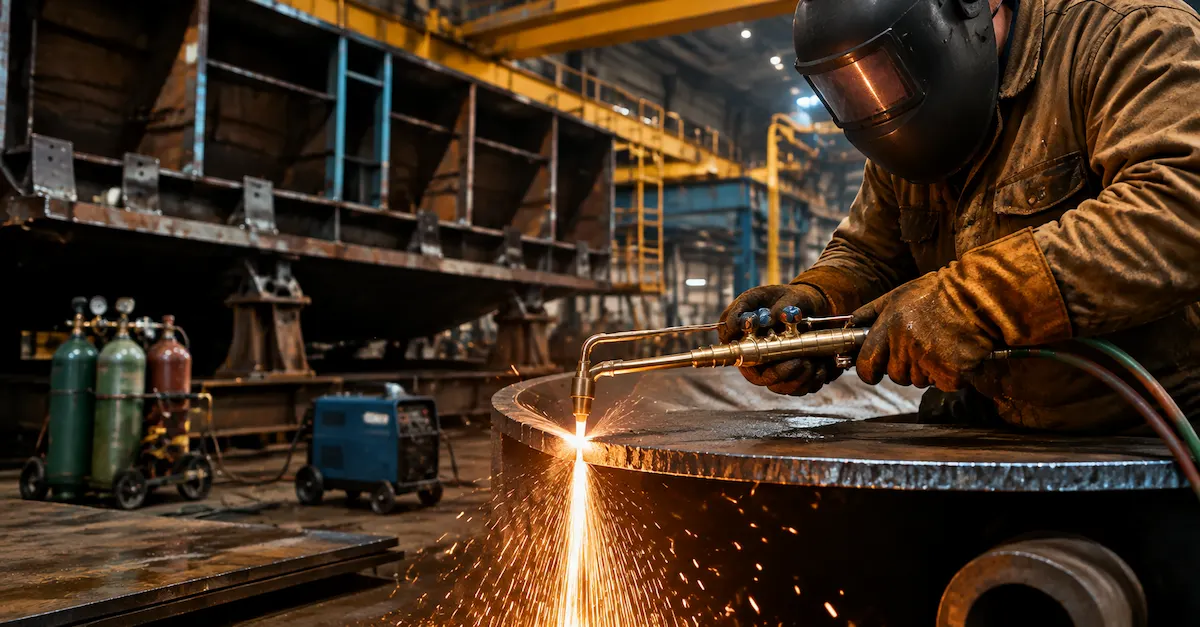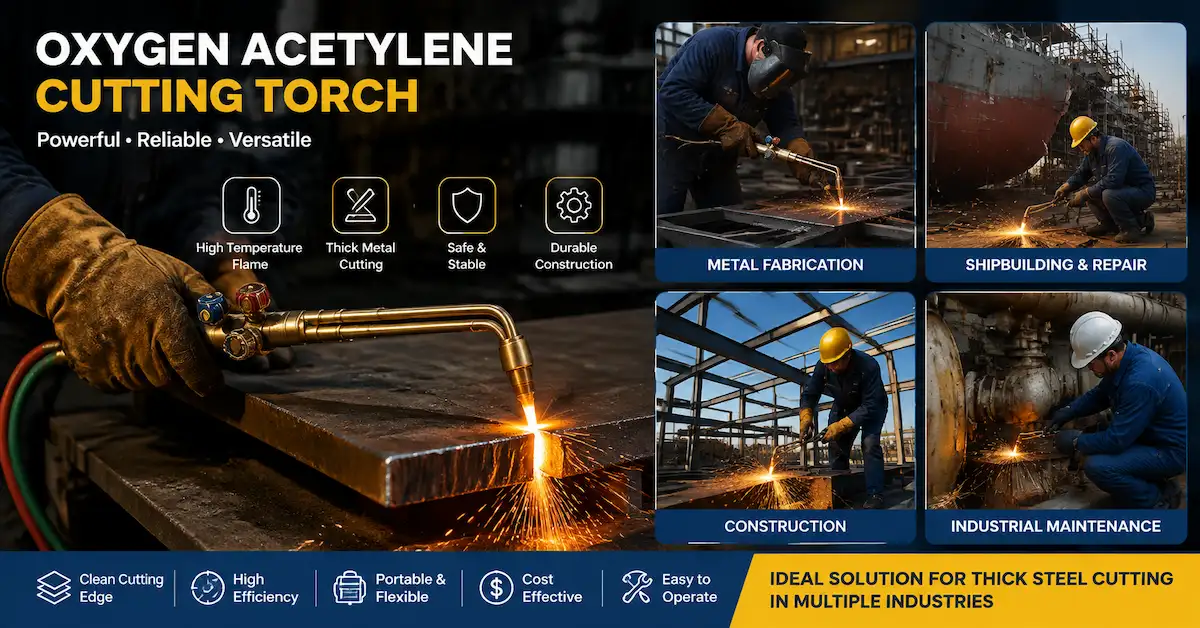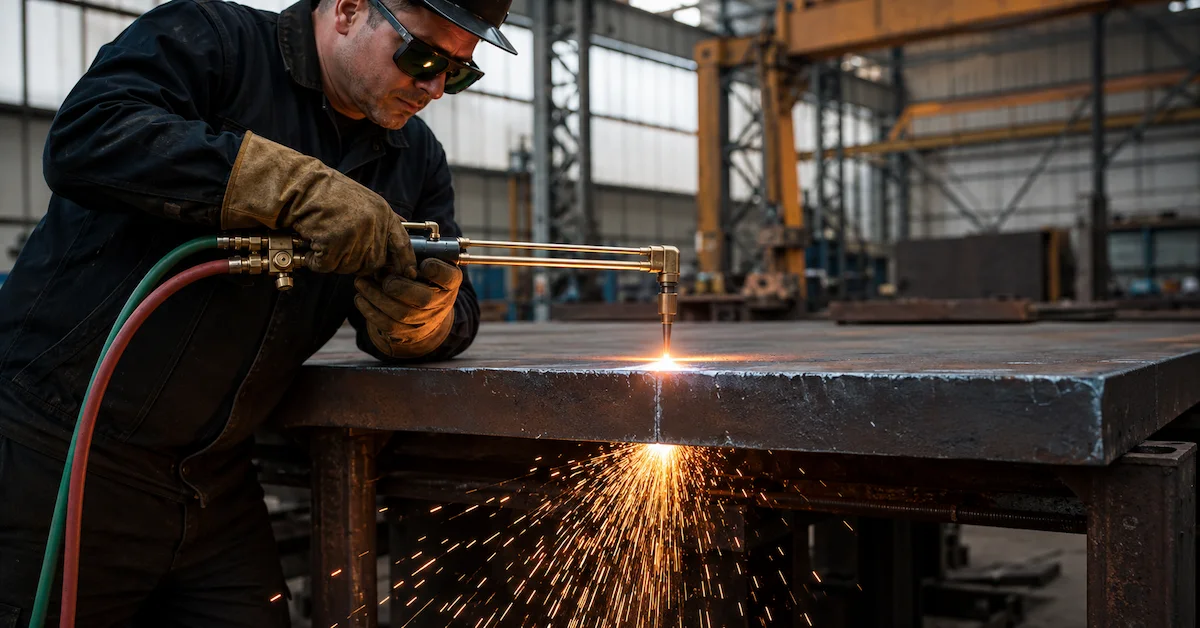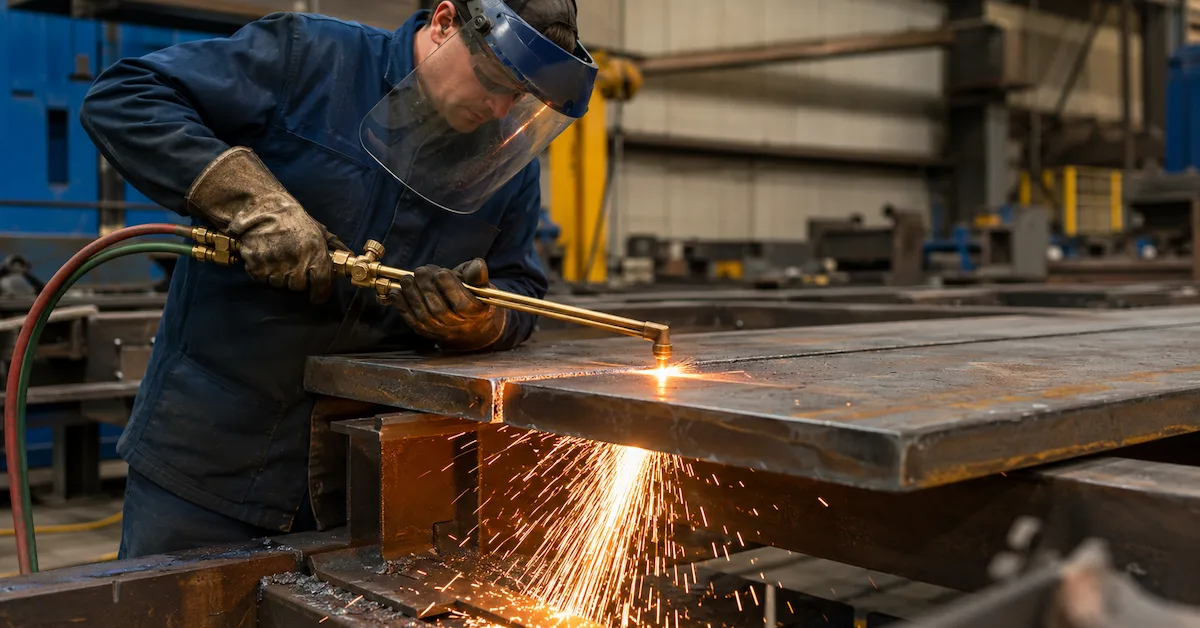


For distributors, importers, industrial buyers, and private-label brands, choosing a certified welding equipment supplier is not simply about finding a certificate logo on a website.
The real question is whether the supplier can provide the correct products, documents, inspections, and compliance support for your target market.
Welding and cutting products may be exposed to gas pressure, heat, sparks, electrical loads, repeated handling, transportation, and demanding job-site conditions. A quality or compliance problem can lead to rejected shipments, distributor complaints, product returns, delayed market entry, or safety concerns.
A professional supplier should therefore be able to explain:
- Which certifications apply to the company
- Which standards apply to each product
- Which models are covered by each certificate
- What testing is performed before shipment
- Which documents are available for import or resale
- How OEM products are controlled
- How compliance changes between markets
UWELD supplies welding and cutting tools across gas cutting, welding, safety, gas heating, HVAC/R, gas-control, and related accessory categories. Buyers evaluating a certified supply partner should review certification scope together with product specifications, sample performance, packaging, and batch quality. For more details, visit https://www.uweldtools.com.

What Does “Certified Welding Equipment Supplier” Really Mean?
The word “certified” can refer to several different things. Buyers should not assume that one certificate automatically covers every product made or supplied by the company.
A supplier may have a certified quality management system, while individual products may follow separate standards. Some products may also require market-specific approvals, test reports, declarations, labels, or technical files.
The main certification levels are:
| Certification Level | What It Usually Covers | What Buyers Should Confirm |
|---|---|---|
| Company quality system | Management and production procedures | Certificate holder, scope, validity |
| Product certification | A specific product or model family | Model numbers and applicable standard |
| Test report | Performance or safety testing | Laboratory, sample, test date |
| Market compliance document | Requirements for a target market | Country, regulation, product scope |
| Supplier inspection record | Internal production and shipment checks | Inspection items and acceptance criteria |
A reliable certified welding equipment supplier should clearly separate these documents instead of presenting them as one general quality claim.
Why Certification Scope Matters
A certificate is useful only when it applies to the product you are buying.
For example, a regulator standard does not automatically certify a welding torch. A torch certificate does not necessarily cover a hose assembly, welding helmet, or complete kit. A company-level ISO certificate shows that a management system is in place, but it does not replace product-specific testing.
Before approving a supplier, buyers should check:
- The legal company name on the certificate
- The manufacturing or business address
- The certificate number
- The issue and expiration dates
- The certification body
- The stated product or process scope
- The applicable standard
- The covered model numbers
- Any limitations or annexes
- Whether the document matches the ordered product
This verification is especially important for importers, distributors, and OEM brands whose own names may appear on the final packaging.
Common Standards Buyers May Encounter
Different welding and cutting products may be evaluated under different standards. The correct requirement depends on product type, destination country, gas system, application, and local regulation.
ISO 9001 Quality Management
ISO 9001 relates to a company’s quality management system. It indicates that the supplier follows documented processes for quality planning, production control, corrective action, records, and continual improvement.
For buyers, ISO 9001 can be useful when evaluating whether a supplier has a structured system. However, it should be reviewed together with product testing, sample quality, and actual inspection procedures.
EN ISO 2503 for Gas Regulators
EN ISO 2503 is associated with pressure regulators and flow-metering devices used for welding, cutting, and related processes.
When sourcing regulators, buyers should confirm:
- Gas type
- Inlet connection
- Outlet connection
- Maximum inlet pressure
- Working pressure range
- Gauge range
- Product model
- Certificate scope
- Market-specific connection requirements
Do not approve a regulator based only on its external appearance. Connection standards and pressure specifications must match the destination market and intended gas.
EN ISO 5172 for Blowpipes and Torches
EN ISO 5172 concerns blowpipes used for gas welding, cutting, heating, and related processes.
Buyers reviewing torch products should check:
- Torch type
- Compatible gases
- Connection dimensions
- Valve operation
- Tip compatibility
- Intended application
- Product model
- Test documentation
A torch and its accessories should be treated as a working system. Incorrectly matched tips, regulators, hoses, or fittings can undermine the value of the certified main product.
CSA and Other Market-Specific Approvals
Products intended for North American or other regulated markets may require specific approvals or documentation depending on product design and application.
Buyers should ask the supplier directly:
- Which models hold the approval?
- Is the certificate current?
- Does it cover the exact ordered configuration?
- Can the mark legally appear on the product or packaging?
- Are production changes controlled?
- Are market-specific labels available?
Never assume that an approval mentioned for one product category applies to the entire catalog.
How to Verify a Supplier’s Certification Documents
Certificate verification should be part of supplier qualification, not an afterthought before shipment.
Request Clear Copies
Ask for complete, readable files rather than cropped screenshots. A useful certificate should show the holder, scope, standard, certificate number, dates, and certification body.
Match the Company Name
The company named on the certificate should match the manufacturer or responsible supplier involved in your order. If the names differ, ask for a clear explanation of the relationship.
Match the Product Model
Compare the ordered model with the model list or annex. Similar-looking products may not be covered by the same certificate.
Check Validity
Confirm whether the certificate is still valid. Also ask whether surveillance audits, renewals, or production inspections are required.
Confirm the Certification Body
Where possible, verify the document through the certification body or issuing organization. Be cautious when certificates contain unclear logos, inconsistent formatting, missing numbers, or incomplete scope descriptions.
Keep Documents with the Purchase File
Store approved certificates, product specifications, packaging artwork, inspection criteria, and sample approvals together. This makes future reorders easier and reduces the risk of specification drift.
Product Categories That Require Careful Compliance Review
A certified welding equipment supplier may offer several product categories, but each category has different technical and documentation concerns.
Gas Regulators
Regulators require close attention because they control pressure and gas flow.
Buyers should inspect:
- Body construction
- Valve operation
- Gauge protection
- Thread accuracy
- Pressure adjustment
- Connection standard
- Gas identification
- Product marking
- Packaging protection
Regulators should be tested in the approved configuration rather than evaluated as isolated metal components.
Cutting and Welding Torches
For cutting torches, welding torches, and heating tools, buyers should review flame control, valves, handle construction, connections, tips, and gas compatibility.
Important questions include:
- Which gases can be used?
- Which tips are compatible?
- Are replacement tips available?
- Is the connection correct for the market?
- What functional testing is performed?
- Does the certificate cover this exact model?
MIG and TIG Torches
Electrical welding torches require checks related to current rating, cooling method, cable length, connector type, consumables, and machine compatibility.
An air-cooled torch designed for moderate-duty work should not be positioned as a high-duty water-cooled solution. Accurate specifications protect both the supplier and the buyer.
Welding Hoses and Fittings
Hoses and fittings should be matched to the gas system, regulator, and torch. Buyers should check hose markings, length, flexibility, connections, assembly quality, and available test information.
Safety Equipment
Welding helmets, gloves, and protective products may require different documentation from gas-control or welding equipment. Buyers should confirm the applicable standard and avoid using unrelated certificates as general proof of compliance.
Complete Welding and Cutting Kits
A kit may contain individually compliant components, but buyers should still verify that the final combination is technically correct and fully documented.
Check:
- All included items
- Component compatibility
- Instructions
- Product labels
- Replacement parts
- Packaging list
- Certificate coverage
- Destination-market requirements
Certification Is Not a Substitute for Quality Control
Certification supports trust, but it does not eliminate the need for batch inspection.
A supplier may hold valid certificates and still produce a shipment with assembly, appearance, packaging, or accessory problems. Buyers should therefore review the supplier’s actual quality-control process.
A practical inspection plan may include:
- Incoming material checks
- Component dimension checks
- Thread and connection inspection
- Assembly verification
- Pressure or functional testing
- Valve operation checks
- Gauge inspection
- Torch performance checks
- Product marking review
- Packaging completeness
- Final random inspection
For repeat orders, buyers should confirm that the same approved materials, components, and production methods are maintained.
Certified Supplier vs General Supplier
| Evaluation Point | General Supplier | Certified Welding Equipment Supplier |
| Quality system | May be informal | Documented management procedures |
| Product standards | May be unclear | Applicable standards identified |
| Certificate scope | Limited explanation | Models and scope should be traceable |
| Testing | Basic or inconsistent | Defined inspection and test procedures |
| Documentation | Supplied only when requested | Prepared for buyer and market needs |
| OEM compliance | Often handled late | Included during product development |
| Change control | May be informal | Product changes should be reviewed |
| Buyer risk | Higher uncertainty | Better traceability and verification |
Certification alone does not guarantee that one supplier is always better. The strongest choice combines valid documents, product expertise, sample performance, consistent production, and transparent communication.
Certification Considerations for OEM and Private-Label Projects
OEM projects create additional compliance responsibilities because the product may carry the buyer’s logo, packaging, model number, or brand identity.
Before approving a private-label project, confirm:
- Whether the existing certificate permits branding changes
- Whether the private-label model is included in scope
- Whether packaging statements are supported
- Which certification marks may be used
- Whether product modifications require retesting
- Who controls the technical file
- Who handles future certificate renewals
- How production changes will be communicated
A responsible OEM welding equipment supplier should raise these questions early rather than after the packaging has already been printed.
What Buyers Should Include in an RFQ
A detailed request for quotation helps the supplier recommend the correct products and documentation.
Include:
- Destination country
- Buyer type and sales channel
- Product category
- Intended application
- Required gas or welding process
- Connection standard
- Performance specifications
- Required certificates
- Packaging type
- Branding requirements
- Estimated quantity
- Target delivery schedule
- Sample requirements
- Inspection expectations
Do not simply request “certified welding equipment.” Specify which certification or market requirement your team needs.
Questions to Ask Before Placing an Order
Ask the supplier:
- Which certifications apply to this exact model?
- Can you provide the full certificate and annex?
- Is the certificate currently valid?
- Which factory or company holds it?
- What functional testing is performed?
- Can you provide the product specification?
- Are market-specific connections available?
- Can OEM branding affect certification scope?
- How are production changes controlled?
- Can you support a pre-shipment inspection?
- Are replacement parts available?
- How do you handle a failed inspection or customer complaint?
Clear answers demonstrate more value than a page filled with certification logos.
Why Buyers Consider UWELD
UWELD supports buyers sourcing welding and cutting tools across gas cutting, welding, safety, gas heating, HVAC/R, regulator, torch, and accessory categories.
For buyers evaluating a certified welding equipment supplier, UWELD can support discussions involving:
- Product and model selection
- Welding and cutting tool categories
- Gas regulators and torches
- Market-specific product requirements
- Quality-control planning
- OEM/ODM development
- Private-label packaging
- Technical documentation
- Distributor supply
- Repeat-order planning
Buyers should provide their destination market, required standard, application, and product configuration when requesting a quotation. This allows the supplier to confirm which documents and products are suitable instead of making a general compliance assumption.
FAQ: Certified Welding Equipment Supplier
1. What is a certified welding equipment supplier?
It is a supplier with verified company systems, product certificates, test documents, or market-compliance support relevant to the welding and cutting products it supplies.
2. Does ISO 9001 certify every product?
No. ISO 9001 relates to the quality management system. Product-specific standards and testing may still be required.
3. Why should buyers check certificate scope?
Certificate scope identifies the covered company, product, model, process, or standard. A certificate may not apply to every product in the supplier’s catalog.
4. Which documents should buyers request?
Depending on the product and market, buyers may request certificates, test reports, specifications, manuals, declarations, labels, packaging information, and inspection records.
5. Are gas regulators and welding torches covered by the same standard?
Not necessarily. Regulators, torches, hoses, machines, and safety products may follow different standards.
6. Can certified welding equipment be private labeled?
It may be possible, but branding, model changes, packaging statements, and product modifications should be reviewed against the certification scope.
7. Why is sample testing still necessary?
Certification does not confirm that every delivered unit is free from assembly, packaging, compatibility, or appearance problems. Samples help verify the actual product.
8. What should be checked during pre-shipment inspection?
Buyers may check product models, quantities, function, connections, markings, accessories, packaging, documentation, and batch consistency.
9. Is the supplier with the most certificates always the best?
No. The best supplier has relevant and valid certificates, suitable products, reliable quality control, technical knowledge, and stable supply.
10. How should buyers start a certification discussion with UWELD?
Provide the product type, destination country, intended application, expected order quantity, required standard, and packaging needs so the applicable product and documentation can be reviewed.
Conclusion
Choosing a certified welding equipment supplier requires more than checking whether certificate logos appear on a website.
Buyers should verify the certificate holder, product scope, model numbers, applicable standards, validity, testing process, and destination-market requirements. Certification should also be supported by sample testing, production quality control, packaging checks, and pre-shipment inspection.
For distributors, importers, industrial buyers, and OEM brands, the right supplier is one that can clearly explain what is certified, what is tested, what is documented, and what must still be confirmed for the final market.
Contact UWELD with your product list, destination market, certification requirements, packaging plan, and estimated quantity to receive a more accurate product recommendation and project quotation.