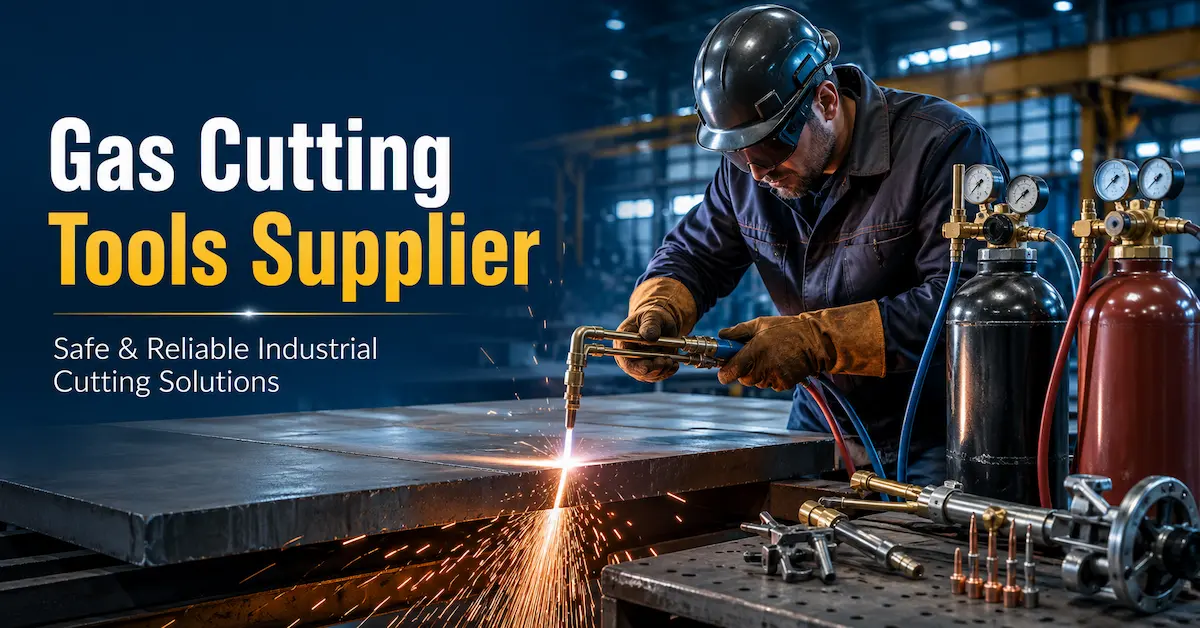


A reliable cutting torch manufacturer should provide more than competitive pricing. Global buyers should evaluate:
- Manufacturing capability
- Stable torch performance
- Precision machining
- Gas compatibility knowledge
- Quality inspection procedures
- OEM and private-label capability
- Production capacity
- Spare parts support
- Export experience
For distributors, importers, and industrial buyers, the right manufacturer can reduce quality risks, improve product consistency, and create long-term supply advantages.
A professional cutting torch manufacturer should understand the complete cutting system, including:
- Cutting torch
- Cutting tip
- Regulator
- Hose
- Gas requirements
- Application environment
UWELD provides professional welding and cutting solutions for global buyers, including gas cutting torches, welding tools, regulators, heating tools, HVAC/R solutions, safety equipment, and accessories. Buyers can explore available categories through the UWELD product center or discuss OEM and sourcing requirements through UWELD solutions.
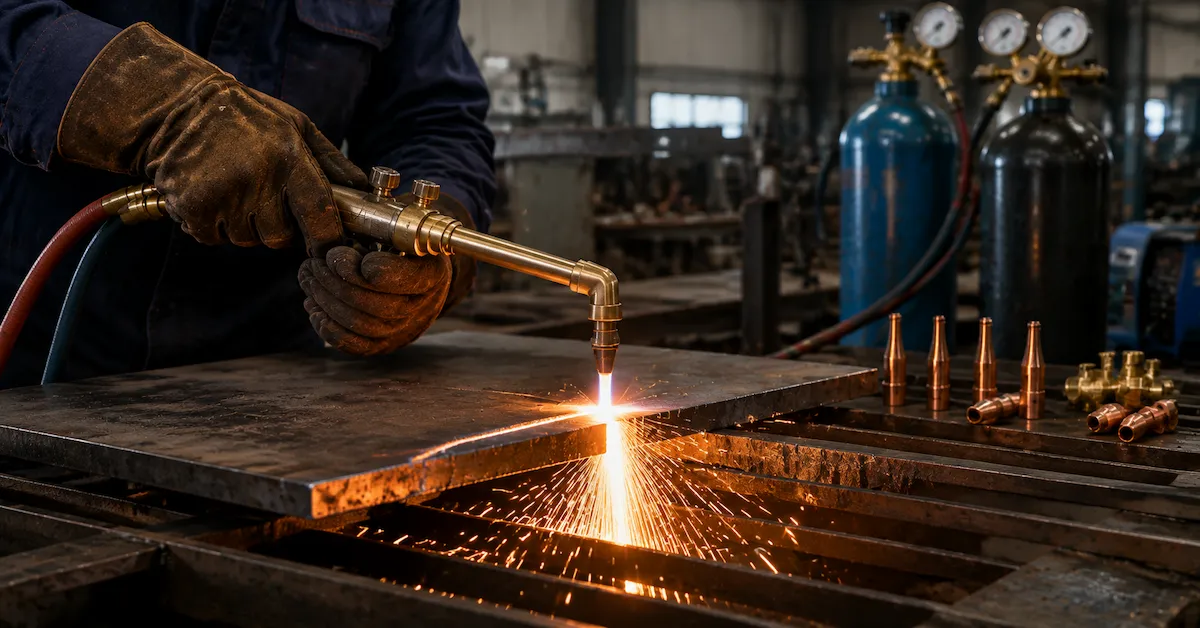
Why Choosing the Right Cutting Torch Manufacturer Matters
For welding distributors, hardware importers, construction suppliers, and industrial buyers, selecting the right cutting torch manufacturer directly affects product quality, customer satisfaction, and business growth.
A cutting torch operates under high-temperature and high-pressure conditions. Small differences in material quality, machining accuracy, valve design, or assembly processes can affect:
- Flame stability
- Cutting efficiency
- Gas consumption
- Product lifespan
- User safety
- Maintenance requirements
Many buyers face similar sourcing challenges:
Inconsistent Product Quality
Some suppliers provide acceptable samples but fail to maintain the same quality during bulk production.
Common problems include:
- Different materials between batches
- Poor valve performance
- Uneven machining quality
- Incorrect accessories
Limited Customization Capability
Distributors and brands often need:
- Private labels
- Custom packaging
- Product combinations
- Market-specific configurations
A manufacturer without OEM experience may struggle to support these requirements.
Lack of Technical Support
Cutting torches must match:
- Gas type
- Cutting thickness
- Tip design
- Regulator specifications
A supplier that only provides a catalog may not provide enough technical guidance.
Unstable Long-Term Supply
For importers and distributors, repeat orders are important. A manufacturer should maintain:
- Stable specifications
- Consistent production
- Reliable lead time
- Continuous spare parts supply
What Does a Cutting Torch Manufacturer Produce?
A professional cutting torch manufacturer may provide different types of gas cutting products for various industrial applications.
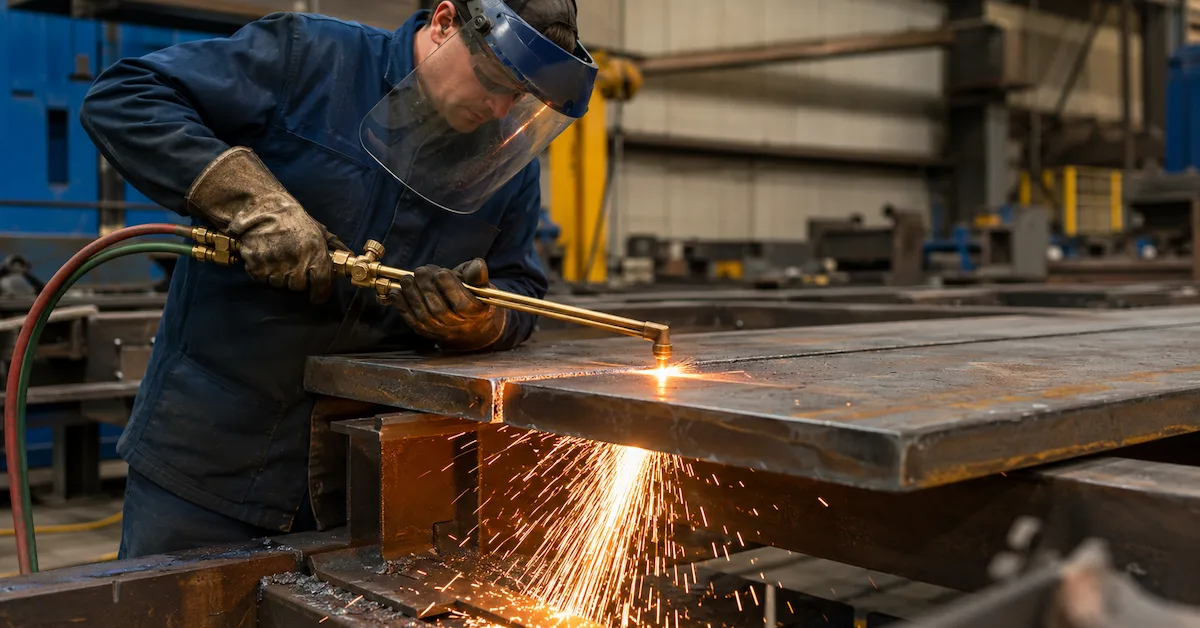
Manual Cutting Torch
Manual cutting torches are commonly used in:
- Metal fabrication workshops
- Repair operations
- Construction projects
- General industrial cutting
Important features include:
- Stable flame control
- Comfortable handle design
- Reliable valves
- Compatible cutting tips
- Easy maintenance
Manual cutting torches are popular among distributors because they serve a wide range of professional users.
Heavy Duty Cutting Torch
Heavy-duty cutting torches are designed for more demanding applications.
Common industries include:
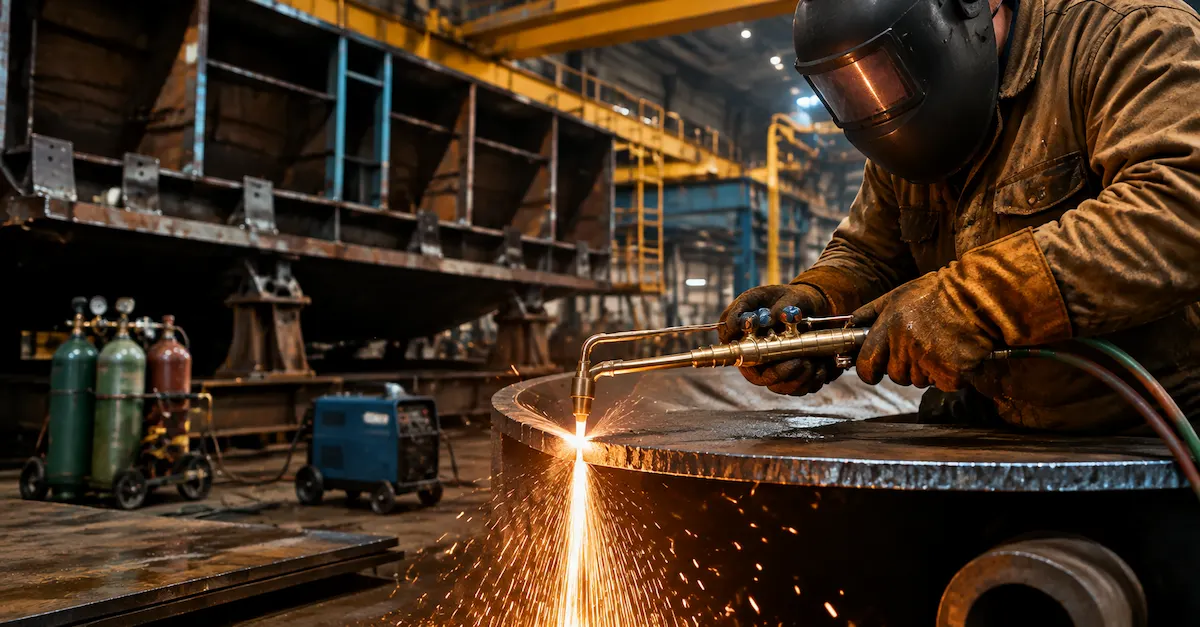
- Shipbuilding
- Steel processing
- Heavy fabrication
- Industrial maintenance
Key requirements:
- Strong body construction
- Higher cutting capacity
- Long service life
- Stable operation under intensive use
Heavy-duty users usually prioritize reliability over the lowest purchase price.
Combination Welding and Cutting Torch
Combination torches provide both welding and cutting functions.
They are suitable for:
- Maintenance teams
- Small workshops
- Mobile repair services
- Multi-purpose applications
Advantages include:
- Reduced equipment investment
- Easier transportation
- Flexible operation
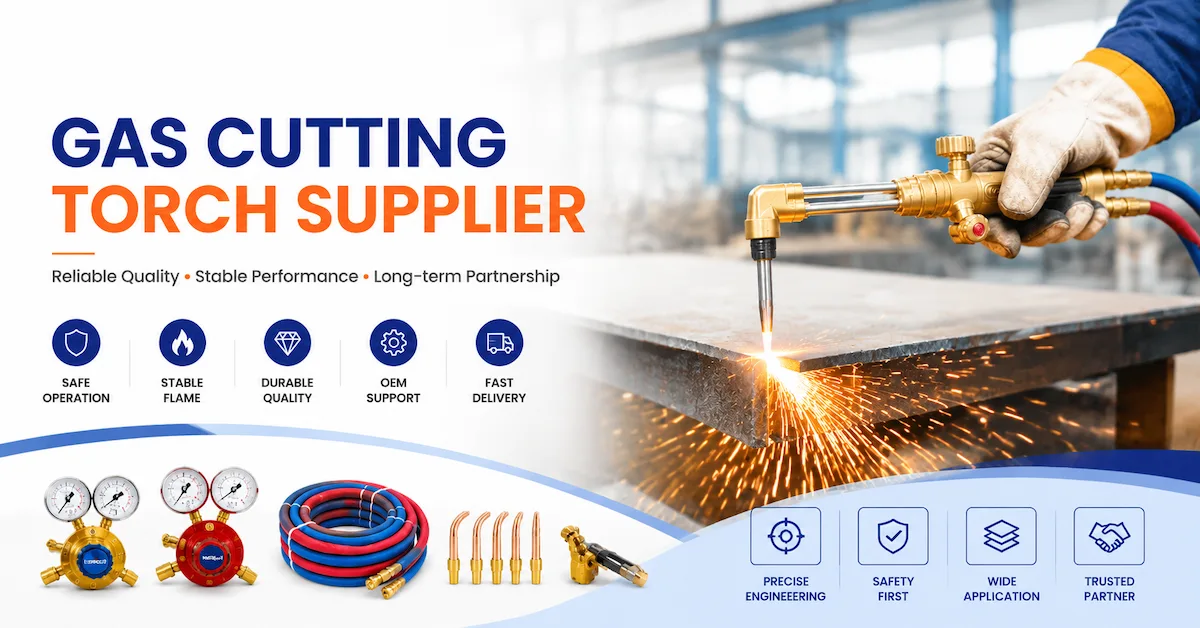
Cutting Torch Accessories
A complete cutting torch product line should include related accessories.
Common accessories include:
- Cutting tips
- Nozzles
- Valves
- Handles
- Connectors
- Repair parts
- Hoses
- Regulators
For distributors, accessories create additional sales opportunities and improve customer support.
How Cutting Torches Are Manufactured
Understanding the manufacturing process helps buyers evaluate whether a supplier has real production capability.
Material Preparation
Quality cutting torches require reliable materials.
Common materials include:
- Brass components
- Copper parts
- Sealing materials
- Metal handles
- Valve components
A professional manufacturer should control:
- Material specifications
- Supplier selection
- Incoming inspection
- Component consistency
Poor material control may result in:
- Leakage
- Short service life
- Poor flame control
Precision Machining
Machining accuracy directly affects torch performance.
Important machining processes include:
- Thread processing
- Internal gas passage machining
- Valve seat machining
- Surface finishing
- Component dimension control
Precision machining helps ensure:
- Correct assembly
- Stable gas flow
- Reliable sealing
- Consistent performance
Assembly Process
During assembly, manufacturers should control:
- Valve installation
- Component matching
- Handle assembly
- Gas passage connection
- Tip compatibility
A controlled assembly process reduces differences between products.
Functional Testing
Before shipment, professional manufacturers should perform product testing.
Testing may include:
- Gas leakage testing
- Valve operation testing
- Flame performance testing
- Connection testing
- Appearance inspection
- Packaging inspection
Testing helps ensure products meet approved specifications.
How to Evaluate a Cutting Torch Manufacturer
Choosing a manufacturer requires more than checking product pictures or prices.
Manufacturing Capability
Buyers should evaluate:
- Factory production capacity
- Manufacturing equipment
- Production experience
- Quality systems
- Workforce capability
Important questions:
- Does the company manufacture products directly?
- What products are produced internally?
- Can they support repeat orders?
- Can they handle OEM projects?
Quality Control System
A reliable cutting torch manufacturer should have clear quality procedures.
Quality control may include:
Incoming Inspection
Checking:
- Brass materials
- Valves
- Tips
- Seals
- Connectors
Production Inspection
Checking:
- Machining accuracy
- Assembly quality
- Component matching
- Product appearance
Final Inspection
Checking:
- Product function
- Quantity
- Packaging
- Accessories
- Shipping condition
OEM and Private Label Capability
Many distributors and brands look for OEM cutting torch manufacturers.
Customization options may include:
- Logo marking
- Handle branding
- Product labels
- Color packaging
- Instruction manuals
- Tool kits
- Custom accessories
OEM capability allows buyers to build differentiated products instead of competing only on price.
Production Capacity
A suitable manufacturer should match your order requirements.
Buyers should understand:
- Monthly production ability
- Lead time
- Sample development time
- Bulk order schedule
- Peak-season capacity
Stable production capability helps avoid inventory shortages.
Export Experience
International buyers should evaluate whether the manufacturer understands export requirements.
Important factors include:
- Export packaging
- Product documents
- Shipping preparation
- Customer communication
- Market requirements
Key Quality Factors Buyers Should Check
Cutting Torch Body Material
The torch body affects:
- Durability
- Heat resistance
- Corrosion resistance
- Service life
Buyers should understand:
- Material type
- Manufacturing process
- Surface treatment
Valve Performance
Valve quality affects:
- Gas control
- Flame adjustment
- User experience
- Safety
Important checks:
- Smooth operation
- Sealing performance
- Adjustment accuracy
Cutting Tip Compatibility
The cutting tip affects:
- Cutting speed
- Flame quality
- Material thickness capability
Buyers should confirm:
- Tip series
- Gas type
- Cutting range
- Replacement availability
Connection Standards
Different markets may require different:
- Thread standards
- Hose connections
- Gas fittings
A professional manufacturer should confirm destination-market requirements before production.
OEM Cutting Torch Manufacturing Solutions
OEM cutting torch manufacturing helps distributors and brands create their own product lines.
Common OEM services include:
Product Branding
Including:
- Logo printing
- Product marking
- Packaging branding
Packaging Customization
Including:
- Color boxes
- Tool cases
- Manuals
- Labels
- Barcode stickers
Product Kits
Manufacturers can help develop:
- Cutting torch kits
- Repair kits
- Industrial cutting sets
- Distributor packages
OEM solutions are especially valuable for:
- Welding distributors
- Hardware importers
- Industrial suppliers
- Private-label brands
Cutting Torch Manufacturer vs Trading Supplier
| Evaluation | Manufacturer | Trading Supplier |
|---|---|---|
| Production control | Direct | Limited |
| Customization | Stronger | Depends on factory |
| Technical support | Better | Usually limited |
| Cost control | Better | Additional margin |
| Product changes | Faster | Slower |
| Quality traceability | Higher | More complicated |
For long-term cooperation, many buyers prefer working directly with manufacturers.
Quality Control Checklist
| Stage | Inspection Focus |
| Material | Brass, copper, seals, components |
| Machining | Dimensions and thread accuracy |
| Assembly | Valve and component fitting |
| Testing | Leakage and flame performance |
| Packing | Product protection and completeness |
How to Choose a China Cutting Torch Manufacturer
For buyers sourcing from China, evaluate:
Factory Experience
Check:
- Years in industry
- Product categories
- Export markets
OEM Capability
Confirm:
- Custom branding
- Packaging
- Product combinations
Quality Management
Review:
- Inspection procedures
- Testing methods
- Production records
Communication
A reliable manufacturer should provide:
- Clear specifications
- Fast response
- Technical recommendations
- Production updates
Common Mistakes When Selecting a Cutting Torch Manufacturer
Choosing Only by Price
Low prices may lead to:
- Poor materials
- Inconsistent quality
- Higher replacement costs
Skipping Sample Testing
Samples help verify:
- Product performance
- Compatibility
- Packaging
Ignoring Spare Parts
Distributors should confirm availability of:
- Tips
- Valves
- Seals
- Accessories
Not Confirming OEM Details
Before production, confirm:
- Logo
- Packaging
- Labels
- Manuals
- Product specifications
Application Industries
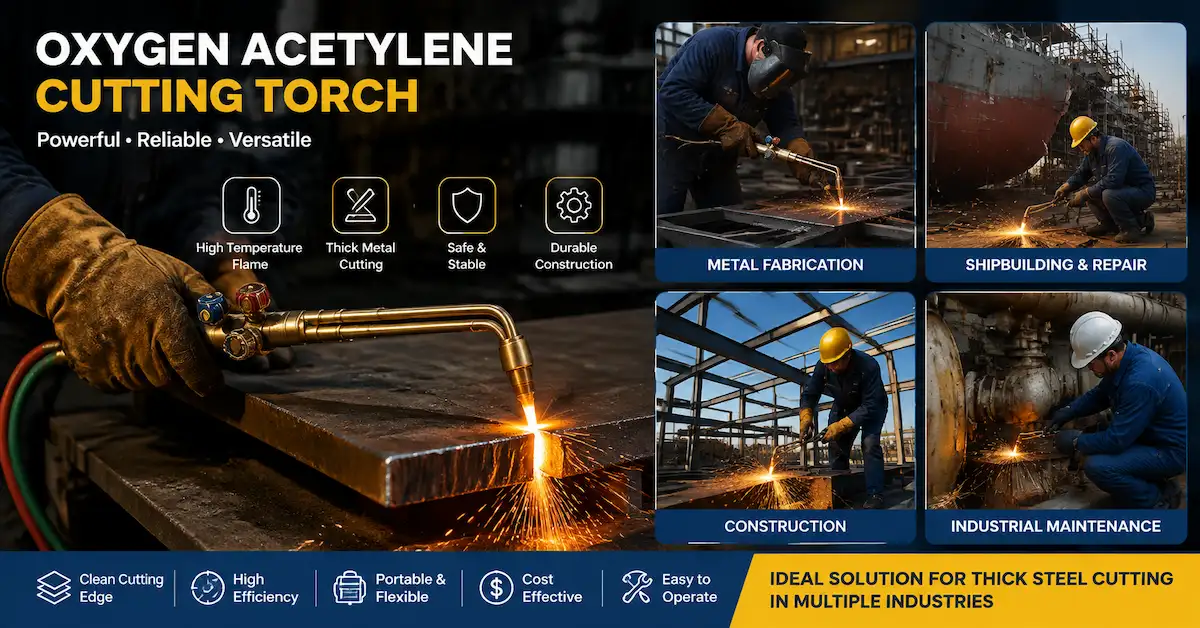
Metal Fabrication
Cutting torches are used for:
- Steel cutting
- Structural fabrication
- Workshop production
Requirements:
- Stable cutting performance
- Durable products
- Easy maintenance
Shipbuilding
Applications:
- Steel plate cutting
- Repair work
- Heavy fabrication
Requirements:
- Heavy-duty performance
- Long working life
Construction
Applications:
- Steel structure work
- Field cutting
- Installation projects
Requirements:
- Portable design
- Reliable operation
Industrial Maintenance
Applications:
- Equipment repair
- Component removal
- Emergency maintenance
Requirements:
- Flexible tools
- Replacement support
Why Choose UWELD as Your Cutting Torch Manufacturer?
UWELD supports global buyers looking for professional cutting torch and welding solutions.
UWELD can support:
- Gas cutting torch manufacturing
- Cutting tool solutions
- Cutting tip matching
- Regulator and hose solutions
- OEM/private-label projects
- Distributor supply
- Quality-focused production
- Export cooperation
Buyers can explore products through the UWELD product center, learn more about the company through the About UWELD page, or discuss cooperation through UWELD solutions.
FAQ: Cutting Torch Manufacturer
1. What does a cutting torch manufacturer produce?
A cutting torch manufacturer produces cutting torches, tips, accessories, and related gas cutting components.
2. How do I choose a cutting torch manufacturer?
Evaluate manufacturing capability, quality control, OEM ability, product range, export experience, and supply stability.
3. Can cutting torches be customized?
Yes. Manufacturers can provide logo branding, packaging customization, product kits, and private-label solutions.
4. What materials are used for cutting torches?
Common materials include brass, copper components, metal handles, valves, and sealing materials.
5. How are cutting torches tested?
Testing may include leakage testing, valve testing, flame testing, connection checks, and final inspection.
6. What is the difference between a manufacturer and supplier?
A manufacturer controls production directly, while a supplier may source products from different factories.
7. Can manufacturers provide replacement parts?
Yes. Professional manufacturers often provide tips, valves, seals, and other replacement components.
8. What industries use cutting torches?
Common industries include fabrication, shipbuilding, construction, maintenance, and steel processing.
9. Should buyers request samples?
Yes. Samples help confirm product quality, compatibility, and manufacturing capability.
10. How can I work with UWELD?
Buyers can contact UWELD through the solutions page for cutting torch manufacturing, OEM, and bulk supply requirements.
Conclusion
Choosing the right cutting torch manufacturer is an important decision for distributors, importers, OEM brands, and industrial buyers.
A reliable manufacturer should provide:
- Stable production
- Quality-controlled manufacturing
- Technical knowledge
- OEM capability
- Spare parts support
- Long-term supply reliability
The best manufacturing partner is not simply the lowest-cost option. It is the supplier that can provide consistent products, professional support, and scalable cooperation.
For buyers sourcing cutting torches, gas cutting tools, OEM solutions, and industrial cutting products, UWELD provides professional welding and cutting solutions.
Explore the UWELD product center or contact UWELD solutions to discuss your project requirements.